Kasumigaseki Capital
Report Update:2026/06/14Location
100-0013
Business content
https://kasumigaseki.co.jp/
Main Scheduled Dates
ーーー
Table of Contents
Summary
Kasumigaseki Capital Co., Ltd. is a diversified company primarily engaged in real estate investment and development. Guided by the management philosophy “Turning Challenges into Value,” the company aims for sustainable growth.Its main business segments are the hospitality business, logistics business, healthcare business, and overseas business. In particular, the hospitality business is expected to grow in response to rising inbound demand, while the logistics business is enhancing its market competitiveness through the development of cold storage facilities. The healthcare business focuses primarily on the development of hospice housing tailored to a super-aging society, and stable growth is anticipated in the future.Revenue for fiscal year 2023 was 37,283 million yen, marking a 179.4% increase year-on-year, and is projected to reach 65,685 million yen in fiscal year 2024 and 96,501 million yen in fiscal year 2025.Recurring profit is also performing well, with projections of 4,119 million yen in FY2023, 7,860 million yen in FY2024, and 17,134 million yen in FY2025; net income attributable to owners of the parent is also expected to increase accordingly.Under the medium-term management plan, the company aims to achieve net income attributable to owners of the parent of 50 billion yen by the fiscal year ending August 2030, and plans to proceed with diversifying its business portfolio and introducing new technologies.In particular, the company places a strong emphasis on capital investment and R&D in its logistics and hotel businesses, while also positioning contributions to local communities and environmental considerations as key factors. Recent news includes the acquisition of shares in the Sendai 89ERS of Miyagi Prefecture, marking an entry into the sports business, as well as the announcement of the launch of logistics operations in Malaysia, signaling a strengthened push into overseas markets.The company’s growth strategy aims for long-term stability while striving for a sustainable society, making it a key point of interest for investors. Efforts to strengthen risk management and compliance are also underway, and ensuring transparency is expected to contribute to enhancing the company’s credibility.Overall, Kasumigaseki Capital has a clear commitment to maintaining sound financial growth through diverse business expansion and efficient operations, while maximizing its future growth potential.
1. Overview of FY2023 Performance
Kasumigaseki Capital Co., Ltd.’s financial results for FY2023 recorded revenue of 37,283 million yen, a 179.4% increase year-on-year, driven by success in multiple business areas including the hotel business, logistics facility development, and healthcare facility development.Ordinary income reached 4,119 million yen, and net income attributable to owners of the parent company reached 2,486 million yen. In FY2024, these figures are expected to reach 7,860 million yen and 5,417 million yen, respectively,and 17,134 million yen and 10,250 million yen, respectively, in fiscal year 2025.In particular, the hotel business has maintained high occupancy rates due to the recovery of inbound and domestic travel demand, while the logistics business is currently developing cold storage warehouses with excellent seismic resistance, and business operations that address the “2024 problem” are expected.The healthcare business, reflecting its importance in a super-aging society, has established itself as a core revenue base for the company. An analysis of the income statement confirms that, in line with the increase in revenue, gross profit rose from 10,099 million yen to 36,436 million yen, while the gross profit margin remained at 38.0%.On the balance sheet, total assets surged from 77,549 million yen to 121,688 million yen, with both current and non-current assets expanding.The cash flow statement shows that operating cash flow shifted from an outflow of 8,446 million yen in fiscal year 2023 to an inflow of 6,893 million yen in fiscal year 2024, indicating an improvement in the company’s ability to generate cash from its core business.In terms of performance metrics, ROE is expected to reach 20.3% in fiscal year 2023 and 26.5% in fiscal year 2024, indicating efficient use of capital. Kasumigaseki Capital is expected to play a significant role in future markets while laying the groundwork for sustainable growth.
2. Earnings Outlook for the Fiscal Year Ending March 2024
The earnings outlook for the fiscal year ending March 2024 projects increased revenue and profits, with net sales of 65,685 million yen, operating income of 7,860 million yen, ordinary income of 7,860 million yen, and net income attributable to the parent company of 5,417 million yen.In particular, the hotel business is expected to maintain high occupancy rates in line with the recovery of inbound demand, which is expected to stabilize earnings. Furthermore, in the logistics business, development of refrigerated and frozen warehouses is progressing, and business operations addressing the “2024 Problem” are anticipated.The healthcare business is also expected to grow by meeting the needs of a super-aging society, with the development of hospice housing in particular expected to contribute to strengthening the revenue base.Recurring profit is projected to reach 7,860 million yen in fiscal year 2024, and net income attributable to owners of the parent is expected to reach 5,417 million yen. These results are evidence that the company’s strategic growth is bearing fruit, and stable growth is anticipated even in the future market environment.The company plans to continue strengthening its commitment to sustainable growth through the diversification of its business portfolio and the promotion of new projects. For investors, these earnings forecasts are expected to serve as important indicators of the company’s growth potential.
3. Medium- to Long-Term Growth Strategy
Kasumigaseki Capital Co., Ltd. has formulated a five-year medium-term management plan covering fiscal years 2024 through 2029, aiming to achieve net income attributable to owners of the parent of 50 billion yen by the fiscal year ending August 2030.Under the management philosophy of “Turning Challenges into Value,” this plan prioritizes the development of high-growth business sectors and socially meaningful initiatives, with its pillars being real estate consulting, logistics, hotels, healthcare, and overseas operations.In particular, the development of hospice housing and the construction of environmentally friendly logistics facilities provide direct solutions to the challenges facing modern society and are expected to drive sustainable growth.Key initiatives include strengthening project promotion, improving fundraising capabilities, developing human resources, and enhancing internal management systems, demonstrating a commitment to diversifying the business portfolio and improving profitability.The investment plan through fiscal year 2025 focuses particularly on capital expenditures and R&D in the logistics and hotel sectors, advancing the development of refrigerated and frozen warehouses and the construction of energy-efficient facilities. The company also aims to ensure a sustainable energy supply through rooftop solar power generation systems. It is actively exploring new business opportunities and plans to expand into the ASEAN region and Middle Eastern markets.Specifically, the company is seeking to expand its logistics business in Malaysia and is working to establish an environment in the Dubai market where Japanese investors can participate. The company emphasizes placing sustainability at the core of its corporate strategy and advancing business operations based on the SDGs, with initiatives to reduce environmental impact serving as a factor in enhancing the company’s brand value.Regarding risk management, the company has demonstrated a strategic approach to addressing changes in the economic environment and markets, as well as stricter regulations. Prioritizing risk identification and control through strengthened internal management systems and regular internal audits, Kasumigaseki Capital is expected to achieve sustainable growth and become an attractive company for investors through these initiatives.
- In fiscal year 2023, Kasumigaseki Capital Co., Ltd. recorded revenue of 37,283 million yen, a 179.4% increase year-on-year,ordinary income of 4,119 million yen, and net income attributable to owners of the parent of 2,486 million yen, with growth projected to continue from FY2024 onward
- For the fiscal year ending March 2024, the company forecasts increased revenue and profits, with revenue of 65,685 million yen, operating profit of 7,860 million yen, and net income attributable to owners of the parent of 5,417 million yen; growth is particularly anticipated in the hotel, logistics, and healthcare businesses
- Kasumigaseki Capital Co., Ltd. has formulated a medium-term management plan covering fiscal years 2024 through 2029. Aiming to achieve net income attributable to parent company shareholders of 50 billion yen by the fiscal year ending August 2030, the company will promote strategies focused on expanding high-growth business sectors and prioritizing sustainability
Business Overview
1. Overview of the Business Model
Kasumigaseki Capital Co., Ltd. is a company engaged in diversified businesses centered on real estate investment and development. Under the management philosophy of “Turning Challenges into Value,” this business model pursues social significance and aims for sustainable growth.To achieve swift and sound management, the company has adopted the guiding principles of “Fast. Steady. Strong.” and focuses primarily on its real estate consulting business.
Specifically, it meets investor needs through a variety of financial services, including the securitization of income-generating real estate, fund formation, and asset management. Furthermore, by efficiently managing the entire process—from acquiring development sites to project management—the company maintains a competitive edge that sets it apart from its peers.The company places a high priority on environmental considerations and is strengthening its commitment to addressing social issues, particularly through the development of cold-chain logistics and healthcare facilities.
From an investor’s perspective, Kasumigaseki Capital’s business model is advantageous in terms of risk diversification. By operating multiple business segments, the company has enhanced its resilience to economic fluctuations, and strategic business expansion with an eye toward future growth potential is anticipated.
2. Major Business Segments
Kasumigaseki Capital’s operations are broadly categorized into the hotel business, logistics business, and healthcare business. The current status and strategic significance of each segment are detailed below.
2.1 Accommodation Business
The accommodation business aims to contribute to the realization of a tourism-oriented nation and regional revitalization, focusing primarily on hotels catering to large groups. The company’s proprietary brands include “fav” and “seven x seven,” and it has established a unique operational model. Diversifying its brand portfolio and developing new hotels are key to enhancing the stability of its revenue streams.
The recent surge in inbound tourism demand is a tailwind for this segment, and further growth is anticipated. The listing of the Kasumigaseki Hotel REIT Investment Corporation is scheduled for 2025, and this is expected to improve the efficiency of asset management.
2.2 Logistics Business
In the logistics business, the company is focusing on the development of frozen and refrigerated warehouses. In response to the recent surge in demand for frozen foods, the company is introducing efficiency-enhancing technologies, such as automated frozen warehouses, and aims to provide logistics solutions that comply with fluorocarbon regulations. The growth of this business is expected to contribute significantly to improving future market competitiveness.
Along with the growth of the overall market, it is necessary to establish a system capable of flexibly responding to changes in demand for mail and fresh food. Amid intensifying competition, the key to success will likely lie in how quickly the company can respond to customer needs.
2.3 Healthcare Business
The Healthcare Business addresses the needs of Japan’s super-aging society, with the development of hospice housing serving as its core focus. The business prioritizes services that meet the expectations of residents and their families, and is required to integrate medical care and nursing care. Given the progression of an aging society, this market is a critically important sector expected to see stable growth in the future.
Demand for this business is expected to increase further, and it is anticipated to play a major role in Kasumigaseki Capital’s growth story. To achieve this, the provision of high-value-added services is essential.
2.4 Overseas Operations
Regarding overseas expansion, the company is focusing its efforts on the United Arab Emirates (UAE). In Dubai, in particular, rising real estate demand driven by population growth is anticipated, presenting opportunities for the company to generate capital gains. Plans are also underway to establish a local subsidiary starting in 2025 and shift toward development-oriented business in the region.
Success in overseas markets requires maximizing the company’s expertise, and strategic alliances and collaboration with local subsidiaries will be key. Furthermore, the company must maintain its international competitiveness and pursue initiatives aimed at sustainable development.
3. The Company’s Market Position and Competitive Advantages
Kasumigaseki Capital has established a unique position in the market through its diverse business operations. Its business model, which focuses on the intersection of “real estate” and “finance,” offers a distinct competitive advantage that sets it apart from competitors.
Leveraging its extensive real estate expertise and strengths in the financial markets, the company provides integrated project management and asset management services. This enables efficient capital utilization while ensuring liquidity. Furthermore, its diversified business operations spread out revenue streams, creating a stable management foundation.
However, intensifying competition must be taken into account, and acquiring new properties in urban areas remains a major challenge. Nevertheless, the company possesses the potential to gain an edge in this competitive environment through community-focused strategies and strengthened marketing capabilities. Promoting technological innovation and digitalization holds the key to enhancing future competitiveness.
4. Market Background
Since the real estate industry is significantly influenced by economic trends and demographic shifts, it is essential to closely monitor future market outlooks. In Japan, in particular, inflationary pressures and labor shortages are pronounced, which could impact property development.
The “2024 Problem” is a key factor driving the maturation of the logistics market and is fueling rising demand for cold-chain logistics facilities. This presents an opportunity for Kasumigaseki Capital’s logistics business to achieve further growth.
In the healthcare market, social needs are evolving due to the aging population. The development of hospice housing and facilities to address these changes is attracting attention as a sector with the potential for stable growth.
Overseas markets also warrant close attention; in the United Arab Emirates, initiatives for sustainable development are advancing, and real estate demand is expected to grow. While the external environment holds promising prospects, the company must remain flexible in responding to competitive pressures and economic fluctuations.
Overall, Kasumigaseki Capital is expected to play a significant role in future markets through its high-growth, diversified business expansion and sustainable operations. The company’s future challenges are drawing attention.
Financial Performance Trends
1. Recent Performance Overview
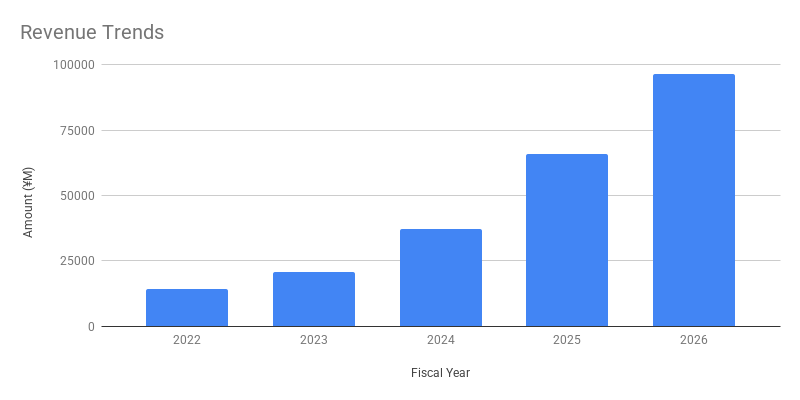
Kasumigaseki Capital Co., Ltd. (hereinafter “the Company”), which specializes in real estate investment and consulting, has achieved remarkable growth in its recent performance. Revenue for fiscal year 2023 was 37,283 million yen, representing a 179.4% increase year-over-year.This growth stems from success across multiple business areas, including the hotel business, logistics facility development, and healthcare facility development. Revenue is projected to reach 65,685 million yen in fiscal year 2024 and 96,501 million yen in fiscal year 2025, indicating significant potential for rapid growth.
In particular, the hotel business has expanded its own-brand hotels and is maintaining high occupancy rates amid the recovery of inbound and domestic travel demand. Additionally, in the logistics business, development of cold storage warehouses with excellent seismic resistance is progressing, and business operations that address the “2024 Problem” are anticipated.Furthermore, the progress in the healthcare business reflects its importance in a super-aging society and has established its position as a core revenue base for the company.
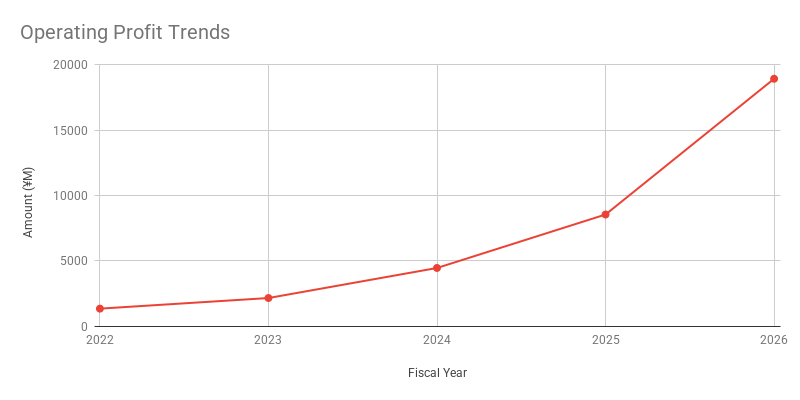
Recurring profit is also strong, with projections indicating an increase from 4,119 million yen in FY2023 to 7,860 million yen in FY2024 and 17,134 million yen in FY2025.Net income attributable to owners of the parent is also expected to perform well, reaching 2,486 million yen in FY2023, 5,417 million yen in FY2024, and 10,250 million yen in FY2025.These figures are evidence that the company’s strategic growth is paying off, despite challenges facing the industry as a whole.
2. Analysis of the Income Statement
A review of recent income statements reveals that Kasumigaseki Capital’s revenue base is growing very healthily.Revenue for FY2023 is projected to be 37,283 million yen, reaching 96,501 million yen in FY2025, representing a growth rate of 157.3% over this period.It is particularly noteworthy that this revenue growth is being driven by a diverse range of businesses, including hotels, logistics, and healthcare.
Although cost of sales will increase from 27,183 million yen to 60,065 million yen, this indicates that stable management is being implemented relative to the pace of revenue growth.As a result, gross profit rose from 10,099 million yen to 36,436 million yen, maintaining a high gross profit margin of 38.0%.This suggests the company’s success in cost management and pricing; while an increase in selling, general, and administrative expenses (SG&A) is notable, operating profit growth has outpaced this rise.
Ordinary profit is expected to increase dramatically from 4,119 million yen in fiscal year 2023 to 17,134 million yen in fiscal year 2025. The company has demonstrated resilience against financial market fluctuations and has established a stable revenue base.The fact that strategies aimed at launching new projects and improving the operational efficiency of existing ones appear to be bearing fruit is a factor that investors should appreciate.
3. Balance Sheet Analysis
An analysis of the company’s balance sheet highlights rapid growth in both assets and liabilities.From fiscal year 2024 to fiscal year 2025, total assets surged from 77,549 million yen to 121,688 million yen, with both current and non-current assets expanding. In particular, current assets demonstrate sound cash management due to increases in accounts receivable and cash.
Cash and cash equivalents increased from 5,893 million yen to 24,012 million yen, and the improvement in the current ratio ensures stability in short-term cash flow.On the other hand, while liabilities are also on an upward trend, their growth is being managed in a stable manner, and interest-bearing debt is projected to reach 68,868 million yen by fiscal year 2025. This indicates that the company’s financial structure is stable and that funding costs remain within a reasonable range.
The equity ratio is projected to recover from 25.2% in FY2023 to 29.7% by FY2025, contributing to the maintenance of the company’s financial stability. While taking external fluctuations into account, stable equity will serve as the foundation for future growth under a sustainable growth strategy.
4. Analysis of the Cash Flow Statement
According to the cash flow statement, operating cash flow was an outflow of 8,446 million yen in fiscal year 2023 but has shifted to an inflow of 6,893 million yen in fiscal year 2024. This change is attributable to an increase in net income before taxes and suggests an improvement in the company’s ability to generate cash from its core business.
Cash flows from investing activities are projected to reach an outflow of 18,557 million yen in fiscal year 2025, driven by aggressive acquisitions of tangible fixed assets and investment securities. These investment activities are not merely for maintenance but are a key factor in promoting corporate growth.Meanwhile, cash flows from financing activities contributed to a net inflow of 24,698 million yen, reflecting strategic initiatives aimed at the next phase of growth.
Thus, while managing its funds stably, the company is solidifying the foundation for future growth and is in a position to achieve high growth through proactive investment. For investors, this cash flow situation serves as a reliable indicator of the company’s future profitability.
5. Analysis of Performance Indicators
Among Kasumigaseki Capital’s performance metrics, particular attention should be paid to ROE (Return on Equity).It is projected to reach 20.3% in fiscal year 2023 and 26.5% in fiscal year 2024, indicating efficient use of capital. Furthermore, ROA (Return on Assets) remains stable at 8.3%, demonstrating efficient utilization of total assets.
EBITDA (Earnings Before Interest, Taxes, Depreciation, and Amortization) is expected to grow from 4,743 million yen to 19,970 million yen, directly reflecting the company’s strengthened earning power. Furthermore, with a dividend payout ratio of 25% planned for fiscal year 2025, this demonstrates a strong commitment to returning value to shareholders.
Thus, Kasumigaseki Capital’s performance indicators demonstrate the fundamental health necessary to achieve sustainable growth. The company successfully balances a clear focus on profitability with efficient capital management, raising expectations for future performance improvements.
As outlined above, Kasumigaseki Capital is maintaining sound growth in its business performance through diversified business operations and efficient management, and its commitment to maximizing future growth potential is clear. With expectations that this will lead to further development, attention is focused on the company’s long-term growth.
Mid-Term Management Plan / Growth Strategy
1. Overview of the Mid-Term Management Plan
Kasumigaseki Capital Co., Ltd. has formulated a five-year medium-term management plan covering fiscal years 2024 through 2029, aiming to achieve net income attributable to owners of the parent of 50 billion yen by the fiscal year ending August 2030.Under the management philosophy of “Turning Challenges into Value,” this plan prioritizes the development of high-growth business sectors and socially meaningful initiatives. Specifically, the company will focus on real estate consulting, logistics, hotels, healthcare, and overseas operations, aiming to provide unique social value in each of these areas.
In particular, initiatives such as the development of hospice housing and the construction of environmentally friendly logistics facilities provide direct solutions to the challenges facing modern society and are expected to drive sustainable growth. These specific priority measures are focused on strengthening project execution, improving fundraising capabilities, developing human resources, and enhancing internal management systems.The company’s commitment to diversifying its business portfolio and improving profitability through these initiatives strengthens its ability to adapt flexibly to the economic environment.
Experts evaluate this plan as implementing essential measures aimed at long-term success while maintaining the flexibility to respond effectively to market fluctuations. For investors, these initiatives hold the potential to serve as a foundation for stabilizing earnings, making them a key point of interest.
2. Investment Plan and Key Initiatives
Kasumigaseki Capital has outlined an investment plan through fiscal year 2025, demonstrating a commitment to capital expenditures and research and development, particularly in the logistics and hotel sectors.Specifically, the company is advancing the development of refrigerated and frozen warehouses and the construction of energy-efficient facilities in its logistics business, implementing measures in anticipation of rising demand for frozen foods in response to the “2024 Problem.” Additionally, it aims to ensure a sustainable energy supply through rooftop solar power generation systems.
In the hotel sector, new development projects are underway, with a strategic focus on capitalizing on the anticipated growth in inbound tourism demand. For example, the company is expanding its portfolio of “culture business hotels” such as “BASE LAYER HOTEL,” aiming to simultaneously contribute to the local economy and stabilize revenue through brand diversification.
In research and development, innovations incorporating new technologies are advancing in the real estate sector. These initiatives are expected to lead to the creation of service models that prioritize collaboration with local communities and are hoped to serve as a foundation for sustainable growth. If these investments yield results, they will enable future risk diversification and serve as a factor providing peace of mind for investors.
3. New Business Initiatives and Growth Strategies by Business Segment
Kasumigaseki Capital is exploring new business opportunities in addition to its existing operations, with plans to expand into the ASEAN region and the Middle East market in particular.Starting with Malaysia, the company aims to expand its logistics operations and establish an environment in the Dubai market where Japanese investors can participate. This approach suggests a path toward achieving sustainable growth while diversifying revenue streams.
In the existing hotel and healthcare businesses, the development of hospice housing is prioritized to strengthen contributions to local communities. This initiative addresses the needs of an aging society by providing an environment where people can spend their final days with peace of mind. Furthermore, the company has outlined a strategy to collaborate with local communities through community-based business development and create services tailored to local needs.
Such business-specific growth strategies are effective for diversifying risk and are key to securing a stable source of revenue for investors in the future. Strategies capable of adapting to market changes will be a major factor in anticipating long-term success.
4. Sustainability and Sustainable Growth Strategies
Kasumigaseki Capital places sustainability at the core of its corporate strategy and is advancing business operations based on the SDGs. As one such initiative, a concrete example in the healthcare business is the development of hospice housing that addresses end-of-life care needs for patients with terminal illnesses.As society ages, there is a growing demand for high-quality medical care and living environments, and by meeting this demand, the company fulfills its social responsibility.
Furthermore, in the logistics sector, efforts to reduce environmental impact are underway, including the selection of refrigerants and the implementation of energy-efficient designs. These environmentally conscious business practices enhance the company’s brand value and enable ethical operations that fulfill its social responsibilities.
According to experts, promoting sustainable corporate strategies in this way is not only seen as enhancing a company’s raison d’être in society but is also evaluated as leading to improved profitability from a long-term perspective. For investors, a company’s possession of a sustainable growth strategy is viewed as a positive factor from the standpoint of stable long-term investment.
5. Approach to Risk Factors
Business operations inevitably involve risks. Kasumigaseki Capital has demonstrated a commitment to strategically addressing risk factors such as changes in the economic environment and markets, as well as stricter regulations. Specifically, the company prioritizes identifying risks and implementing controls through the strengthening of internal management systems and regular internal audits.
These efforts also contribute to strengthening corporate governance and serve as a factor in enhancing the company’s credibility. In particular, ensuring transparency for investors and reviewing risk management and compliance are essential for securing the company’s long-term growth.
For investors, companies that practice robust risk management provide a sense of security. This is a particularly noteworthy point because measures that provide a safety net against short-term economic fluctuations foster expectations of sustainable growth.
6. Implementation Structure and Performance Measurement
Kasumigaseki Capital has established a framework to ensure the execution of its medium-term management plan. Within this framework, the company places a strong emphasis on setting clear KPIs and regularly monitoring the progress of each initiative. This enables periodic review and adjustment of strategies, allowing for flexible responses.
According to experts, having clear performance metrics contributes to improving the motivation of management and employees, serving as a factor that enhances the company’s overall performance. For investors, the existence of metrics indicating stable earnings growth is a key factor in investment decisions.
From a long-term perspective, these implementation frameworks and performance metrics serve as a foundation for sustained growth and are likely to be a source of heightened expectations among investors.
It is clear that Kasumigaseki Capital’s medium-term management plan and growth strategy are designed to achieve long-term stability while aiming for a sustainable society. In particular, the company’s commitment to socially meaningful business development and its prudent approach to risk management are likely to be viewed as positive factors by investors.In the next chapter, we will further explore the feasibility of this plan while addressing specific market trends and the competitive environment.
News & Topics
1. Strategic Expansion for Organizational Growth and Regional Contribution
Kasumigaseki Capital Co., Ltd. announced in November 2023 that it had acquired shares in the Sendai 89ERS of Miyagi Prefecture, making them a wholly owned subsidiary. This move demonstrates the company’s commitment to regional contribution and is a strategic step aimed at entering the sports business.Maki Sato, General Manager of the Sendai 89ERS, stated, “Sports play a vital role in regional revitalization,” expressing high hopes for the team’s contribution to revitalizing the local area.
For investors, this move can be viewed as part of a long-term growth strategy. Contributing to the community through sports not only fulfills corporate social responsibility but is also highly likely to directly enhance brand value. Furthermore, since revitalizing the local economy has a positive impact on industries such as tourism, there is also the expectation that contributing to the development of the entire region will strengthen trust in the company.In the short term, concerns remain regarding the initial costs associated with entering the sports business, but stable growth is anticipated in the medium to long term.
2. Launch of Logistics Operations in Malaysia
Kasumigaseki Capital plans to launch a logistics business in Malaysia starting in 2024. This initiative is positioned as part of the company’s strategy to strengthen its presence in the ASEAN region, with a particular focus on the development of leased cold storage facilities. The company has also established a policy of pursuing sustainable management through the adoption of new technologies that comply with fluorocarbon regulations.
The logistics industry is a rapidly changing sector, and there is a particular need to improve working conditions in light of the “2024 Problem.” Kasumigaseki Capital’s new initiatives are commendable for aligning with market needs while aiming to improve efficiency and profitability.For investors, expanding into overseas markets serves as a means of diversifying risk and presents an opportunity to broaden growth potential. However, thorough research into local regulations and competitive conditions is necessary, and investors should avoid overemphasizing the pursuit of short-term profits.
3. New Challenges in the Healthcare Business
As Japan’s population continues to age, Kasumigaseki Capital is focusing its efforts on the development of hospice housing. This initiative provides a place where people can spend their final days with peace of mind, and it is likely to become an important option, particularly for the elderly and their families. Some facilities are already in operation, and the company plans to continue development in the future.
Growth in the healthcare sector not only promotes the diversification of corporate revenue streams but also contributes to solving social issues.Investors need to pay close attention to this from the perspective that companies that fulfill their social responsibilities—rather than merely pursuing profits—are the ones that achieve sustainable growth. Furthermore, hospice housing is highly likely to become a factor that provides a competitive advantage in future markets and is expected to contribute to improving the company’s image.
4. Environmental Initiatives and Sustainable Management
Kasumigaseki Capital is advancing initiatives to reduce its environmental impact through the installation of solar panels at its own facilities and the promotion of renewable energy in the local community. This enhances the company’s brand value and contributes to fulfilling its social responsibilities.
Environmental consideration goes beyond mere corporate activities; it is essential for building a sustainable business model. The company has set a goal for fiscal year 2024 to increase the number of environmental-related orders and business investments, and these efforts are expected to contribute to long-term corporate growth.Investors should recognize that environmentally conscious corporate attitudes foster future investment opportunities and strive to support companies that prioritize sustainability.
5. Management Policy and Mid-Term Management Plan
Kasumigaseki Capital aims for growth over the next five years based on its medium-term management plan starting in fiscal year 2024.The company aims to achieve net income attributable to parent company shareholders of 50 billion yen, with key initiatives focused on diversifying its business portfolio and developing new technologies and business ventures. These efforts are expected to strengthen the company’s sustainable growth and its ability to manage risks.
Business strategies for entering new markets are considered a key factor in enhancing competitive advantage. The company places high importance on strengthening internal systems and investing in human resource development, while also promoting innovation in products and services. For investors, these growth strategies provide a basis for anticipating profits from a long-term perspective. The company is required to thoroughly implement risk management and support sustainable corporate growth.
6. Strengthening Risk Management and Compliance
Kasumigaseki Capital is intensifying its focus on risks associated with securing and executing projects. In particular, identifying risks related to entering new markets and real estate development is prioritized, and appropriate information gathering and risk assessments are being conducted. Furthermore, efforts are underway to establish internal systems to ensure compliance with domestic and international laws and regulations.
In particular, the threat of recent cyberattacks requires immediate information security management. Since ensuring transparency and strengthening internal audits are positioned as key measures, these efforts are expected to contribute to enhancing the company’s credibility.For investors, risk management and strengthened compliance are key indicators of a company’s stability. To achieve sustainable growth, a commitment to supporting these initiatives is essential.
Considering the company’s past achievements and future outlook, Kasumigaseki Capital aims for further growth while contributing to the local community, prioritizing environmental considerations, and diversifying its business. By responding swiftly to industry changes and managing risks appropriately, the company is expected to become an attractive investment opportunity for investors.As attention focuses on future developments, investors should concentrate on making investment decisions based on these factors.
Company Overview
1. Basic Company Information
Kasumigaseki Capital Co., Ltd. is a real estate investment company headquartered at 3-2-1 Kasumigaseki, Chiyoda-ku, Tokyo. Established in September 2011, the company initially began operations in the shopping center business in Sendai City, Miyagi Prefecture, but relocated its headquarters to Tokyo as the business expanded.The President and CEO is Mr. Koshiro Kawamoto, and the company continues to grow under his leadership. In particular, changing the company name to “Kasumigaseki Capital Co., Ltd.” in 2015 and listing on the Tokyo Stock Exchange’s Mothers Market were significant steps in the company’s growth.The company is currently listed on the Growth Market and, having achieved a listing on the Prime Market in 2023, is attracting significant attention from investors.
The company operates a wide range of businesses, including real estate consulting services, logistics facility development, hotel operations, and healthcare facility development. Looking ahead, the company expects to secure a new revenue stream by listing the Kasumigaseki Hotel REIT, which is scheduled to be established in 2025.Overall, Kasumigaseki Capital possesses a diverse business model and is building a foundation for growth.
2. Business Activities and Structure
Kasumigaseki Capital’s business activities can be broadly divided into three categories. First, in the real estate business, the company develops and operates shopping centers and office buildings, aiming for community-oriented operations. Second, the real estate consulting business aims to provide clients with precise proposals amid intensifying competition and to achieve optimal asset management.Finally, the introduction of renewable energy, driven by a commitment to sustainable growth, seeks to balance environmental considerations with contributions to the local community.
Each business is driven by a commitment to addressing social needs and fulfilling corporate social responsibility (CSR) alongside profitability, thereby contributing to the company’s credibility. In particular, from the perspective of community contribution, the company has undertaken initiatives such as the development of healthcare facilities, and its efforts to meet social expectations are highly regarded.For investors, while this diverse business portfolio enhances the company’s stability, it is also necessary to closely monitor the performance of each individual business.
3. Organizational Structure and Management
To achieve efficient and transparent management, Kasumigaseki Capital operates as a company with an Audit and Supervisory Committee. The Board of Directors consists of 13 members, including outside directors, and is composed of individuals with diverse expertise. The presence of outside directors is a key element in incorporating external perspectives and is expected to contribute to strategic decision-making.Ensuring corporate governance and transparency also leads to increased trust in the company.
Key members of the executive team include Chairman Junji Ogawa and Kazunari Hirose, Head of the Corporate Planning Office, whose leadership is driving the company’s growth. Mr. Hirose, in particular, possesses extensive experience in the financial industry and is highly regarded for his ability to make strategic decisions.The leadership of this management team and highly transparent operations are essential for the company to achieve its dual goals of sustainable growth and social contribution.
4. History and Key Milestones
Kasumigaseki Capital’s origins date back to 2011. The company initially launched a shopping center business in Miyagi Prefecture and was reorganized as a corporation in 2015. Since then, it has continued to grow, achieving a listing on the Tokyo Stock Exchange Mothers Market and obtaining registration as an investment advisory and agency firm in 2020.Of particular note is the company’s transition to the Growth Market in 2022 and its subsequent listing on the Prime Market in 2023. These steps have contributed to enhancing the company’s credibility and improving its market standing.
Recently, the company has been focusing on international expansion, such as establishing local subsidiaries in Indonesia and Thailand, and this global perspective is expected to influence its future growth.Another key point is the company’s plan to establish a local subsidiary in Malaysia in 2025 to further advance its overseas expansion. A review of the company’s history clearly demonstrates Kasumigaseki Capital’s commitment to contributing to the regional economy and establishing a sustainable business model.
5. Future Outlook and Recommendations for Investors
Based on its track record of growth, Kasumigaseki Capital is a company expected to continue its sustainable growth. Specifically, the company is expected to diversify its business and strengthen its revenue base through further expansion in domestic and international markets and investment in emerging businesses.Furthermore, securing new revenue streams that meet market needs while fulfilling its social responsibility in the renewable energy sector is a key factor in enhancing corporate value.
For investors, it is important to maintain expectations for future performance, closely monitor the company’s proactive growth strategy, and make investment decisions after comprehensively considering risks.As the company is recognized as one capable of delivering stable earnings and dividends—while carefully monitoring changes in the market environment and performance indicators—it is increasingly viewed as a suitable candidate for long-term investment. We hope that the company’s progress will provide investors with a new vision.
Kasumigaseki Capital is a company with a solid management foundation that pursues growth while enhancing transparency and trustworthiness. Its diverse business structure, strong organizational framework, and sustainable business model hold the potential to generate future investment opportunities. In the next chapter, we will delve deeper into the company’s financial condition and performance analysis.
Shareholder Returns
1. Dividend Policy and History
Kasumigaseki Capital Co., Ltd.’s shareholder return policy is fundamentally based on maintaining stable dividends. This policy takes the company’s sustainable growth into account, prioritizing the securing of internal reserves necessary for future business development while reflecting the company’s performance.Looking at past dividend payout ratios, the company plans to pay a dividend of 240 yen per share in 2025, which is expected to result in a consolidated dividend payout ratio of 23.1%. This serves as an indicator of the company’s strengthened commitment to shareholder returns, raising expectations for its future dividend policy.
These dividends are determined by the Board of Directors and the General Meeting of Shareholders; since interim dividends can be decided promptly by the Board of Directors, the company can respond flexibly to changes in the business environment.Furthermore, the company is implementing a shareholder benefits program to strengthen ties with shareholders and enhance their loyalty. Through these initiatives, Kasumigaseki Capital is providing shareholders with both stable dividends and a sense of anticipation regarding the company’s future growth.
From an expert’s perspective, flexibility in dividend policy is a key factor in business sectors where future growth is anticipated.A commitment to stable profit distribution, independent of economic conditions and market trends, is essential for securing a competitive advantage over other companies. For investors, a dividend policy backed by stable dividends and corporate growth strategies is attractive and is viewed as contributing to sustainable growth in the future.
2. Share Buybacks and Their Impact
Kasumigaseki Capital implements share buybacks as part of its shareholder return initiatives. Share buybacks are a direct means of returning profits to shareholders and serve as an important tool for stabilizing and enhancing stock prices in the market.In fiscal year 2025, the company plans to repurchase 2,450 shares. This measure is expected to reduce the number of outstanding shares and improve earnings per share.
Since share buybacks increase shareholders’ equity, they have the potential to enhance the value of shareholders’ assets. This measure serves as a signal that the company is confident in its future growth, which helps build investor confidence. While share buybacks can be seen as an effective way to utilize a company’s retained earnings, it is also necessary to remain vigilant regarding changes in market conditions and the economic environment.
From an expert’s perspective, companies must approach share buybacks with a long-term view. It is desirable to secure stable cash flow and execute buybacks when surplus funds are available. If such measures are implemented appropriately, companies can build a foundation to support sustainable growth.For investors, profit distribution through share buybacks is attractive and is perceived as a sign of confidence in the company’s growth strategy.
3. Implementation of Dividend Policy and Its Impact
Kasumigaseki Capital’s dividend policy takes into account future business development while monitoring performance trends.The company plans to pay a year-end dividend of 240 yen in 2025, which represents a significant increase from past dividend amounts. The dividend payout ratio has reached 67.7%, clearly demonstrating the company’s commitment to returning a large portion of its earnings to shareholders. This allows shareholders to enjoy a stable income stream and enables the company to strengthen its relationship of trust with shareholders.
The increase in dividends, driven by the company’s growth, is welcome news for investors and is expected to have a positive impact on future investment strategies. Furthermore, the dividend policy enhances corporate transparency and serves as a foundation for building trust with shareholders. Stable dividends are an indicator of management’s confidence; while supporting the company’s growth, they also ensure a reliable return for shareholders.
Experts point out that the proper implementation of dividend policies is a factor that enhances a company’s credibility and, in the long term, leads to improved competitiveness.Investors can monitor a company’s growth while enjoying stable dividends, thereby expanding their investment options. Furthermore, the impact of dividend increases is closely linked to a company’s capital policy and is considered a factor that helps facilitate the smooth execution of its overall strategy.
4. Expansion of the Shareholder Benefits Program
Kasumigaseki Capital is focusing on measures to deepen communication with shareholders by introducing a shareholder benefits program. Under this program, points are awarded based on the number of shares held and the holding period, allowing shareholders to receive various benefits. As a result, shareholder benefits serve not only as a means of returning profits but also play a role in fostering loyalty to the company.
This shareholder benefits program is designed to strengthen the interface between the company and its shareholders and is highly regarded as a way to meet shareholder expectations. The number of users of the benefits program is on the rise, and management places great importance on the program’s significance as part of shareholder returns.For investors, shareholder benefits offer a “special experience” that goes beyond financial gains and can serve as an opportunity to deepen their bond with the company.
Experts point out that shareholder benefit programs are an important factor contributing to sustainable corporate growth. Enhancing these programs has the potential to reinforce a positive corporate image and serve as a catalyst for long-term investment. Consequently, shareholders are expected to develop a greater sense of being partners who contribute to the company’s growth, rather than merely stakeholders.
5. Strengthening the Management Foundation and Future Outlook
Kasumigaseki Capital Co., Ltd.’s shareholder return policy is closely linked to its sustainable growth strategy. While implementing shareholder returns directly shares corporate profits with shareholders, the fundamental challenge lies in how to manage the earnings that serve as the source of those returns. By securing retained earnings, the company creates opportunities to undertake new investment projects and enhance its competitiveness over the long term.
Strengthening the management foundation is also crucial for implementing shareholder return measures. For a company to enter new markets or develop new products, it is essential to first establish a solid management foundation. Kasumigaseki Capital has indicated its intention to continue balancing shareholder returns with growth, and this stance serves as a key factor in securing investor trust.
From an expert’s perspective, a company’s growth strategy serves as the backbone of its shareholder return policy, and the balance struck between the two significantly influences how the company is evaluated both internally and externally. If shareholder return policies are positioned not merely as profit distribution but as a foundation for fostering corporate growth, investors will be expected to continue monitoring these developments closely.
Going forward, Kasumigaseki Capital is expected to aim for the building of long-term trust and an increase in its stock price by reaffirming the significance of shareholder returns while managing the company to achieve sustainable growth. From this perspective, investors should heighten their interest in the company’s activities.
Kasumigaseki Capital’s shareholder return policy balances corporate growth strategies with the building of trust, and its future developments are worth watching. It is also important in terms of creating an environment where the company’s sound growth is returned to shareholders and sustainable development is anticipated.
Business Risks
1. Factors Affecting Business Performance
Kasumigaseki Capital’s performance in its real estate consulting business is sensitive to economic conditions and market trends.If economic fundamentals deteriorate, the likelihood of a direct negative impact on performance increases. In particular, during periods when client investment sentiment declines, the total number of real estate transactions decreases, which could put pressure on order intake, sales, and profits. Under such circumstances, if projects fail to generate expected returns, this could have a ripple effect on overall performance.
Investors are required to accurately understand this risk of performance volatility and remain sensitive to changes in the market and economic environment. Furthermore, since the company’s client base is concentrated among major real estate developers and investment funds, risk hedging is a critical issue, as a deterioration in the financial condition of a specific client could directly impact the company’s order intake and earnings.Diversifying the customer base would be one way to address this.
Furthermore, attention must be paid to changes in the regulatory environment. Since changes in tax systems and lending conditions have a direct impact on real estate operations, it is necessary to constantly gather information and establish a system capable of responding flexibly. Investors should evaluate the company’s views and countermeasures regarding these factors affecting business performance.
2. Industry-Specific Risks
One risk specific to the real estate industry is the volatility of economic cycles. When the market is strong, demand increases; conversely, during recessions, there are concerns about oversupply and rising vacancy rates. In Japan in particular, with its declining and aging population, supply and demand are concentrated in specific regions, making it essential to accurately interpret market trends.
Furthermore, responding to decarbonization driven by growing environmental awareness is a significant risk factor. As demand for sustainable buildings and technologies rises, the risk of declining valuations for existing assets and increased renovation costs is inevitable. Investors must closely monitor how companies approach sustainable development and their ability to execute these strategies.
The competitive environment is also fierce. As the number of new entrants increases, companies are likely to face greater challenges in differentiating themselves. Maintaining technological capabilities and uniqueness will be a critical challenge. Furthermore, legal and geopolitical risks associated with overseas expansion cannot be ignored, and analysis and planning regarding these variables are necessary.
3. Financial and Management Risks
Kasumigaseki Capital’s financial risks are primarily attributed to changes in the funding environment and excessive debt. This includes the risk of rising borrowing costs due to rising market interest rates and tighter monetary policy. In particular, real estate projects often require significant capital on a per-project basis, which could impact overall business operations.
Liquidity risk is also a factor that cannot be overlooked. As short-term funding needs increase, any situation where financing cannot be secured smoothly threatens the soundness of the business. Securing diverse financing channels is essential, and efforts to reduce dependence on major financial institutions are also important.
Furthermore, strengthening governance and compliance is essential. Deficiencies in internal controls directly impact a company’s credibility and significantly affect the stability of management and the risk of leadership turnover. Diversity among executives and strategies for nurturing the next generation are also crucial for sustainable growth, and these elements must be managed comprehensively.
4. Risks and Management of Outsourcing Dependency
Since consulting operations rely on specific external vendors, serious risks arise if contractors fail to perform their duties appropriately. Any shortcomings on the part of external partners can significantly undermine the company’s credibility. Therefore, investors must evaluate the selection of contractors and the robustness of the management system.
To mitigate this risk, the Company regularly reviews the creditworthiness of its outsourcing partners and actively works to select new ones. However, investors must carefully monitor whether this management system is functioning effectively. In particular, as market fluctuations accelerate, the selection and retention of appropriate outsourcing partners have a profound impact on business stability.
Furthermore, in our business operations, facilitating smooth communication with subcontractors and building trust are key challenges. Care must be taken, as delays in information transmission or misunderstandings can directly impact the quality of operations and, consequently, adversely affect the services provided to customers.
5. Risks of Overseas Expansion and Market Environment
When Kasumigaseki Capital expands into overseas markets, economic fluctuations and political risks could have a serious impact on its business. In particular, investors must closely monitor rapid inflation and exchange rate risks, as these directly affect the company’s finances. If the political situation in the target country is unstable, there is also a risk that the continuity of the business could be jeopardized.
Therefore, it is crucial for the company to conduct market analysis for each target country and explore risk management strategies and countermeasures. Specifically, the company must thoroughly investigate regional economic trends and legal regulations and implement appropriate measures. Investors must evaluate the company’s risk management capabilities in overseas markets and verify the effectiveness of its strategies.
Furthermore, as the competitive environment in international markets is extremely fierce, companies need to adopt strategic approaches, such as building local partnerships and forming consortia. This enables them to enhance their adaptability to local markets while diversifying risks.
6. Natural Disasters and Geopolitical Risks
In the real estate industry, natural disasters and geopolitical risks are factors that cannot be ignored. Japan, in particular, is highly susceptible to earthquakes and typhoons, which can significantly impact project progress and asset value. This may result in unexpected costs or losses, making prior risk assessment and countermeasures essential.
Regarding geopolitical risks, fluctuations in the political situation or international relations of the host country can affect business operations. In particular, heightened international tensions may adversely affect asset preservation and the business environment, so it is necessary to remain constantly vigilant regarding external factors. Preparedness for these natural disasters and geopolitical risks will likely be a major factor influencing investor confidence.
7. ESG-Related Risks
In the current investment environment, companies are increasingly expected to address ESG (Environmental, Social, and Governance) risks.As the shift toward environmentally conscious business models progresses, companies that fail to meet ESG standards may see their standing with investors decline, potentially making it difficult to raise capital. Therefore, companies must strengthen initiatives that comply with ESG standards and strive for sustainable development.
As this area will become increasingly important in the future, investors must carefully consider how companies manage ESG risks and how they should be evaluated. In particular, strengthening transparency and reporting systems will serve as the foundation for improving credibility.
Furthermore, as ESG-related regulations advance, a company’s competitiveness will depend on its flexibility and ability to respond swiftly to these changes. Investors should view a company’s commitment to strengthening initiatives toward a sustainable society as a key factor in their evaluation.
Properly understanding the impact of these risks on companies and formulating risk management strategies is crucial for achieving sustainable growth.
In the next chapter, we will continue our analysis of how companies are deploying strategies to improve performance and drive growth in response to these risks. Investors are urged to pay close attention to these trends and make informed decisions.
Financial Charts