INPEX
Report Update:2026/05/09Location
Akasaka Biz Tower, 5-3-1 Akasaka, Minato-ku, Tokyo 107-6332
Business content
It is one of Japan's largest oil and natural gas exploration and production companies and holds an important position in the international energy market. Its main business activities include exploration, development, production, and sales of oil and natural gas, with diverse projects in the UAE, Australia, and other countries.
Main Scheduled Dates
ーーー
Table of Contents
1605TSE Prime
Summary
INPEX Corporation is one of Japan’s largest oil and natural gas development companies and plays a significant role in the international energy market.Its main business activities include the exploration, development, production, and sale of oil and natural gas, with the Ichthys LNG Project in Australia serving as a key pillar of its revenue base. INPEX is also actively engaged in renewable energy initiatives, advancing the production of hydrogen and ammonia as well as the adoption of CCS technology, and pursuing sustainable growth based on “INPEX Vision 2035,” which aims for net-zero carbon by 2050.Its business is divided into oil and natural gas development, LNG-related operations, renewable energy, and low-carbon solutions, with the Ichthys LNG Project expected to secure stable revenue. Recent performance has shown steady growth, with revenue reaching approximately 2.316 trillion yen in fiscal 2022 and an operating margin maintaining a high level of about 65%.Key areas of focus going forward include the implementation of CCS technology, the commercialization of hydrogen, and further investment in the renewable energy sector, with the development of offshore wind power and geothermal energy being particularly important factors. Under its medium-term management plan, the company anticipates operating cash flow of approximately 2.2 trillion yen, of which it plans to invest approximately 1.1 trillion yen in existing projects and its natural gas business.Regarding shareholder returns, the basic policy is to aim for an annual dividend of 90 yen per share and set the total payout ratio at 50% or higher. INPEX is expected to demonstrate the ability to respond flexibly to geopolitical risks and changes in the market environment, and strategic initiatives to achieve sustainable growth are anticipated. For investors, INPEX’s diversified approach is likely to be a key factor in maintaining its competitiveness in the future market.
1. Summary of Cumulative Financial Results for Fiscal Year 2023
INPEX Corporation’s consolidated financial results for the fiscal year ended March 2023 (April 2022–March 2023) showed a decline in both revenue and profit. Revenue decreased by 6.0% year-on-year to approximately 2.165 trillion yen, while operating profit was 111.4 billion yen, ordinary profit was 113.0 billion yen, and net profit attributable to owners of the parent was 80.0 billion yen.This performance was influenced by falling crude oil and natural gas prices. In particular, the decline in FY2023 was significant compared to FY2022, when operating cash flow reached 782.2 billion yen, supported by high liquefied natural gas (LNG) prices.Although INPEX has secured stable cash flow, primarily through the Ichthys LNG Project, concerns remain regarding the impact of production issues in fiscal 2023. While the operating margin remained high at 51.5%, a reaction to the high profits achieved under the exceptional circumstances of fiscal 2022 is evident. Cost of sales reached 848 billion yen, driven by soaring crude oil and natural gas prices.Going forward, concrete actions toward realizing a low-carbon society and investments in renewable energy will be key challenges. In particular, the implementation of CCS technology and the commercialization of hydrogen could significantly impact the company’s earnings structure, and investors need to closely monitor these developments. INPEX has demonstrated a commitment to achieving sustainable growth by strengthening its environmental initiatives while working to stabilize its management foundation.
2. Earnings Outlook for the Fiscal Year Ending March 2024
The earnings forecast for the fiscal year ending March 2024 projects revenue of 2.165 trillion yen, operating profit of 111.4 billion yen, ordinary profit to be determined, and net profit attributable to the parent company to be determined.While the company achieved significant growth in fiscal 2023 due to the Russian invasion of Ukraine, a surge in energy demand driven by the U.S. economic recovery, a weak yen, and soaring oil prices, a decline in revenue is expected for fiscal 2024 due to falling crude oil and natural gas prices. In particular, production issues are anticipated at the Ichthys LNG project, creating a situation that will require the company to demonstrate its adaptability.Although the operating profit margin remains high at approximately 51.5%, the high profits in FY2022 were the result of exceptional circumstances, making sustainable performance improvement measures necessary. Investors should focus on INPEX’s future not only in terms of short-term performance fluctuations but also from the perspectives of long-term growth strategies and risk management. In particular, the company’s ability to respond flexibly to changes in the energy industry will be a key factor in enhancing its corporate value.INPEX has established “INPEX Vision 2035” to achieve net-zero carbon by 2050 and is implementing specific measures to pursue sustainable growth. Investments in renewable energy businesses and the introduction of CCS technology are anticipated, which are expected to secure future revenue streams.Since future performance trends will depend heavily on the execution of these strategies and changes in the market environment, it is important for investors to closely monitor ongoing performance analysis and measures aimed at improvement.
3. Medium- to Long-Term Growth Strategy
Based on “INPEX Vision 2035,” which aims to achieve net-zero by 2050, INPEX Corporation has formulated a medium-term management plan covering fiscal years 2025 through 2027. This plan emphasizes balancing sustainable energy supply with business growth. In particular, it positions natural gas as a “realistic transition fuel” and outlines a policy to strengthen initiatives in CCS (carbon capture and storage) technology and the hydrogen business.The company has made ensuring safety its top priority, calling for concrete actions aimed at zero accidents, while also setting a target to reduce emissions intensity by 35% between 2025 and 2027.Regarding the investment plan, the company expects operating cash flow of approximately 2.2 trillion yen. Of this amount, approximately 1.1 trillion yen will be allocated to existing projects and natural gas/LNG operations, approximately 500 billion yen to low-carbon sectors and hydrogen-related businesses, and the remaining 200 billion yen to newly developed power generation operations.In particular, investment in the Ichthys LNG project is considered a priority, and the company aims to improve efficiency and safety through the introduction of digital technologies. For new businesses, the company will focus on hydrogen and ammonia production projects and the introduction of CCS, while also advancing renewable energy-related businesses to diversify its energy supply.Key performance indicators (KPIs) have been set to establish a foundation for growth through fiscal 2030, aiming to secure stable cash flow through the expansion of the natural gas business and improve ordinary income. Risk factors include geopolitical risks and changes in the market environment, requiring a flexible approach to portfolio construction. INPEX aims to establish itself as a highly reliable company in the eyes of investors by putting in place a framework to execute its growth strategy while prioritizing sustainability.
- For the cumulative period through FY2023, both revenue and profit declined, impacted by falling crude oil and natural gas prices as well as production issues; moving forward, concrete actions toward a low-carbon society and investment in renewable energy will be key challenges.
- While the company forecasts revenue of 2.165 trillion yen and operating profit of 111.4 billion yen for the fiscal year ending March 2024, the impact of falling crude oil and natural gas prices, as well as production issues at the Ichthys LNG project, means that measures for sustained performance improvement are required
- Aiming to achieve net-zero by 2050, INPEX Corporation has formulated a mid-term management plan for the period from fiscal 2025 to fiscal 2027 that balances sustainable energy supply with business growth, and plans to strengthen investments particularly in natural gas and low-carbon sectors
Business Overview
1. Overview of the Business Model
INPEX Corporation is one of Japan’s largest oil and natural gas development companies and holds a significant position in the international energy market. Its main business activities include the exploration, development, production, and sale of oil and natural gas, with diverse projects underway in the UAE, Australia, and other regions. In particular, the Ichthys LNG project in Australia is a key pillar supporting the company’s revenue base and contributes to securing stable cash flow.
INPEX is actively engaged not only in the oil and natural gas business but also in renewable energy initiatives. Environmental considerations are positioned as a key strategic priority, including the production of hydrogen and ammonia, as well as the adoption of CCS (Carbon Capture and Storage) technology. Through these efforts, the company is pursuing sustainable growth to achieve its goal of net-zero carbon by 2050, as outlined in “INPEX Vision 2035.”For investors, INPEX’s multifaceted approach will likely be a key factor in determining how the company maintains its competitiveness in the market going forward.
2. Main Business Segments
INPEX’s business is primarily divided into oil and natural gas development, LNG-related operations, renewable energy, and low-carbon solutions. In the outlook for fiscal 2025, the Ichthys LNG Project is expected to be a major source of revenue, ensuring stable sales. Specifically, the Ichthys Project supplies 9.3 million tons of LNG annually, which underpins the company’s overall revenue base.
Furthermore, in the renewable energy sector, development of offshore wind power and hydrogen parks is progressing, and these projects are expected to serve as future revenue sources. In particular, initiatives related to hydrogen are considered a crucial step toward realizing a sustainable society and represent a position worthy of attention for investors. In this way, INPEX aims to diversify risk through its multiple business segments and achieve sustained improvement in performance.
3. The Company’s Market Position and Competitive Advantages
INPEX has established a strong market position, particularly in the Asian region, and benefits from government support, giving it an advantage in ensuring a stable supply of resources. Its competitive advantages include extensive technical expertise and an international network, which enable effective risk diversification. Furthermore, the company’s strengthened environmental commitment and the renewal of its business model amid the shift toward clean energy are contributing to increased public trust.
In particular, INPEX is charting a course to overcome its competitive disadvantages by making large-scale investments in CCS and renewable energy technologies. Ultimately, under its long-term strategy to achieve net-zero carbon by 2050, the company is demonstrating a commitment to sustainable growth. This is likely a key point for investors, suggesting significant future growth potential.
4. Performance Trends
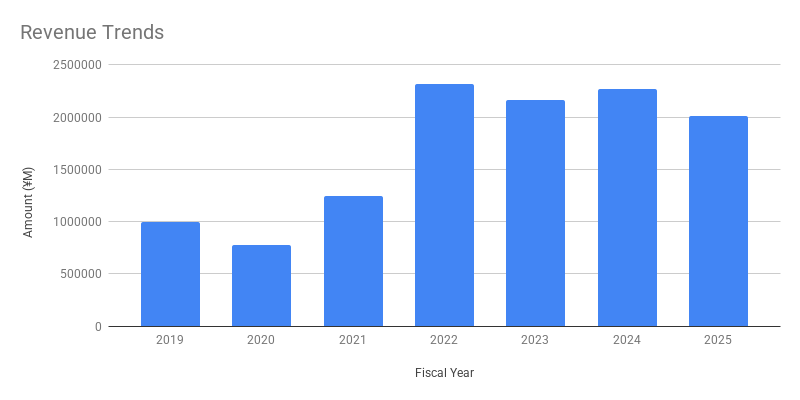
INPEX’s recent performance has shown steady growth over the past few years. Revenue for fiscal year 2022 reached approximately 2.316 trillion yen, a significant increase of 186% year-over-year, driven by rising international energy prices and expanding demand. In particular, with the current surge in natural gas demand, the company’s LNG-related businesses are performing exceptionally well, and this trend is expected to continue.
The operating profit margin has reached approximately 65%, reflecting the company’s efficient utilization of resources. Furthermore, EBITDA has remained robust, establishing a stable management foundation based on sustainable cash flow. Regarding shareholder returns, a dividend policy aligned with the mid-term management plan for fiscal years 2025 through 2030 is scheduled, and the company is expected to achieve a balance between sustainable growth and shareholder returns.
5. Future Focus Areas
A key point to watch for INPEX going forward is the implementation of concrete actions toward realizing a low-carbon society. In particular, the implementation of CCS technology and the commercialization of hydrogen have the potential to significantly impact the company’s revenue structure. Progress on the Abadi LNG project is also critical; as the company aims to reach FID (Final Investment Decision) by 2027, the outcome will be a focal point for the market.
Furthermore, the company plans to increase investment in the renewable energy sector; in particular, the development of offshore wind power and geothermal energy will be key factors in meeting societal needs. As a result, INPEX is expected to demonstrate clearer leadership in the supply of clean energy. Investors need to evaluate the company’s value enhancement through these developments and assess its future growth trajectory.
INPEX is advancing diverse business initiatives while maintaining a solid management foundation, and its stance as a company committed to sustainable growth is likely to enhance its competitiveness in the market going forward. By considering these perspectives, investors can prepare to navigate the company’s strategic direction and respond to market changes.
Financial Performance Trends
1. Recent Performance Overview
As one of Japan’s leading oil and natural gas development companies, INPEX Corporation demonstrated remarkable growth between 2021 and 2023.Revenue for fiscal year 2021 was approximately 1.2443 trillion yen, reaching 2.3160 trillion yen in fiscal year 2022 and 2.1650 trillion yen in fiscal year 2023. This growth is attributed to a surge in energy demand following Russia’s invasion of Ukraine and the recovery of the U.S. economy, as well as the weak yen and soaring oil prices.
On the other hand, the decline in revenue in fiscal 2023 was primarily due to falling crude oil and natural gas prices, serving as a reminder of the impact geopolitical factors can have on corporate performance. In particular, fiscal 2022 saw operating cash flow reach an impressive 782.2 billion yen, supported by high liquefied natural gas (LNG) prices, and the company’s implementation of stable and sustainable dividends was highly appreciated by shareholders.Looking ahead, with production issues anticipated at the Ichthys LNG project, the company will need to demonstrate its ability to adapt.
Investors should focus on INPEX’s future not only in terms of short-term earnings fluctuations but also from the perspectives of long-term growth strategies and risk management. In particular, it is essential to consider the company’s ability to respond flexibly to changes in the energy industry as a key factor in enhancing corporate value.
2. Analysis of the Income Statement
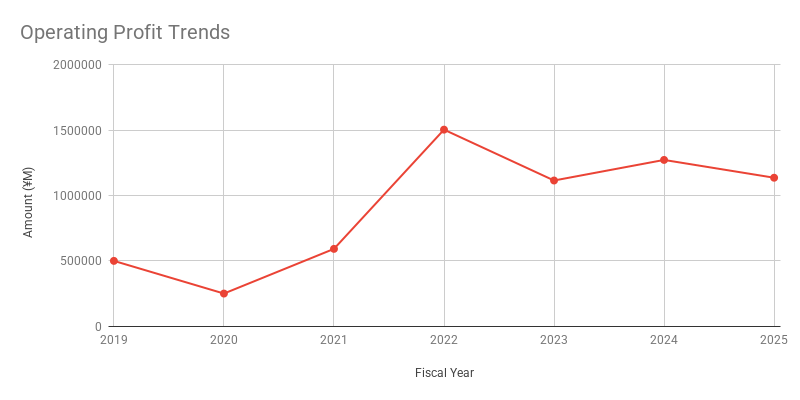
An analysis of INPEX’s income statement reveals changes in profit margins alongside revenue trends. From fiscal year 2021 to fiscal year 2023, revenue grew from 1.2443 trillion yen to 2.3160 trillion yen, achieving remarkable growth to reach 2.1650 trillion yen in fiscal year 2023.However, while operating profit reached a five-year high of 150.3 billion yen in FY2022, it declined to 111.4 billion yen in FY2023. Although the operating profit margin improved from 47.5% in FY2021 to 51.5% in FY2023, the high profit in FY2022 was the result of exceptional circumstances, so sustainable measures to improve performance are likely required.
Cost of sales has been on an upward trend, reaching 818.1 billion yen in 2022 and 848.0 billion yen in 2023. This trend is driven by soaring crude oil and natural gas prices as well as production issues, indicating that efficient cost management is a key challenge moving forward. In particular, selling, general, and administrative expenses (SG&A) have also increased year over year to 70.3 billion yen, underscoring the need for greater operational efficiency. Consequently, investors must pay close attention to future improvements in cost structure and profit margins.
Furthermore, strengthening risk hedging measures against changes in the external environment is essential, and it is necessary to closely monitor how INPEX’s performance is affected by market conditions.
3. Balance Sheet Analysis
INPEX’s balance sheet indicates that total assets have been on an upward trend through fiscal year 2023.Total assets stood at 5.158 trillion yen in FY2021 and reached approximately 6.7395 trillion yen in FY2023. The increase in current assets was particularly notable, rising from 518.8 billion yen in FY2021 to 838.4 billion yen in FY2023, confirming an improvement in short-term liquidity.
However, fixed assets have decreased slightly, and the decline in tangible fixed assets suggests that improvements are needed in this area to strengthen the company’s future earnings base. Regarding liabilities, interest-bearing debt has decreased, and the debt-to-equity ratio is improving. As the equity ratio rises, measures to enhance capital efficiency are required.
Additionally, it is necessary to monitor the impact on operations of foreign exchange risks and fluctuations in crude oil prices. In particular, maintaining a risk management system capable of responding swiftly to changes in the external environment, along with enhancing financial soundness, will form the foundation supporting the company’s growth. Investors must place importance on this point and closely monitor whether the company’s strategies are being effectively executed.
4. Analysis of the Cash Flow Statement
An analysis of INPEX’s cash flow statements from 2021 to 2023 clearly demonstrates how the increase in operating cash flow (OCF) is contributing to the company’s growth.Operating CF reached 782.2 billion yen in FY2022 and 788.1 billion yen in FY2023, indicating an improvement in cash generation capacity. However, cash flow from investing activities has turned negative, standing at approximately -320.1 billion yen in FY2023. This is analyzed as being influenced by investments in new projects, which are expected to lead to future profit growth.
Financial cash flow is also important, with long-term borrowings maintaining a stable source of funding. However, repayment burdens are also arising, creating a situation where optimization of borrowings is required. In particular, as the company strives to implement shareholder return policies, improving the equity ratio becomes crucial. For investors, assessing cash flow trends and the efficiency of capital allocation will likely be essential factors in future investment decisions.
5. Analysis of Performance Indicators
Regarding performance metrics, INPEX is notable for maintaining stable profit margins. ROE is expected to exceed 10% in 2024, and capital efficiency is projected to improve. Additionally, EBITDA is expected to increase, reflecting positive evaluation of the company’s initiatives for sustainable growth.
On the other hand, reducing GHG emissions is considered a critical challenge for corporate growth, and balancing sustainability with growth will be a major test moving forward. How INPEX responds to instability in international relations surrounding natural resources, and its ability to continue executing its long-term strategy, will be key to enhancing corporate value.
The company’s financial indicators, performance, and planned growth strategies are strongly influenced by future market trends and the external environment. Therefore, it is important for investors to continue closely monitoring ongoing performance analysis and measures aimed at improvement.
INPEX is expected to maintain a stance that aims for sustainable growth while continuing to provide value to its investors and remaining mindful of the global environment. The execution of sustainable energy supply initiatives and corporate strategies is expected to continue contributing to the enhancement of corporate value in the future.
Medium-Term Management Plan / Growth Strategy
1. Overview of the Mid-Term Management Plan
INPEX Corporation has formulated a mid-term management plan covering fiscal years 2025 through 2027 under the banner of “INPEX Vision 2035,” which is aimed at achieving net-zero by 2050. Based on the current business environment, this plan focuses primarily on balancing sustainable energy supply with business growth. Specifically, the central themes are strengthening the core oil and natural gas business and promoting low-carbon solutions.In particular, the company positions natural gas as a “realistic transition fuel” and plans to strengthen its efforts in CCS (carbon capture and storage) technology and the hydrogen business.
“Ensuring safety” is the top priority in this mid-term management plan, requiring concrete actions aimed at achieving zero accidents. At the same time, a target has been set to reduce emissions intensity by 35% between 2025 and 2027, with the expansion of renewable energy and the utilization of CCS technology identified as key means to achieve this. In this way, INPEX is shifting toward a business model that incorporates sustainability to enhance shareholder value.
For investors, this plan is significant as part of a growth strategy based on a medium- to long-term perspective, and the management flexibility required to adapt to future market conditions is also noteworthy. Initiatives that balance the stabilization of energy supply with business sustainability have the potential to enhance investment value.
2. Investment Plan and Key Initiatives
INPEX’s 2025–2027 Mid-Term Management Plan projects operating cash flow (CF) of approximately 2.2 trillion yen, of which about 1.1 trillion yen is scheduled to be invested in existing projects and natural gas/LNG operations.In addition, approximately 500 billion yen is planned to be allocated to investments in low-carbon sectors and hydrogen-related businesses, while the remaining 200 billion yen will be allocated to the newly launched power business.
A key focus of these investments will be funding for the Ichthys LNG Project, a critical initiative aimed at realizing a sustainable energy supply through liquefied natural gas production in Australia. Furthermore, capital expenditures will prioritize the introduction of digital technologies that contribute to efficiency and safety improvements, and efforts to accelerate operations using AI technology will also be advanced.
Thus, INPEX’s investment plan goes beyond mere capital injection; it aims to expand the company’s revenue base and strengthen sustainability in the long term. From an investor’s perspective, this feasible plan—backed by technological innovation—will drive corporate growth and foster expectations for increased future profitability.
3. New Business Initiatives and Business-Specific Growth Strategies
INPEX is also proactive in creating new businesses, focusing particularly on hydrogen and ammonia production projects and the introduction of CCS.The blue hydrogen and ammonia production demonstration test to be conducted in Kashiwazaki City, Niigata Prefecture, from 2025 to 2026 is positioned as a key project symbolizing INPEX’s sustainable operations. Furthermore, the company has outlined a strategy to reduce its own GHG emissions through CCS technology while also providing GHG reduction solutions to third parties, thereby creating new revenue streams.
The company is also strengthening its renewable energy-related businesses, particularly by promoting the adoption of offshore wind power and geothermal power generation to ensure a stable power supply and diversify its energy sources. Through these efforts, INPEX is establishing a sustainable energy supply model and positioning itself to respond flexibly to market changes and regulatory impacts.
As part of its corporate growth strategy, the company is focusing on promoting sustainability while developing the necessary technologies and infrastructure to achieve it. For investors, it is important to understand the potential for future earnings from the expansion of new businesses and to closely monitor the execution of this strategy.
4. Results, Expected Effects, and KPIs
INPEX’s medium-term management plan sets clear KPIs aimed at establishing a foundation for medium- to long-term growth through fiscal year 2030. Specifically, the goal is to secure stable cash flow through the expansion of the natural gas business between fiscal years 2025 and 2027, and to improve ordinary income through growth investments.Looking at each business segment, the company is also clearly committed to measuring results and evaluating progress toward operational efficiency through CIEMS (Corporate Inclusive Energy Management System) and increasing the proportion of renewable energy.
Based on this, the company plans to increase dividends in fiscal 2025 with the aim of progressive shareholder returns, with a view to steadily improving profit margins. In particular, the shareholder return policy includes a commitment to maintain a total return ratio of 50% or higher, and initiatives to enhance capital efficiency are expected to boost investor confidence.
Thus, INPEX’s medium-term management plan is grounded in solid performance metrics and anticipates the expected benefits for achieving sustainable growth. Investors should actively monitor these numerical targets, as they provide a means to assess the company’s business progress and its ability to maintain competitiveness.
5. Approach to Risk Factors
INPEX’s mid-term management plan emphasizes responding to geopolitical risks and changes in the market environment. In particular, as external factors such as the Ukraine crisis and instability in the Middle East pose threats to energy supply, INPEX aims to build a flexible portfolio. Specifically, the plan is to minimize geographic risk by expanding operations primarily in the Oceania region.
Furthermore, amid rising volatility in crude oil prices, INPEX is strengthening its management foundation through initiatives such as “Profit Booster 500” and establishing a structure capable of responding flexibly to challenging market conditions. This approach can serve as a source of reassurance for investors, as investing in a company with robust risk management is highly likely to contribute to long-term success.
Clearly demonstrating a commitment to addressing risk factors and implementing appropriate countermeasures will not only lead to INPEX’s sustainable growth but also provide long-term peace of mind for investors.
6. Implementation Structure
The framework for executing INPEX’s medium-term management plan incorporates robust organizational support. In particular, committees and departments dedicated to promoting sustainability have been established to monitor the progress of initiatives based on management policies and to facilitate appropriate actions. Furthermore, promoting diversity—such as increasing the proportion of female managers and raising the rate of male employees taking paternity leave—is identified as a key priority.
This execution framework fosters a culture of sustainability awareness throughout the organization, contributing to operational efficiency and enhanced competitiveness. Furthermore, a system is in place to drive continuous improvement by implementing the PDCA cycle in each department based on clearly defined sustainability metrics.
For investors, companies with robust implementation frameworks are viewed as reliable investment targets because they offer the potential for stable growth and help mitigate risks. By continuing to execute its growth strategy leveraging this robust framework, INPEX aims to further expand its market share.
INPEX’s medium-term management plan and growth strategy provide important information that investors should closely monitor. As the company’s efforts to balance sustainability and growth strategy are expected to lead to improved profitability and shareholder returns, attention is focused on its future developments. Investors should regularly review project progress, market trends, and the status of risk management, and base their investment decisions on this information.
News & Topics
1. Review of the Mid-Term Management Plan and Future Outlook
Through its mid-term management plan covering 2022 to 2024, INPEX has generally achieved strong operational performance. In particular, driven by rising energy demand, the company succeeded in expanding its profitability; although production issues arose at the Ichthys LNG project in 2024, overall performance exceeded the plan.This was driven by high oil prices and a weak yen, with the average oil price reaching $87.0/bbl—higher than initially anticipated.
The majority of the resulting cash flow was allocated to reducing interest-bearing debt and shareholder returns, with total operating cash flow reaching 3,030.2 billion yen. Consequently, capital allocation has prioritized returns to investors, and the company’s financial position remains sound. A key risk is the issue with the Ichthys LNG Project, and close attention should be paid to how this will affect future performance and shareholder returns.
2. Formulation of INPEX Vision 2035 and Its Significance
INPEX has formulated “INPEX Vision 2035,” setting a clear direction for future energy supply and growth strategies. This vision prioritizes the stable supply of energy while simultaneously securing funds for shareholder returns. Specifically, the company aims to expand the liquefaction capacity of the Ichthys LNG Project and achieve early production commencement for the Abadi LNG Project.
Furthermore, by positioning natural gas as a “realistic transition fuel” and strengthening efforts in low-carbon sectors and new initiatives, the company aims to realize a net-zero society by 2050. These initiatives fulfill the company’s social responsibility toward the energy market and send a strong message to investors. Given the company’s clear direction and the expectation of long-term sustainable growth, this is likely to attract investor interest.
3. Specification of Key Growth Pillars
INPEX has identified the following three growth pillars and is implementing focused initiatives.
1. Expansion of the Natural Gas/LNG Business
2. Initiatives for Decarbonization
3. Development of New Businesses
To expand the natural gas business, we will continue exploration activities centered on the Abadi LNG Project, aiming to commence production in the early 2030s. Additionally, we are working to reduce GHG (greenhouse gas) emissions through the introduction of CCS (carbon capture and storage) technology, while also formulating GHG reduction measures across the entire supply chain.
The expansion of new businesses is another key focus area. In particular, within the power business, we are working to provide high-value-added electricity through the integration of renewable energy and battery storage. This initiative aims to establish a sustainable business model, and its significance in strengthening our response to environmental issues is attracting interest from investors.
4. Strengthening the Shareholder Return Policy
INPEX plans to implement a dividend policy starting at 90 yen per share annually during its medium-term management plan period from fiscal 2025 to fiscal 2027. The company has explicitly stated its goal of providing stable shareholder returns, with a basic policy of setting the total payout ratio at 50% or higher. For fiscal 2025, the company plans a total dividend payout of 59,921 million yen, or 150 yen per share.
This shareholder return policy serves the dual purpose of strengthening the company’s financial foundation while ensuring returns for long-term investors, thereby providing investors with a sense of security. Such a stable dividend policy is particularly attractive to risk-averse investors and is a factor that will draw attention to future market trends.
5. Business Risks and Enhanced Risk Management
INPEX’s business operations involve various risks. In particular, risks related to natural disasters, changes in laws and regulations, and resource discovery in the oil and natural gas development business are intricately intertwined. Furthermore, dependence on specific regions could directly impact business performance, necessitating effective risk management.
The company ensures future stability by establishing a management system to identify and assess risks and conducting regular reviews. In particular, addressing risks related to off-take agreements and resource reserves is crucial for long-term business operations and is a key point of interest for investors.
6. Conclusion
INPEX is promoting a growth strategy based on “INPEX Vision 2035” and implementing management practices that prioritize both the stable supply of energy and shareholder returns.This vision, which looks toward 2035, aims to contribute to a sustainable energy market and serves as a factor in enhancing the company’s credibility. It is expected that future concrete measures will aim to enhance sustainable corporate value and, along with strengthened risk management, serve as a positive signal to investors. As attention focuses on INPEX’s future initiatives, investors are also required to make strategic decisions based on appropriate information.
Chapter 5: Company Overview
1. Basic Information (Company Overview, Location, etc.)
INPEX Corporation (Stock Code: 1605) is Japan’s largest oil and natural gas development company and a state-owned enterprise with the Minister of Economy, Trade and Industry as its largest shareholder.Headquartered in Akasaka, Minato-ku, Tokyo, the company was established in April 2006 through the merger of International Petroleum Exploration Co., Ltd. and Imperial Oil Co., Ltd. INPEX’s mission is to realize a prosperous society through the development and supply of sustainable energy, and based on this mission, it is developing a diverse range of energy-related projects.
Its main business activities include the Ichthys LNG Project, the Abadi LNG Project, and the Abu Dhabi Oil Field Project, through which it contributes to energy supply in both the domestic Japanese and international markets. Furthermore, the company is expanding into the renewable energy sector and is engaged in a variety of initiatives, including the development of hydrogen and ammonia, offshore wind power generation, and geothermal power generation.Furthermore, in 2023, the company is promoting research and development on carbon recycling technologies and exploring new forms of energy supply. The Japanese government holds a 23.74% stake in INPEX, which exerts a unique influence on the company’s corporate strategy and operations.
2. History and Key Milestones
The history of INPEX Corporation began with a management integration agreement between International Petroleum Development Corporation and Teikoku Oil Co., Ltd. in November 2005. Following this agreement, approval for the establishment of the new company was received in January 2006, and the company was founded with a capital of 30 billion yen. It was listed on the Tokyo Stock Exchange immediately after its establishment, and the company was expected to grow.In 2008, the two companies merged, and the company was renamed INPEX Corporation, with the aim of expanding its business under the new structure.
Subsequently, INPEX raised capital, securing approximately 520 billion yen in August 2010 to strengthen its capital base. Gas production from the Ichthys LNG Project began in 2018, and LNG shipments from the Prelude FLNG began in 2019.In 2021, the company changed its name to INPEX, and in 2022, it moved to the Prime Market of the Tokyo Stock Exchange, thereby improving corporate transparency. Going forward, achieving net-zero carbon by 2050 and driving new technological innovation will be key priorities, and the company will pursue a strategy to strengthen its competitiveness through sustainable energy supply.
3. Organizational Structure and Key Management
INPEX has adopted an executive officer system to ensure sound and efficient management, thereby enhancing organizational agility. As of March 26, 2026, Takayuki Ueda serves as President and Representative Director; his leadership stems from a strong sense of mission to ensure a stable supply of energy. Under President Ueda, Vice Presidents, Senior Managing Executive Officers, and Managing Executive Officers oversee a wide range of business operations, actively driving management strategies in their respective fields.
In particular, Hitoshi Okawa and Toshiaki Takimoto play key roles as General Manager of the General Affairs Division and General Manager of the Corporate Planning Division, respectively, and are central figures in the formulation of management strategies. Additionally, Daisuke Yamada, who oversees the finance division, and Hideki Kurimura, who drives technological innovation, are contributing to the company’s growth and supporting the stable operation of the entire organization. Although INPEX’s management team members come from diverse backgrounds, they work as one to advance initiatives that adapt to changing environmental conditions.
4. Geographic Expansion and International Partnerships
INPEX operates in more than 20 countries worldwide. In particular, the Ichthys LNG Project in Australia and the Abu Dhabi oil field project have been key factors in establishing the company’s significant position in the international energy market. Through these projects, INPEX contributes to infrastructure development and regional economic growth while ensuring the stability of energy supply.
Furthermore, INPEX maintains a strong foundation in the domestic market, supplying natural gas to the Kanto-Koshinetsu region via its own gas pipeline network. Possessing the largest reserves and production volume in Japan is a key factor in maintaining strong relationships with domestic and international partners. Additionally, by collaborating with multinational corporations through its international network and exploring new business opportunities, the company aims to become a leader in realizing a sustainable energy supply.
5. Sustainability and Environmental Initiatives
INPEX is strengthening its efforts to realize a sustainable energy society. Specifically, with the goal of achieving net-zero carbon by 2050, the company is focusing on the development of renewable energy and the introduction of low-carbon technologies. This is a crucial approach as environmental awareness grows and social responsibility is increasingly demanded within the oil and natural gas industry.
Furthermore, the company is investing in a variety of renewable energy projects, including the production of green and blue hydrogen, offshore wind power, and geothermal power generation. These initiatives contribute to climate change mitigation and are significant for securing a sustainable energy supply. If INPEX succeeds in enhancing its corporate value from a sustainability perspective, it will be able to further strengthen its position as a leading company in the energy sector.
6. Economic and Market Environment
The energy market is highly susceptible to fluctuations in international demand and the impact of policies, and INPEX is no exception. In recent years, fluctuations in oil and gas prices have been particularly pronounced, directly affecting the company’s performance. Furthermore, as policies promoting the transition to renewable energy advance, there is a need to shift from traditional business models to new forms. To adapt to these market conditions, INPEX aims to drive technological innovation and efficient resource allocation to establish a sustainable competitive advantage.
Looking ahead, as energy demand in the Asian region is expected to rise, overseas expansion and the introduction of new technologies will become key themes as part of new growth strategies. Investors must also carefully examine this market environment and evaluate the suitability of investing in INPEX.
7. Challenges and Future Outlook
While INPEX places a strong emphasis on sustainability, competition in the international market continues to intensify. Responding swiftly to changes in the energy industry and establishing a sustainable, profitable business model are essential elements for future growth. By adapting to changing market conditions and technological innovations and seizing new market opportunities, INPEX is expected to establish leadership in sustainable energy supply.
For investors, INPEX is a company that maintains a stable business foundation while continuing to address the risks it faces in the volatile energy market. It is important to monitor INPEX’s developments while considering the balance between long-term growth potential and risk.
INPEX is advancing initiatives to maintain corporate growth and competitiveness in the international market, with the shift toward sustainable energy at the core of its strategy. Moving forward, investors will need to assess the company’s growth potential through its performance and management strategies.
Shareholder Returns
1. Dividend Policy and Its Background
INPEX Corporation recognizes the importance of shareholder returns and has established a dividend policy with a view toward sustainable management. In its medium-term management plan spanning 2025 to 2027, the company aims for a progressive annual dividend of 90 yen per share; this policy seeks to balance stable dividends with a growth-oriented approach. Through this, the company demonstrates its commitment to meeting shareholder expectations.
The dividend policy is influenced by the economic environment and business performance, particularly trends in the oil market and fluctuations in the yen exchange rate.In the past, a dividend of 50 yen per share was set for fiscal year 2022, and this stable distribution of profits has fostered shareholder confidence. Furthermore, INPEX adopts a flexible dividend policy tailored to market conditions and business performance, emphasizing its commitment to consistently returning value to shareholders. Such a stable dividend policy enhances the company’s credibility and contributes to long-term growth.
For investors, INPEX’s dividend policy serves as a factor that strengthens confidence in the company’s performance and market stability. This allows shareholders to anticipate stable returns, making it a key consideration in investment decisions. Overall, INPEX’s dividend policy serves as a crucial foundation for strengthening the relationship of trust between the company and its shareholders and for pursuing sustainable growth.
2. Past Dividend Performance and Future Outlook
Through its dividend performance over the past few years, INPEX Corporation has pursued a diversified approach to shareholder returns. The dividend payout ratio recovered from 24.9% in fiscal 2022 to 30.2% in fiscal 2023, resulting in enhanced returns for shareholders. This trend is based on the company’s profit growth and has led to increased confidence among shareholders.
Looking ahead, a dividend of 50 yen per share is projected for fiscal year 2025, with plans to increase it to 108 yen in fiscal year 2026. The intent behind this progressive dividend policy is to enhance corporate value by providing shareholders with stable and sustainable returns. In particular, the dividend increase is seen as a result of past performance, underscoring the importance of corporate growth in driving shareholder returns.
According to experts, stable dividends send a strong message to investors. When a company increases shareholder returns against the backdrop of its own growth and profitability, it is fulfilling management’s responsibility to shareholders. Therefore, INPEX’s dividend policy is the result of balancing performance-based rewards with future investments, serving as a factor that allows investors to continue investing with confidence.
3. The Significance of the Share Buyback Policy
INPEX’s share buyback policy is a core element of its shareholder return strategy and a powerful tool for optimizing the company’s capital structure. The acquisition of treasury stock serves as a means of raising capital from the market and directly returns profits to shareholders. In particular, with the strong performance in recent years, the implementation of share buybacks has accelerated, contributing to the enhancement of shareholder value.
The strategic implementation of share buybacks is expected to help prevent dilution, improve EPS (earnings per share), and stabilize the stock price.INPEX has previously conducted share buybacks on a scale of 60 million shares or 100 billion yen, which are positioned as a flexible measure to address market volatility. Furthermore, share buybacks are a means of efficiently utilizing management resources and serve as a factor that enhances the company’s appeal to shareholders as a stable investment.
Investors need to pay close attention to shareholder returns through share buybacks. When a company uses its own capital to purchase its shares, it demonstrates management’s confidence in the stock and sends a positive signal to the market. Going forward, INPEX is expected to continue conducting flexible share buybacks linked to business performance, demonstrating its commitment to maximizing shareholder value.
4. Considerations on the Total Payout Ratio
INPEX Corporation aims to maintain a total payout ratio of 50% or higher as part of its shareholder returns policy. This target clearly demonstrates the company’s commitment to consistently returning stable profits to shareholders and contributes to building trust with investors. Understanding the total payout ratio is also a key indicator reflecting a company’s financial health and is an essential factor in investment decisions.
In fact, in its mid-term management plan for fiscal year 2025, INPEX has explicitly stated its policy of continuously improving profitability and the return rate, which contributes to the company’s sustainable growth. Investors are expected to evaluate the company’s management strategy and the sustainability of its profitability based on this total return ratio target and continue to invest with confidence.
Based on past performance, it is important for companies to demonstrate a commitment to meeting shareholder expectations by maintaining stable cash flow—gained through experience—while adapting to changes in the market environment, and using this as a foundation for dividends and share buybacks. By achieving a better total return ratio, companies are expected to continue establishing themselves as trusted entities.
5. Outlook for Future Shareholder Return Strategies
INPEX Corporation aims for sustainable management in its future shareholder returns and plans to implement measures with a long-term perspective. In particular, “INPEX Vision 2035,” which looks toward 2035, places great importance on balancing shareholder returns with sustainable growth. As companies are required to respond flexibly to fluctuations in the energy market, they must strengthen shareholder returns while achieving stable profits.
In the future, initiatives addressing climate change and the transition to low-carbon businesses will be key, and shareholder return policies are expected to evolve accordingly. A virtuous cycle will be formed in which the company’s development promotes returns to shareholders, and conversely, shareholder support propels the company’s growth. INPEX is required to maintain a commitment to maximizing shareholder value through sustainable management strategies.
Therefore, shareholder returns extend beyond mere economic considerations and are closely linked to corporate social responsibility and growth strategies. As investors, it is essential that we review these measures, remain mindful of the potential for future returns, and enjoy an environment where we can invest with confidence.
Through INPEX Corporation’s approach to shareholder returns, we can aim to strengthen the relationship of trust with the company and raise expectations for future sustainable growth.
Business Risks
1. Factors Affecting Business Performance
INPEX’s business performance is heavily dependent on fluctuations in crude oil and natural gas prices in the international market. Consequently, various external factors can significantly impact earnings. Causes of price fluctuations include changes in supply-demand balance, geopolitical risks, and economic indicators. Recently, Russia’s invasion of Ukraine and instability in the Middle East have heightened supply concerns in the energy market, contributing to increased price volatility.
In addition, natural disasters and technical failures also have an impact. In particular, the operation of natural gas projects requires high-cost maintenance and management, and there is a risk that these costs could put pressure on earnings. Furthermore, regulatory changes and the introduction of new environmental standards can also affect project feasibility and costs. For INPEX, which is highly market-dependent and concentrates its resource development in the Middle East and Australia, political and economic fluctuations in these regions directly affect its business performance.
Investors are advised to understand these risks and ensure continuous strategic review. As demand for renewable energy grows and energy efficiency improves, INPEX’s responsiveness and strategic adaptability will be critical factors in its future performance.
2. Industry-Specific Risks
The energy industry faces many unique risks. First, geopolitical risks are a major factor. Because resources are concentrated in specific regions, political instability or conflict in those areas can significantly impact production and supply. In particular, recent tensions in the Middle East have created risks directly linked to securing resource supplies.
Furthermore, the tightening of environmental regulations cannot be ignored. As companies are required to address climate change, they must reevaluate existing infrastructure and operational processes. The resulting increase in costs could put pressure on corporate profits. Additionally, as renewable energy becomes more widespread, there are concerns about a decline in demand for oil and natural gas. Particularly in the European market, where the transition away from fossil fuels is considered an urgent priority, companies are required to make rapid strategic adjustments.
Adapting to technological innovation is also a requirement for the energy industry. If companies fail to keep pace with rapidly evolving technologies, they risk losing their competitive edge. Taking these factors into account makes continuous risk management essential for companies, including INPEX.
3. Financial and Management Risks
INPEX’s financial risks are particularly evident in capital raising and management. As the company has formulated a medium-term management plan through 2025 and is required to make growth investments while aiming for stable shareholder returns, improving capital efficiency is essential. However, despite rapid growth, revenue has not increased proportionally, creating a risk that capital efficiency will decline.
Furthermore, the impact of crude oil price fluctuations on earnings is particularly pronounced, necessitating flexible financing that accounts for the influence of fluctuating external factors on operations. The influence of the Japanese government, as the largest shareholder, may also impose constraints on management policies and decisions, which carries the risk of compromising business flexibility.
Investors must fully understand the financial challenges and capital structure facing INPEX and conduct a risk assessment. Strengthening governance and ensuring transparency under the current management policy are expected to be key factors supporting sustainable growth.
4. Overseas Expansion Risks
While INPEX is advancing oil and natural gas development in international markets, the associated country risks cannot be ignored. Regions such as the Middle East and Asia each harbor unique risk factors. Political instability, changes in economic policy, and shifts in laws and regulations could impact business operations. In particular, since laws and regulations in countries such as Kazakhstan fluctuate rapidly, it is necessary to conduct a thorough analysis of risks in each region.
In addition to the international competitive environment, investors must also consider the maturity of the markets where the company operates and dependencies within the supply chain. Therefore, it is important for investors to verify how INPEX manages risks on a regional basis and whether it has established a system capable of responding flexibly and promptly.
5. ESG-Related Risks
In recent corporate management, ESG (Environmental, Social, and Governance) considerations are highly prioritized. In particular, regulations regarding climate change are stringent, and companies must adapt to them. INPEX has also established a policy aiming for net-zero by 2050 and is exploring low-carbon solutions in its business operations.
However, since ESG-related risks often involve new investments and transformations, costs may increase in the short term. As investors, it is necessary to understand the associated risks and cost-effectiveness and to evaluate whether the company’s ESG initiatives are sustainable and effective. Furthermore, since ESG initiatives contribute to a company’s long-term value, they are also an important factor in investment decisions.
INPEX is striving to enhance corporate value through the management of these risks. Consequently, investors are also required to make decisions that take these perspectives into account.
While many risk factors are involved in INPEX’s performance and strategy, it is important to understand that appropriate risk management and flexible strategies are key factors in enhancing its sustainability. This perspective will help clarify expectations for future investments and facilitate more sound investment decisions.
Financial Charts