Excio Group
Report Update:2026/07/10Location
3-29-20 Shibuya, Shibuya-ku, Tokyo 150-0002
Business content
Excio Group Co., Ltd. is an information and communications construction group focused on telecommunications and urban infrastructure, with particular strengths in business with the NTT Group.
Main Scheduled Dates
ーーー
Table of Contents
1951TSE Prime
Summary
Exeo Group Co., Ltd. is an information and communications construction group focused on telecommunications and urban infrastructure, with particular strengths in business for the NTT Group. Its main business segments are the Telecommunications Carrier Business, Urban Infrastructure Business, and System Solutions Business. Consolidated revenue for fiscal year 2022 was 627.7 billion yen, with the Telecommunications Carrier Business accounting for 37.5% of that total.With the expansion of 5G services, the Exeo Group is leveraging its technical expertise to compete in the market and is also pursuing economies of scale through business integration. For investors, the growth of the telecommunications carrier business and the potential for expansion into new markets are factors that will contribute to future increases in revenue and profits.In fiscal year 2023, revenue reached 627,607 million yen, but operating income decreased to 32,552 million yen, impacted by an increase in selling, general, and administrative expenses.The earnings outlook for fiscal year 2024 calls for a slight increase to revenue of 614,095 million yen and operating income of 34,121 million yen, though there are concerns about a slowdown in new orders.Under its medium-term management plan, the company aims to achieve revenue of 900 billion yen and operating profit of 77 billion yen by 2030, positioning a stronger customer focus and the adoption of advanced technologies as key drivers of growth.The Exeo Group is pursuing sustainable growth through investments in renewable energy and the promotion of digital transformation, while also strengthening its ESG initiatives.While the Group continues to enhance its competitiveness through recent business alliances and technological development, various risk factors exist, including factors affecting business performance, industry-specific risks, financial and management risks, and environmental and ESG risks. It is important for investors to understand these risks and closely monitor the company’s growth strategy and changes in the market environment.The Exeo Group is a company with promising future growth prospects, aiming for sustainable growth and social contribution.
1. Overview of Fiscal Year 2023 Results
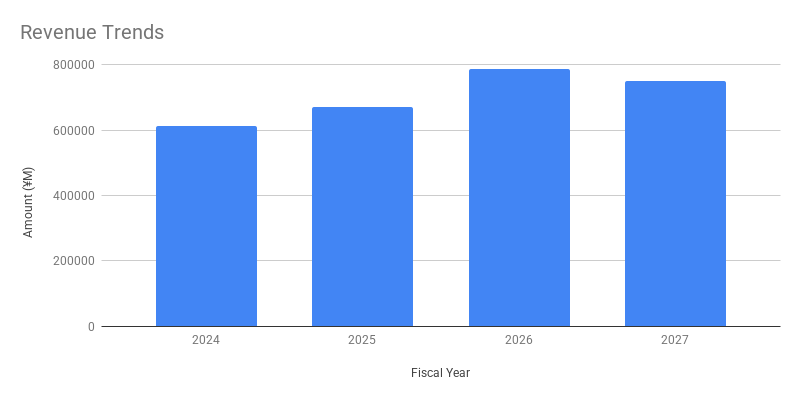
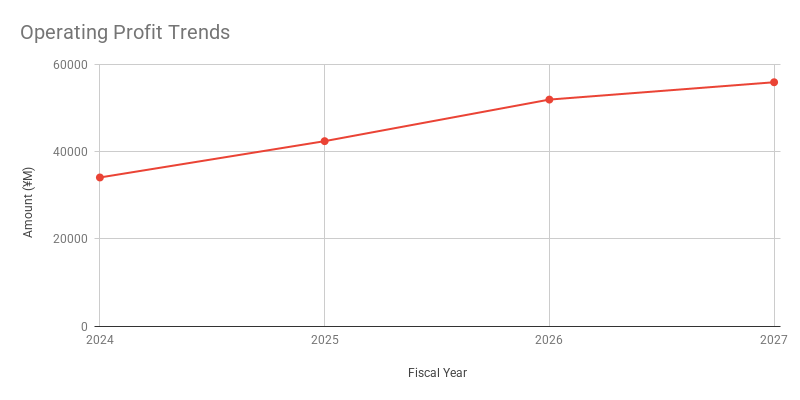
Excio Group Co., Ltd.’s financial results for fiscal year 2023 showed a decrease from the previous year, with net sales of 627,607 million yen and operating income of 32,552 million yen. While net sales grew by 103.8% year-over-year, operating income fell by 76.8% compared to the previous year.The main factors were an increase in selling, general, and administrative expenses (SG&A), particularly soaring labor and logistics costs, which put pressure on profits. The outlook for fiscal year 2024 calls for a slight increase to revenue of 614,095 million yen and operating income of 34,121 million yen, though these figures still represent a downward trend compared to the previous year.Revenue is projected to reach 670,822 million yen in fiscal year 2025 and 787,715 million yen in fiscal year 2026, with the renewable energy business and the development of digital infrastructure expected to drive future growth.Although the Exeo Group is maintaining stable growth, risk factors do exist, such as challenges in advancing new businesses and securing talent. In particular, a slowdown in new orders and the start of construction projects in the telecommunications carrier business is highly likely to affect performance and will be a key factor determining future growth.Overall, while the Exeo Group aims for sustainable growth, it has become clear that improving the efficiency of management resources and adapting to market competition are urgent priorities.
2. Earnings Outlook for the Fiscal Year Ending March 2024
The earnings outlook for the fiscal year ending March 2024 calls for a slight increase to 614,095 million yen in revenue and 34,121 million yen in operating income; however, these figures are trending downward compared to the previous year. This is linked to the slowdown in new orders and the start of construction projects, which will be a key factor determining future growth.Revenue is projected to reach 670,822 million yen in fiscal year 2025 and 787,715 million yen in fiscal year 2026, with the shift toward renewable energy and the development of digital infrastructure expected to be key drivers of future growth.In particular, the telecommunications carrier business has secured stable demand backed by strong business relationships with the NTT Group; however, rising SG&A expenses—especially soaring labor and logistics costs—are leading to a decline in operating profit. The Exeo Group considers efficient operations and a review of fixed costs to be urgent priorities, with managing SG&A expenses being particularly critical.Overall, while the Exeo Group is maintaining stable growth, risk factors such as the progress of new businesses and difficulties in securing talent do exist; therefore, investors need to closely monitor performance trends while taking these factors into account.
3. Medium- to Long-Term Growth Strategy
Excio Group Co., Ltd. has formulated a medium-term management plan covering the period from 2026 to 2030 and aims for sustainable growth based on its corporate philosophy: “Contributing to a society that seeks prosperity by cultivating technological capabilities.”Specific performance targets include net sales of 900 billion yen, operating income of 77 billion yen, ROE of 12.0%, and EPS of 260 yen. The Group will drive growth by strengthening its customer focus, embracing cutting-edge technologies, and developing talent.In particular, the Telecommunications Carrier Business is required to advance its technology to support the widespread adoption of digital social infrastructure, while the Social Infrastructure Business will specialize in the electrical equipment sector to address customer challenges. The System Solutions Business plans to promote generative AI and data-driven management to provide high-value-added services.In terms of capital expenditures, the company plans to invest approximately 7,524百万円 to establish a new Comprehensive Technology Center in the Telecommunications Carrier Business, thereby building a foundation for technological advancement and customer trust. Sustainability initiatives will also be strengthened, with the goal of reducing environmental impact by aiming for a 100% purchase rate of electricity derived from renewable energy by fiscal year 2030.In terms of new business development, the Systems Solutions Business will expand into new markets using generative AI technology and advance into overseas markets, with particular expectations for building distribution networks in Singapore and Indonesia. In the Social Infrastructure Business, entry into the renewable energy market is planned, and the company expects to construct urban infrastructure and provide related services.The financial targets for fiscal year 2030 serve as a roadmap for enhancing corporate value; in particular, ROE is a key indicator for maximizing shareholder value. Risk management is also crucial, and the company is expected to enhance its competitiveness by flexibly adapting to changes in the business environment, strengthening its human capital strategy, and promoting diverse work styles.Through these strategies, the Exeo Group aims to achieve sustainable growth and contribute to solving societal challenges.
- For fiscal year 2023, Exeo Group Co., Ltd. reported net sales of 627,607 million yen andoperating profit of 32,552 million yen—both down from the previous year. While a slight increase is expected for fiscal year 2024, the overall trend remains downward. While the renewable energy business and the development of digital infrastructure will be key drivers of growth, risks include challenges in advancing new business initiatives, difficulties in securing talent, and a slowdown in orders for the telecommunications carrier business.
- For the fiscal year ending March 2024, a slight increase to 614,095 million yen in revenue and 34,121 million yen in operating profit is expected; however, a slowdown in new orders and an increase in selling, general, and administrative expenses pose risks.
- Exio Group Co., Ltd. has formulated a medium-term management plan for the period from 2026 to 2030, aiming for revenue of 900 billion yen, operating profit of 77 billion yen, ROE of 12.0%, and EPS of 260 yen. The company aims to achieve sustainable growth through the enhancement of technical capabilities and human resource development.
Business Overview
1. Overview of the Business Model
Exeo Group Co., Ltd. is an information and communications construction group focused on telecommunications and urban infrastructure, with particular strengths in business with the NTT Group. In its major business segments—telecommunications carriers, urban infrastructure, and system solutions—flexibility and technical expertise are key to the company’s competitive advantage, as they enable it to provide diverse services tailored to market demand.The telecommunications carrier business provides integrated services ranging from design to construction and maintenance, consistently meeting customer needs. This business model provides a solid foundation for expanding services to meet the needs of existing customers and for new investments, enabling sustainable growth.
Against this backdrop, the Exio Group is entering the competitive market by leveraging its technical expertise, particularly in light of the expansion of 5G services. Furthermore, the pursuit of economies of scale through business integration is a key factor; the company is optimizing its resources through unique partnerships that set it apart from competitors. As a result, the Exio Group is establishing a framework capable of generating sustainable profits.
From an investor’s perspective, the robustness of the Exio Group’s business model is emphasized. In particular, the growth of its telecommunications carrier business and the potential for expansion into new markets are factors that could contribute to future increases in revenue and profits. Furthermore, the Group’s efforts to build new revenue models utilizing digital technology are also noteworthy.
2. Major Business Segments
The Exeo Group’s operations are divided into three main segments: the Telecommunications Carrier Business, the Urban Infrastructure Business, and the System Solutions Business.Consolidated revenue for fiscal year 2022 was 627.7 billion yen, with the Telecommunications Carrier Business accounting for 37.5% of that total, while the Urban Infrastructure Business and the System Solutions Business accounted for 32.4% and 30.1%, respectively. These businesses aim to grow in a way that complements one another.
The Telecommunications Carrier segment, in particular, leverages its close relationship with NTT Group companies as a key strength, securing stable demand by focusing on high-speed fiber-optic access services and construction projects in the mobile sector.The Urban Infrastructure segment focuses on public infrastructure construction and renewable energy-related projects, with growth expected particularly against the backdrop of government policies. The System Solutions segment provides services supporting digital transformation (DX), contributing to the securing of new revenue streams.
This balanced portfolio of business segments serves as the foundation supporting the Exeo Group’s sustainable growth. For investors, it is particularly important to keep a close eye on the growth of the Urban Infrastructure and System Solutions segments, as both are highly likely to contribute to future revenue expansion.
3. Market Position and Competitive Advantages
The Exio Group has established itself as a strong player in Japan’s information and communications and urban infrastructure sectors, with Comsys Holdings among its competitors. However, the Exio Group is distinguished by its close relationship with the NTT Group and the strong support it receives from public funds and regional resources. This strengthens the company’s market position and serves as a key factor in its credibility.
Furthermore, the Exio Group’s strength lies in the synergy among its various business segments.Growth in the Systems Solutions business is being driven by the development of new solutions through synergies with the telecommunications carrier business, in line with advancements in AI and digital infrastructure. In addition, the Exio Group is strengthening its ESG (Environmental, Social, and Governance) initiatives, which contribute to brand building and enhance customer trust.
For investors, the Exio Group’s competitive advantage stems not only from its technical capabilities but also from its corporate strategy, which prioritizes sustainable social contributions. Continued efforts will be required to further solidify its position in the market going forward.
4. Market Background and Future Outlook
The information and communications and urban infrastructure industries, in which the Exio Group operates, are in a constantly dynamic market environment driven by rapid technological innovation and regulatory changes. In particular, as 5G deployment progresses, investment in communications infrastructure is accelerating.Furthermore, the spread of digitalization and AI has heightened the importance of securing the technological infrastructure to support these advancements. In addition, interest in renewable energy is growing, leading to an increase in investment opportunities both domestically and internationally.
With a trend toward expanding business operations—including into international markets—the Exio Group is expected to expand its presence in emerging markets. Particularly in emerging markets such as Singapore and Indonesia, developing products and providing services tailored to local needs is considered crucial and is likely to present new growth opportunities for the company.
From an investor’s perspective, it is noteworthy that the Exio Group’s growth strategy extends beyond mere revenue expansion to include business initiatives that contribute to the realization of a sustainable society. Since further growth is anticipated in the future in the public works and renewable energy sectors, it is important to monitor these strategies.
5. Sustainability Initiatives
In pursuing sustainable growth, the Exio Group is placing a strong emphasis on ESG initiatives. In today’s world, where environmentally conscious business operations are fundamental and corporate activities that prioritize social contribution are essential, the company’s stance is particularly important.As investment in renewable energy continues to grow, the Exio Group is expected not only to benefit from this market growth but also to establish its own resource-efficient business model.
Furthermore, the Exio Group focuses on employee development and social contribution activities, recognizing that these efforts lead to enhanced corporate credibility and brand value. Looking ahead, the Group aims to develop technologies that meet customer needs while improving internal efficiency to achieve sustainable management.
For investors, sustainability initiatives are a key factor influencing future investment decisions. In particular, as companies that prioritize ESG tend to gain stronger customer support, the Exio Group’s stance will serve as a positive factor for its future growth.
This overview of the business has deepened our understanding of the Exio Group’s diversified business model, growth strategies, and sustainability initiatives. In the next chapter, we will focus on performance trends and examine specific figures and changes in the market environment.
Performance Trends
1. Overview of Recent Financial Performance
Excio Group Co., Ltd. operates in three main business segments: telecommunications carriers, urban infrastructure, and system solutions. The telecommunications business, in particular, continues to grow steadily, backed by strong business relationships with major domestic telecommunications groups, notably the NTT Group.Revenue for fiscal year 2022 was 594,840 million yen, representing a year-over-year growth of 103.8%. This was driven by increased demand for telecommunications infrastructure development and urban infrastructure construction; operating income reached 42,380 million yen, marking an increase of 115.7%.
However, in fiscal year 2023, although revenue reached 627,607 million yen, operating income decreased to 32,552 million yen, representing a 76.8% year-over-year decline. This was caused by an increase in selling, general, and administrative expenses, particularly due to soaring labor and logistics costs.Looking ahead to fiscal year 2024, while a slight increase is expected—with net sales projected at 614,095 million yen and operating income at 34,121 million yen—the figures are still on a downward trend compared to the previous year. This phenomenon is linked to a slowdown in new orders and the start of construction projects, which will be a key factor determining future growth.
Revenue is projected to reach 670,822 million yen in fiscal year 2025 and 787,715 million yen in fiscal year 2026. The shift toward renewable energy and the development of digital infrastructure are expected to be key drivers of future growth.Overall, while the Exeo Group is maintaining stable growth, risk factors remain, such as challenges in advancing new business initiatives and securing talent.
2. Analysis of the Income Statement
To evaluate the Exio Group’s performance, we will conduct a detailed analysis of the income statement. Revenue increased from 594,840 million yen in fiscal year 2022 to 627,607 million yen in fiscal year 2023, but is projected to decline to 614,095 million yen in fiscal year 2024.This decline is primarily attributable to slowing growth in the telecommunications business, creating a need to develop new business ventures.
The operating profit margin is another key indicator to watch; it fell to approximately 5.2% in fiscal year 2023. This indicates that maintaining profits is becoming increasingly difficult due to the impact of the business environment. Going forward, efficient operations and a review of fixed costs are urgent priorities, and managing selling, general, and administrative expenses (SG&A) is particularly important.
Furthermore, changes in the cost structure are also noteworthy. In fiscal year 2023, SG&A expenses reached 49,285百万円, necessitating the optimization of management resources and improvements in labor productivity. Overall, the Exeo Group needs to advance cost management and efficient operations in order to balance stability and growth in its income statement.
3. Balance Sheet Analysis
To understand the Exio Group’s financial position, we will analyze its liquidity and asset-liability structure based on the balance sheet. Total assets increased from 535,617 million yen in the fiscal year ended March 2022 to 577,941 million yen in the fiscal year ended March 2023.This increase was primarily due to growth in notes receivable and construction in progress, and liquidity can be assessed as sound. However, attention must be paid to cash flow management.
The equity ratio stands at 52.5%; while the company maintains financial soundness, the fact that this ratio has been trending downward year after year could be a cause for concern. In particular, the increase in long-term borrowings is driving up financing costs, and it is necessary to consider the future burden of interest payments and other expenses. Thus, the downward trend in the equity ratio may pose a risk to the Exio Group’s future financing.
4. Analysis of the Statement of Cash Flows
Let’s examine the trends in the Exio Group’s cash flow.Cash flow from operating activities was 26,406 million yen in fiscal year 2022 but decreased to 5,483 million yen in fiscal year 2023—a figure that raises questions about operational efficiency. This trend indicates a need for funds to support future growth investments.
Cash flow from investing activities was -20,388 million yen; while these investments are aimed at future growth, the outflow of funds could also put pressure on profits. It is necessary to review the status of cash flow from financing activities and improve the efficiency of fundraising.Overall, the Exio Group’s cash flow may indicate fragile liquidity, requiring cautious measures in future operations and planning.
5. Analysis of Performance Indicators
When evaluating the Exio Group’s performance metrics, ROE and ROA figures are particularly important. ROE stands at a stable 9.4%, indicating management efficiency based on return on equity. Furthermore, ROA (return on assets) reflects the overall profitability situation, including liquidity, and the Group must ensure stable profitability.EBITDA is also an indicator of competitiveness within the industry, and there is a need to improve operating efficiency going forward. Trends in these performance metrics make it clear that while the Exio Group is pursuing efficient business operations, it also needs strategies to enhance its competitiveness.
End of Chapter
An analysis of the Exio Group’s performance trends reveals that while sales and operating income are showing an upward trend, net income and cash flow remain unstable. Consequently, the company faces an urgent need to optimize the use of its management resources and adapt to market competition, and attention is focused on how it will execute its future growth strategy.For investors, risk assessment based on these performance trends is essential.
Medium-Term Management Plan / Growth Strategy
1. Overview of the Mid-Term Management Plan
Exio Group Co., Ltd. has formulated a medium-term management plan covering the period from 2026 to 2030. This plan is based on the company’s corporate philosophy: “Contributing to a society that seeks prosperity by cultivating technological capabilities.” In light of recent fluctuations in the economic environment, the plan incorporates specific measures to achieve sustainable growth.
The three main business segments are the Telecommunications Carrier Business, the Social Infrastructure Business, and the System Solutions Business. Strengthening customer focus, embracing cutting-edge technologies, and people-centered management are incorporated as drivers of growth. In particular, the Telecommunications Infrastructure Business requires technological advancements to promote the widespread adoption of digital social infrastructure.The Social Infrastructure Business specializes in the electrical equipment sector and aims to solve customer challenges. In the System Solutions Business, generative AI and data-driven management are being promoted, with plans to provide high-value-added services.
The specific performance targets for 2030 are revenue of 900 billion yen, operating income of 77 billion yen, ROE of 12.0%, and EPS of 260 yen. This vision serves as a guiding principle to contribute to solving societal challenges and supporting sustainable development.
To ensure the company’s growth, a customer-centric approach, cutting-edge technology, and the development of human capital are essential; by combining these elements, the Exio Group is expected to strengthen its competitiveness while building a foundation for the future.
2. Investment Plans and Key Initiatives
The medium-term management plan includes specific initiatives related to capital investment and research and development. In particular, the telecommunications carrier business requires further expansion of facilities, and plans are in place to establish new comprehensive technology centers in Kawagoe, Fuchu, and Fukuyama.The total investment is projected to be approximately 7,524百万円, and this is expected to lay the foundation for technological advancement and customer trust.
Leveraging advances in AI technology, the Systems Solutions business is currently conducting R&D focused on generative AI. The goal is to support customers’ digital transformation by enhancing data analysis and remote tracking technologies, thereby contributing to improved business efficiency.
In addition, sustainability initiatives are being strengthened, with a goal of sourcing 100% of electricity from renewable energy sources by fiscal year 2030. The aim is to contribute to the realization of a sustainable society while reducing environmental impact.
These measures serve as the foundation for enhancing the company’s competitiveness and earning customer trust, making them key factors for investors in supporting the company’s business growth.
3. New Business Initiatives and Growth Strategies by Business Segment
The Exeo Group is also focusing on developing new businesses. In the Systems Solutions business in particular, the company plans to use generative AI technology to tap into new markets. By adopting this technology, the company aims to respond quickly to customer needs and enhance its competitiveness.
The Group also plans to expand into overseas markets; specifically, in Singapore and Indonesia, it is building distribution networks based on the services it provides. Strengthening its international presence will enhance the Group’s competitiveness in these markets.
In the social infrastructure business, the Group plans to enter new renewable energy markets, with expectations for the construction of urban infrastructure and the provision of renewable energy-related services. In response to future increases in demand, the Exio Group is expected to enhance its future profitability by implementing strategies to capture new growth opportunities.
By combining new and existing businesses, the Exio Group aims to establish a competitive advantage in the market and achieve sustainable growth. This approach is also crucial for enhancing the value of the company as a whole.
4. Financial Targets and Their Significance
The performance targets for fiscal year 2030 are set at 900 billion yen in revenue, 77 billion yen in operating profit (an operating profit margin of 8.5%), a ROE of 12.0%, and EPS of 260 yen.These metrics serve as a roadmap for enhancing corporate value, and ROE, in particular, is a key indicator for maximizing shareholder value.
Setting financial targets enhances management transparency and strengthens relationships of trust with stakeholders. For investors, these figures are crucial indicators of the company’s growth potential and profitability, and will serve as a reference when making investment decisions.
Efforts in the area of ESG (Environmental, Social, and Governance) are also being strengthened; the adoption of renewable energy and the realization of a circular economy not only fulfill the company’s social responsibilities but also contribute to fundraising and building customer trust. Therefore, ESG initiatives cannot be overlooked as factors that contribute to enhancing corporate value.
Corporate activities aligned with these financial goals are essential for ensuring long-term growth and sustainability.
5. Risk Management and Future Outlook
Risk management in the business environment is a critical element of the medium-term management plan. Since various external factors—such as the situation in the Middle East, trade policies, and their impact on consumer spending—can affect corporate performance, vigilance regarding risks is essential.
By flexibly reviewing risk assessments and countermeasures and strengthening organization-wide risk management, we will improve our ability to respond to change. In particular, given concerns over a shortage of engineers and intensifying market competition, strengthening our human capital strategy is crucial.
By focusing on securing and developing young talent and promoting diverse work styles and career support, the company will enhance internal diversity and create an environment that fosters innovation. Through its Mid-Term Management Plan, the Exio Group is expected to build a foundation as a flexible organization capable of adapting to change and achieving future growth.
The Exio Group’s medium-term management plan and growth strategy are strategically aligned with the current business environment and are noteworthy for setting specific financial targets and growth drivers. To pursue sustainable growth and enhance corporate value, the company must regularly analyze its performance and progress and make appropriate investment decisions.
News & Topics
1. Announcement of the Mid-Term Management Plan
The Exeo Group has announced its medium-term management plan covering the period from 2026 to 2030. Under the theme “A New Stage: Harnessing Change to Leap Forward as a Unified Group Through Solid Technology and the Growth of Our People,” this plan aims to enhance value-added services and productivity through a customer-centric approach.The plan emphasizes measures to create new business models and support growth, with a particular focus on achieving balanced growth across the telecommunications infrastructure, social infrastructure, and system solutions businesses.
The business plan sets targets to achieve revenue of 900 billion yen, operating income of 77 billion yen (an operating income margin of 8.5%), a return on equity (ROE) of 12.0%, and earnings per share (EPS) of 260 yen by fiscal year 2030.These targets serve as benchmarks for the Exeo Group’s pursuit of sustainable growth and indicate that management will be conducted with a long-term perspective. According to experts, if this plan progresses appropriately toward its realization, it has the potential to enhance the company’s competitiveness and contribute to sustainable development.
From an investor’s perspective, this medium-term management plan is a key indicator of new growth opportunities and fosters expectations for improved business performance. While successful progress is expected to enhance corporate value, the company will need to overcome challenges during implementation, making risk management a critical factor.
2. Recent Business Partnerships
In 2023, the Exio Group formed a business alliance with Terra Motors, aiming to contribute to the development of urban infrastructure and the energy sector. This alliance is expected to accelerate the Group’s international expansion in the renewable energy and smart energy sectors, presenting a significant growth opportunity for the Exio Group.Behind this partnership lies the corporate responsibility to build a sustainable society, which aligns with the Exio Group’s sustainability philosophy.
Furthermore, through a business partnership with the former Showa Electric Wire & Cable Holdings in 2021, the Group has also entered the offshore wind power generation project sector, a development that demonstrates the company’s presence in the renewable energy market. Experts point out that the know-how and networks gained through such partnerships will undoubtedly have a positive impact on the Exio Group, and future developments are being closely watched.
For investors, these business alliances are viewed as part of the company’s strategy to diversify risk and build new business models, and they represent areas where growth is expected. However, it is also necessary to consider the risk that the success or failure of these alliances—or difficulties in their implementation—could affect short-term business performance.
3. Promoting Technological Development and Innovation
The Exio Group continues to expand its business focused on 5G networks, a next-generation communication technology, and is proceeding with construction projects to provide high-speed fiber-optic access services and accommodate increasing data traffic. In particular, the Group is placing a strong emphasis on proposing system solutions that utilize generative AI technology, and plans to establish a Generative AI Center in fiscal year 2025.This center will consolidate technology and information, enabling flexible responses tailored to customer needs.
Experts assess that these technological developments will enhance the Exio Group’s competitiveness and note that they have the potential to play a significant role in the industry as a whole. Furthermore, the widespread adoption of 5G networks is expected to accelerate digitalization and contribute to the expansion of related businesses.
From an investor’s perspective, the Exio Group’s technological innovations are drawing attention as part of its growth strategy, leading to entry into new markets and the strengthening of existing services. However, it is necessary to objectively assess risks related to the costs of introducing new technologies, intensifying market competition, and the maturity of these technologies.
4. Sustainability Initiatives
The Exeo Group recognizes the realization of a sustainable society as part of its corporate social responsibility and is actively implementing initiatives from an ESG (Environmental, Social, and Governance) perspective. In particular, aiming to expand the use of renewable energy and reduce CO2 emissions, the Group has set a goal of achieving a 100% purchase rate of electricity derived from renewable energy by fiscal year 2030.It has also announced plans to increase the adoption rate of low-emission vehicles (such as EVs) to 100% by fiscal year 2025.
Experts analyze that these initiatives will enhance the company’s brand value and help garner support from consumers and investors. Furthermore, they note that sustainability is a critical component of business strategy, as the Exio Group’s environmental considerations also contribute to long-term risk management and regulatory compliance.
For investors, a commitment to sustainability is one aspect that demonstrates a company’s growth potential and reliability, and it is a key factor that cannot be overlooked when considering future growth prospects. However, it is also important to note that changes in environmental regulations and market competition may become new risk factors for the company.
5. Changes in the Business Environment and Risk Management
The Exio Group is closely monitoring changes in the business environment and recognizes that rising prices and instability in the international situation could affect its business performance. Furthermore, the Group has established risk assessment and management systems to address the situation in the Middle East and fluctuations in the global economy, and is strengthening measures against natural disasters and information security risks.Management places a high priority on flexible decision-making and is working to strengthen compliance frameworks and internal audit systems to address risk factors.
Experts have commented that conducting phased risk assessments enhances a company’s ability to adapt to future uncertainties. Such risk management is essential for ensuring corporate sustainability and is also crucial for mitigating the impact of any issues that may arise.
From an investor’s perspective, the strengthening of a company’s risk management framework is reassuring and suggests stable management. However, it is important to continue assessing vulnerability to external factors, and international market trends, in particular, must be monitored constantly.
6. Employee Health and Safety
The Exio Group places a high priority on employee health and safety and is committed to creating an environment where employees can work in good physical and mental health.In 2024, the Group established the “Excio Group Health Management Declaration” and the “Basic Policy on Health Management,” clearly outlining its commitment to maintaining and promoting the health of employees and their families. In particular, the Group is focusing on implementing DEIB (Diversity, Equity, Inclusion, and Belonging) to foster an organization that respects diversity.
Experts emphasize that health management leads to improved employee morale and increased productivity, and it is viewed as a means of strengthening the corporate foundation for sustainable growth. As these initiatives progress, the company is expected to fulfill its social responsibilities and enhance its credibility and appeal.
For investors, ensuring a positive work environment is a factor directly linked to corporate value, and a commitment to employee health and safety serves as a driver of competitiveness. However, implementing these initiatives requires certain costs and resources, and how these are managed serves as an indicator of the company’s stance.
Through these wide-ranging initiatives, the Exio Group is pursuing sustainable growth and social contribution. This corporate stance is supported by flexibility in the current business environment and proactive innovation, and further growth can be expected. Investors need to closely monitor the strategic direction the company sets and its responsiveness to market needs to assess its future performance outlook.
Company Overview
1. Basic Corporate Information
EXEO Group, Inc. is a leading company in the information and communications construction industry, headquartered in Shibuya Ward, Tokyo.Since its establishment in 1954, the company has provided high-quality services through telecommunications carriers, urban infrastructure, and system solutions. In particular, for telecommunications carriers, it offers a one-stop service that handles design, construction, and maintenance all under one roof, delivering highly reliable operations.Keigo Kajimura, President and CEO, has contributed to the development and implementation of corporate strategy. Under the management philosophy of “Cultivating Technical Expertise, Pursuing Prosperity, and Contributing to Society,” the company is committed to realizing a sustainable society. With 152 subsidiaries and 15 affiliated companies, the group has established a strong international presence.
A key feature of the company is its global vision and the wide range of services it offers, spanning from the design and construction of telecommunications infrastructure to digital transformation. For investors, the Exeo Group is a company with a stable business foundation and a structure capable of responding flexibly to market changes, and it is expected to continue growing in the future.
2. Business Activities and Structure
The Exio Group not only has a division specializing in infrastructure construction for telecommunications carriers but also operates a diverse range of businesses, including urban infrastructure, ICT solutions, and the development of environmental technologies. This diversity serves as a key factor in enhancing competitiveness by diversifying risk while simultaneously generating synergies through mutual complementarity across different industries.
For telecommunications carriers, the Group provides integrated services encompassing design, construction, and maintenance, and in recent years has been responding swiftly to 5G and next-generation communication technologies. Additionally, it has expanded into fields such as renewable energy and waste management and is actively developing environmental conservation technologies. These initiatives stem from the Group’s commitment to contributing to corporate sustainability.
For investors, the Exeo Group’s business diversification is a key factor in enhancing earnings stability and growth potential. The company’s ability to swiftly adjust its strategies in response to market needs will likely contribute to maintaining its competitive advantage going forward.
3. Organizational Structure and Personnel
The Exio Group’s organizational structure is built around three main business divisions: telecommunications carriers, urban infrastructure, and system solutions. This structure is designed to establish efficient business processes, and each division is composed of personnel with specialized expertise.The management team comprises professionals with diverse backgrounds, including Shigeki Hayashi, CFO, who is responsible for financial strategy, and Koji Tanaka, who oversees the West Japan Headquarters.
In particular, CEO Keigo Kajimura draws on his extensive experience and knowledge to formulate and execute corporate strategy, setting the overall direction for the company. The management team is actively promoting the adoption of new technologies and innovation, and is strongly committed to realizing a sustainable society.
From an investor’s perspective, an effective organizational structure and an experienced management team serve as key indicators of the company’s reliability and its ability to adapt to volatile markets.
4. Research and Development and Innovation
The Exeo Group has a research and development framework designed to support sustainable growth. Specifically, it is focusing on developing new solutions related to telecommunications infrastructure and environmental technologies. In particular, it is establishing a foundation to maintain its competitive edge against other companies in the deployment of 5G networks and the adoption of IoT technologies.
Additionally, a recent partnership includes a business alliance with Terra Motors. This partnership is intended to drive progress, particularly in the renewable energy sector, with the goal of strengthening competitiveness in the field of offshore wind power generation. The company’s commitment to technological development aimed at realizing a sustainable society will likely be a major factor in enhancing its corporate value.
For investors, investment in research and development serves as the foundation for sustainable earnings and is an indispensable element when considering long-term growth. The new market opportunities created by innovation are a key factor in ensuring the Exio Group’s future growth.
5. ESG and Sustainability Initiatives
The Exio Group is actively advancing its ESG (Environmental, Social, and Governance) initiatives. Amid growing awareness of environmental issues, the Group is focusing on the adoption of renewable energy and the development of waste management technologies, aiming to ensure that its business activities contribute to a sustainable society.The fact that environmental considerations are translated into concrete actions based on the company’s management philosophy also contributes to the long-term enhancement of corporate value.
As a result, the Exio Group is more likely to be viewed favorably by investors as a company that fulfills its social responsibilities. Particularly in today’s business environment, where sustainable growth is essential, high-quality ESG initiatives are a key factor in enhancing a company’s competitiveness and brand value.
These initiatives will likely remain indispensable elements of the Group’s future growth strategy as well. From an investor’s perspective, fulfilling corporate social responsibility is expected to further enhance the company’s appeal as a long-term investment opportunity.
Exio Group Co., Ltd. is an attractive company in various respects, ranging from its diverse business operations centered on telecommunications infrastructure to its initiatives aimed at sustainable growth. In particular, investment decisions should be made with a focus on management’s strategies and policies, organizational structure, and approach to technological innovation.
Shareholder Returns
1. Dividend Policy and History
Excio Group Co., Ltd. regards returning profits to shareholders as a key management priority and maintains a consistent dividend policy. In particular, while using the dividend on equity (DOE) ratio as a basic indicator, the company strives to return value to shareholders through stable dividends.Specifically, the company has set a target dividend payout ratio of 4.0% and places a high priority on the stability of dividends for shareholders.In this regard, the company plans to increase dividends to 96 yen per share in fiscal year 2022, 102 yen in fiscal year 2023, and 120 yen in fiscal year 2034, demonstrating flexibility in response to changes in the economic environment and business performance.
Furthermore, the dividend policy is based on two dividend payments per year, with an interim dividend decided by the Board of Directors and a year-end dividend decided at the Annual General Meeting of Shareholders.This transparent approach serves as a key measure for enhancing shareholder trust and increasing corporate value. In particular, the phased dividend increase planned for fiscal year 2025 is a strategy that reflects expectations for economic recovery from the COVID-19 pandemic.
The Exeo Group’s dividend policy is significant not only for the benefit of shareholders but also as a measure aimed at fostering corporate growth.The Group maintains the perspective that pursuing sustainable growth—by investing in human resource development and digital transformation (DX) in parallel with the utilization of retained earnings—ultimately leads to shareholder returns. Therefore, this dividend policy aligns with the Group’s overall long-term growth strategy.
2. Share Buybacks and Their Impact
The Exeo Group actively implements share buybacks as part of its shareholder return policy.Share buybacks are viewed as a method to enhance the flexibility of capital policy and are positioned as a means to maximize shareholder value. Under the latest plan, the company intends to repurchase up to 2,000,000 shares in fiscal year 2026, with the total amount expected to reach 4,000百万円.
The objective of share buybacks is to reduce the number of outstanding shares. By preventing dilution, this is expected to improve earnings per share and dividend yields for existing shareholders, as well as contribute to an increase in the stock price. Additionally, the company benefits from the ability to adjust the supply-and-demand balance for external capital and enhance its credibility both domestically and internationally.In particular, as the economic environment is expected to recover gradually in fiscal year 2025, an increase in profits returned to shareholders is anticipated.
Furthermore, one advantage of share buybacks is that, unlike cash dividends, they reduce the tax burden.Historical data also shows that companies tend to see their stock prices rise following share buybacks, making this an attractive approach for investors. For the Exeo Group, share buybacks serve not merely as a means of absorbing capital, but also as a measure that contributes to improving capital efficiency with an eye toward future growth.
3. Quantitative Analysis of Shareholder Returns
From the perspective of shareholder returns, the Exio Group’s total annual dividend payout has been steadily increasing. For fiscal year 2026, the company plans to pay an interim dividend of 40 yen and a year-end dividend of 40 yen, for a total annual dividend of 80 yen. This policy is designed to provide shareholders with stable returns while also taking into account the retained earnings necessary for growth.
Furthermore, the historical dividend payout ratio has been stable; as indicated by the figures of 51.8% for fiscal year 2022 and 39.6% for fiscal year 2023, this policy is intentionally designed to promote shareholder returns. As a result, the Exio Group will be able to enhance shareholder trust from a long-term perspective and establish its reputation as a growing company.In particular, a high dividend payout ratio of 55.7% clearly demonstrates that profits are being channeled toward shareholder returns, which serves as a positive signal to investors.
Thus, it can be said that the Exio Group’s shareholder return policies are clearly communicated through concrete figures and offer an attractive option to investors.
4. Alignment with Financial Strategy
The Exio Group’s shareholder returns are deeply linked to its financial strategy.To ensure sustainable corporate growth, it is essential to strike a balance between shareholder returns and corporate investment. Therefore, measures such as the dividend policy and share buybacks are implemented in a manner consistent with the company’s long-term strategy. In particular, even when allocating resources to future growth areas (such as digital transformation and M&A), the company consistently maintains a commitment to maximizing shareholder value.
Specifically, the Group has adopted a strategy of making proactive investments while maintaining stable cash flow by controlling the dividend payout ratio and securing necessary retained earnings. This approach makes it possible to ensure corporate growth while also delivering shareholder returns. Consequently, it is clear that the Excio Group views shareholder returns not merely as a short-term measure, but as a foundation for the company’s sustainable growth.
5. Future Shareholder Return Initiatives and Outlook
The Exio Group’s future shareholder return initiatives are central to its corporate strategy and are the subject of high expectations. In particular, while further dividend increases and shareholder return measures through share buybacks are anticipated, concrete investments to support corporate growth are also essential.Allocating resources to digital transformation and M&A will not only enhance corporate value but also serve as a key driver for increasing future returns to shareholders.
Such a shareholder return policy demonstrates a commitment to communication with investors and requires maintaining transparency in information. A key challenge moving forward will be to present a long-term outlook to shareholders and enhance the company’s credibility by meeting their expectations.
These measures are closely linked to the Exio Group’s growth strategy and are key elements in supporting the company’s sustainable growth while meeting shareholder expectations. It is expected that the approach to shareholder returns will continue to evolve, contributing to the maximization of corporate value.
The Exio Group’s shareholder return policy is expected to continue evolving while remaining consistent with its past track record. The Group is expected to maintain a stance of reliably fulfilling its responsibilities to shareholders with the aim of enhancing corporate value.
The Exio Group’s specific shareholder return measures and track record provide attractive long-term options for investors, and attention is likely to remain focused on these developments in the future.
Business Risks
1. Factors Affecting Business Performance
The Exio Group’s business performance relies on the telecommunications carrier business as its primary source of revenue and is particularly dependent on the NTT Group.As reported, revenue for fiscal year 2023 is projected to increase from 614,095 million yen to 670,822 million yen, and further to 787,715 million yen; however, this growth depends primarily on demand within the telecommunications industry.If capital expenditures by telecommunications carriers—the company’s customers—are curtailed, this will directly impact business performance.
Fluctuations in market demand and the competitive environment pose risks to the company’s financial performance. In particular, while demand for telecommunications infrastructure related to 5G and digital transformation (DX) is high, it could be affected by the economic environment, government policies, and intensifying competition. Since financial performance is strongly influenced by these factors, investors must continue to monitor changes in the market environment.
Furthermore, it is crucial for the Exio Group to manage internal factors affecting its business performance. If it becomes difficult to secure human resources and technical personnel, there is a risk that project progress will stall. Training and recruitment efforts to maintain the provision of high-quality services are essential, and as competition intensifies across the industry as a whole, sustained efforts are required.
For investors, it is important to understand that the Exio Group’s performance depends on changes in the telecommunications market, trends in customer capital expenditures, and the management of internal resources, and to grasp the mechanisms behind fluctuations in its performance.
2. Industry-Specific Risks
The construction industry, to which the Exio Group belongs—particularly the information and communications infrastructure and urban infrastructure sectors—faces various industry-specific risks. First among these is the rapid pace of technological innovation.With the spread of 5G and the Internet of Things (IoT), advanced technologies are required, and a shortage of engineers could lead to project delays or a decline in quality. The risk of costs skyrocketing as a result cannot be ignored.
Risks related to regulations and policies are also industry-specific challenges. Policy changes regarding real estate and public infrastructure affect funding and construction contracts, so constant vigilance is required. For example, a policy change regarding renewable energy projects could drastically alter business operations.
Furthermore, material procurement risks are a problem facing the modern construction industry. Amid ongoing supply instability caused by natural disasters and international trade friction, rising costs and delivery delays can erode customer trust. In addition, cybersecurity risks must not be overlooked.As an information and communications infrastructure company, the risk of losing public trust increases significantly if losses occur due to data breaches or intrusions resulting from cyberattacks.
Therefore, the Exeo Group must accurately identify industry-specific risks and strengthen risk management as the key to maintaining its competitive advantage.
3. Financial and Management Risks
The Exio Group faces a variety of financial and operational risks related to financing, cash flow management, and internal controls. While financing relies primarily on bank loans, interest rate fluctuations and credit risks are ever-present. In particular, recent interest rate hikes carry the risk of increasing borrowing costs and squeezing profit margins.
In addition, there are concerns about a deterioration in financial soundness and cash flow. A decline in the current ratio and debt-to-equity ratio would make fundraising even more difficult, and soaring labor and raw material costs are expected to have a direct impact on business performance.
Strengthening internal controls is also crucial, as contract breaches, human error, and fraudulent activities can jeopardize a company’s credibility. Therefore, it is essential to establish a risk management framework to prevent problems before they arise.
Furthermore, caution is needed regarding the risks associated with M&A and new investments. If expected synergies are not realized or hidden liabilities emerge, the company’s valuation may decline. Particularly when expanding overseas, it is essential to quickly grasp changes in regional markets and take appropriate countermeasures.
Investors should recognize that thoroughly considering financial and managerial risks and evaluating financial transparency and the reliability of management strategies are directly linked to investment success.
4. Environmental and ESG Risks
As consideration for ESG (Environmental, Social, and Governance) issues gains importance, the Exeo Group is required to appropriately manage environmental risks.Consideration for climate change and the natural environment is a factor that cannot be ignored in a company’s sustainable growth. In particular, compliance with the TCFD (Task Force on Climate-related Financial Disclosures) serves as an important guideline for evaluating efforts to reduce greenhouse gas emissions.
Investment in renewable energy and low-carbon technologies is essential for companies to achieve sustainable business models; failure to do so carries the risk of losing the trust of customers and investors, leading to a decline in corporate value. Furthermore, if the products or services a company provides do not comply with future environmental regulations, there are concerns regarding legal risks and a decline in market competitiveness.
For this reason, it is important for the Exeo Group to periodically review its climate-related risk assessments and incorporate the findings into its strategy. Investors must verify whether a company’s ESG policies and environmental measures are contributing to improved sustainability and evaluate their impact.
5. Corporate Governance and Risk Management
Robust corporate governance is essential for the Exio Group to achieve sustainable growth. Strengthening internal controls and risk management serves as a fundamental means of enhancing corporate transparency and credibility. Clarifying the roles of the Board of Directors and the Audit Committee, as well as ensuring diversity, provides the foundation for earning the trust of the market.
In terms of business risk management, it is necessary to establish a system capable of responding swiftly to changes in the external environment. Furthermore, regular evaluations and feedback are key factors in enhancing the effectiveness of risk management. Ensuring transparency contributes to a more favorable assessment in financial markets and leads to an increase in corporate value.
Therefore, investors must evaluate a company’s governance and risk management systems to determine whether their transparency contributes to sustainable growth. By continuously balancing risks and opportunities, companies are expected to sustain long-term growth.
Overall, it is important for investors to understand the various risks faced by the Exeo Group and how they are managed.Since these risk factors are intertwined and influence one another depending on the company’s growth strategy and market conditions, it is essential to evaluate them from multiple perspectives when making investment decisions. Companies that manage risks appropriately are expected to offer stability for future investments, increasing their likelihood of achieving sustainable growth.
Financial Charts