True Data
Report Update:2026/05/09Location
1-10-11, Shiba Daimon, Minato-ku, Tokyo 105-0012, Japan
Business content
It is a leading data marketing company based on consumer purchasing data in Japan. In particular, the company provides value-added marketing solutions to consumer goods manufacturers and retailers by utilizing ID-POS data and analyzing consumer purchasing trends in detail.
Main Scheduled Dates
ーーー
Table of Contents
4416TSE Growth
Summary
True Data Co., Ltd. is a leading data marketing company in Japan that leverages consumer purchasing data. The company specializes in utilizing ID-POS data to conduct detailed analyses of consumer purchasing trends, providing high-value-added marketing solutions to consumer goods manufacturers and retailers. Its main business segments are categorized into data analysis solutions for consumer goods manufacturers, retailers, and all industries, with each segment offering services tailored to different customer groups.For the fiscal year ending March 2023, the company reported revenue of 1,554,285 thousand yen, operating income of 48,468 thousand yen, and ordinary income of 49,166 thousand yen. Notably, net income decreased by 77.9% year-over-year. This decline in performance was influenced by intensifying competition and diversifying consumer needs, and the company will need to invest in AI and data analysis technologies moving forward.Under its medium-term management plan, the company aims to achieve revenue of 2 billion yen and operating profit of 160 million yen by the fiscal year ending March 2025, and plans to proceed with strengthening its data infrastructure and developing new services. In particular, the company places high priority on enhancing data analysis using AI technology and entering new markets, with an eye toward expanding into overseas markets. Recently, the company released its “POS Data Cleansing Service” and the AI tool “Potential Scan,” and is undertaking initiatives to improve data consistency and analytical capabilities.Furthermore, the company has announced a capital and business alliance with Itochu Corporation and is pursuing strategies to enhance competitiveness, such as the rollout of new services. While prioritizing financial soundness, the company is also considering a shareholder return policy and is looking into the possibility of paying dividends in the future. Among investors, expectations are growing that True Data’s growth strategy and the rollout of new services will contribute to an increase in corporate value.
1. Overview of FY2023 Financial Results
True Data Co., Ltd.’s FY2023 results showed revenue of 1,554,285 thousand yen, a 2.4% decrease year-on-year; operating profit of 48,468 thousand yen, a 24.2% decrease year-on-year;ordinary income of 49,166 thousand yen (down 21.6% year-on-year), and net income attributable to owners of the parent company of 13,231 thousand yen (down 77.9% year-on-year).The decline in performance was primarily due to diversifying consumer needs, intensifying competition, and the waning impact of new services and promotions introduced the previous year. In particular, cost of sales reached 675,000 thousand yen, with the cost of sales ratio remaining at approximately 47%. Although selling, general, and administrative expenses decreased to 846,374 thousand yen, reflecting efforts to improve cost efficiency, operating profit declined from 63,942 thousand yen in the previous year.On the balance sheet, total assets increased to 1,362,640 thousand yen, and the current ratio stands at a healthy 410.9%; however, the decline in cash flow is a cause for concern. Cash flow from operating activities decreased to 37,153 thousand yen, a sharp deterioration from the previous year’s 127,526 thousand yen.In terms of performance metrics, ROE stands at a low level of 1.2%, indicating that the efficient utilization of assets remains a challenge. Going forward, the company needs to invest in AI and data analysis technologies to enhance its competitiveness. Under its medium-term management plan, the company aims to achieve sales of 2 billion yen and operating profit of 160 million yen for the fiscal year ending March 2025, and plans to strengthen its data infrastructure and develop new services. Investors should closely monitor the company’s strategic direction for ensuring sustainable growth and trends in new product development.
2. Earnings Outlook for the Fiscal Year Ending March 2025
The earnings outlook for the fiscal year ending March 2025 targets net sales of 2 billion yen and operating profit of 160 million yen.True Data Co., Ltd. plans to drive growth centered on data utilization, with a particular focus on advancing the use of big data in the retail industry. The mid-term management plan includes key initiatives such as strengthening the data infrastructure, deepening AI and data analytics, expanding subscription-based services, enhancing brand awareness, and developing new markets. Through these efforts, the company aims to visualize consumer behavior and advance marketing support.In particular, the company expects to improve the quality of marketing support provided to client companies by strengthening data analysis using AI technology. Additionally, the company plans to respond flexibly to domestic and international market conditions, promoting entry into new markets and cross-industry expansion; its entry into the Southeast Asian market is drawing particular attention. This will facilitate the shift from the physical to the digital world and enable the company to respond to the diversification of consumer needs.For investors, the appeal lies in the fact that the execution of this strategy is expected to diversify future revenue streams and lead to sustainable growth. However, risks exist in an increasingly competitive market environment, and preparations to address these risks must be made. True Data has demonstrated a commitment to achieving sustainable growth and enhancing corporate value through data utilization, and it is expected to build further competitive advantages while flexibly adapting to future market conditions and industry trends.
3. Medium- to Long-Term Growth Strategy
Under the philosophy of “Creating the Future with Data and Wisdom,” True Data Co., Ltd. has formulated a growth strategy in its medium-term management plan, aiming for revenue of 2 billion yen and operating profit of 160 million yen by the fiscal year ending March 2025.Specific measures include strengthening the data infrastructure, deepening data analysis utilizing AI technology, expanding subscription-based services, enhancing brand awareness, and developing new markets. In particular, the aim is to achieve sustainable growth by visualizing consumer behavior and advancing marketing support. In the domestic market, the company will proceed with the integration of ID-POS data and improve the accuracy of consumer trend analysis to optimize advertising and sales promotion strategies.In overseas markets, the company will prioritize expansion into Southeast Asia, aiming to provide services tailored to regional characteristics. Furthermore, the company plans to expand service offerings to other industries, securing new revenue streams through data utilization in the tourism and foodservice sectors. Regarding capital expenditures, the company will invest in strengthening its cloud infrastructure and in infrastructure for AI technology and big data processing to enable efficient data processing.Through R&D investment, the company will develop new data marketing tools and methodologies, focusing particularly on improving the accuracy of AI-driven data analysis. The mid-term management plan sets specific KPIs of 2 billion yen in revenue and 160 million yen in operating profit, which are expected to be achieved through the strengthening of a recurring revenue business model and the rollout of new services.Expected outcomes include improved operational efficiency and enhanced marketing effectiveness. As revenue contributions from new markets increase, the customer base is expected to diversify, and risk hedging effects are also anticipated. Risk factors include changes in the external environment, intensifying market competition, and risks associated with technological advancements; the company is required to implement risk hedging measures through strengthening collaborative networks and developing new sales channels.To support this initiative, the company is proceeding with the recruitment and development of personnel possessing specialized expertise in data utilization, while also enhancing training programs related to AI and data analysis. This will establish a foundation to support the company’s future growth and strengthen its ability to adapt quickly to market changes. True Data aims for growth through data utilization, demonstrating a commitment to sustainable growth and enhancing corporate value.
- For the fiscal year ending March 2023, the company recorded a 2.4% year-on-year decrease in revenue and a 24.2% year-on-year decrease in operating profit; moving forward, the company plans to increase technical investments in AI and data analysis.
- For the fiscal year ending March 2025, the company aims for revenue of 2 billion yen and operating profit of 160 million yen. Its strategy focuses on growth driven by data utilization, with a particular emphasis on strengthening data analysis using AI technology and entering new markets to achieve sustainable growth and enhance corporate value.
- In its medium-term management plan, True Data Co., Ltd. has set targets of 2 billion yen in revenue and 160 million yen in operating profit for the fiscal year ending March 2025. The company has outlined a strategy to achieve sustainable growth by strengthening its data infrastructure, leveraging AI technology, and expanding its subscription-based services.
Business Overview
1. Overview of the Business Model
True Data Co., Ltd. is a leading data marketing company based on consumer purchasing data in Japan. In particular, by utilizing ID-POS data to analyze consumer purchasing trends in detail, the company provides high-value-added marketing solutions to consumer goods manufacturers and retailers. The company’s business model is based on an integrated process of data collection, management, analysis, and utilization, which aims to help clients improve their competitiveness in the market.
At the core of its operations is customer-ID-linked POS data collected from retailers nationwide. By analyzing consumer preferences and purchasing behavior based on this vast dataset and supporting data-driven decision-making, the company aims to improve services for its client companies.Furthermore, True Data focuses on organizing information into an easily accessible format through its proprietary data visualization tools, “Eagle Eye” and “Shopping Scan,” thereby driving the digital transformation of its client companies.
True Data’s business model offers clear differentiators from competitors and possesses the flexibility to implement marketing strategies tailored to customer needs. In the digital age, expectations for data utilization are particularly high, and the company plays a role in elevating corporate marketing activities to a new level by meeting those needs.
2. Main Business Segments
True Data’s main business segments are categorized into data analysis solutions for consumer goods manufacturers, the retail industry, and all industries. Each segment provides marketing support tailored to different customer bases and needs, and the company anticipates stable revenue, particularly through recurring revenue models.
2.1 Solutions for Consumer Goods Manufacturers
For consumer goods manufacturers, the “Eagle Eye” analysis tool, which is based on purchase data, plays a key role. This tool tracks consumer trial and repeat purchase rates, contributing to new product development and the optimization of marketing strategies. In fiscal year 2023, revenue for this segment reached approximately 956 million yen, showing a slight increase from the previous year.
2.2 Solutions for Retailers
For retailers, we provide tools such as “Shopping Scan” to analyze consumer purchasing behavior. This enables retailers to enhance the effectiveness of store layout design, product selection, and promotional activities. Sales in this segment amounted to 308.6 million yen. Although a slight decline was observed, ongoing efforts to acquire new customers suggest significant potential for future growth.
2.3 Solutions for All Industries
Services for all industries include dashboards such as “Urecon” and “KURASHI360,” which perform marketing analysis of consumer data and trade area analysis. This segment, which recorded sales of 289.7 million yen, is advancing collaborations with educational institutions and local governments, making it a key factor in exploring new revenue opportunities.
Through these segments, True Data is strengthening its market competitiveness by deploying industry-specific solutions and providing value-added services tailored to customer needs.
3. The Company’s Market Position and Competitive Advantages
True Data has established a unique position in Japan’s data marketing market. In particular, by utilizing ID-linked POS data, the company maintains a clear competitive advantage over its rivals, driven by the following factors.
3.1 Data Volume and Quality
With consumer purchase data covering over 60 million people nationwide, True Data differentiates itself from competitors through the volume and quality of its data. This vast dataset facilitates deep insights into consumer behavior and market trends, serving as a key factor in maximizing the effectiveness of marketing initiatives for client companies.
3.2 Comprehensive Marketing Solutions
True Data provides end-to-end services ranging from data collection and analysis to proposals for clients, and this comprehensive support for client companies serves as a key differentiator from competitors. This comprehensiveness is a critical factor in responding swiftly to client needs and enhances the company’s credibility within the industry.
3.3 Strengthening Strategic Alliances
By pursuing strategic partnerships with companies such as Itochu Corporation and Nielsen, True Data is also strengthening its technological capabilities and sales networks. This enables the company to simultaneously improve both the speed and quality of service delivery to clients.
In this way, True Data maintains a unique market position by leveraging its expertise in data cleansing and analysis to provide consistent services to companies seeking to enhance their marketing capabilities.
4. Market Background
The Japanese consumer marketing market must respond swiftly to rapidly changing consumer needs. In particular, the advancement of digitalization following the COVID-19 pandemic has caused consumer purchasing behavior to shift significantly from traditional models. In this market environment, the importance of data utilization is growing ever more critical.
While the infrastructure for utilizing purchase data in marketing is in place thanks to the widespread adoption of POS systems and loyalty cards, challenges remain in their practical implementation. True Data provides an environment for data utilization that enables companies to achieve sustainable growth, thereby strongly supporting the digital transformation of its client companies.
In response to market changes, True Data is advancing data utilization tailored to consumer needs and playing a leading role in driving the digital shift in the retail industry. In this highly competitive environment, the company must strengthen its position within the industry by creating new value based on data.
5. Future Outlook and Challenges
True Data aims to enhance its data analysis services by advancing the adoption of AI and machine learning, anticipating further business opportunities. As demand continues to diversify, expanding data marketing into new industries will be key. In particular, expansion into sectors beyond consumer goods manufacturers and retail, as well as strengthening business partnerships, is crucial; the company is also considering the introduction of new services and expansion into international markets.
However, the company faces challenges regarding profitability and the need to strengthen cost management, and its reliance on specific clients is also a concern. It is urgent to solidify a new growth strategy for 2025 and build a sustainable business model. By responding swiftly to changes in the market environment and executing its strategy, True Data is expected to further accelerate its growth.
Financial Performance Trends
1. Recent Performance Overview
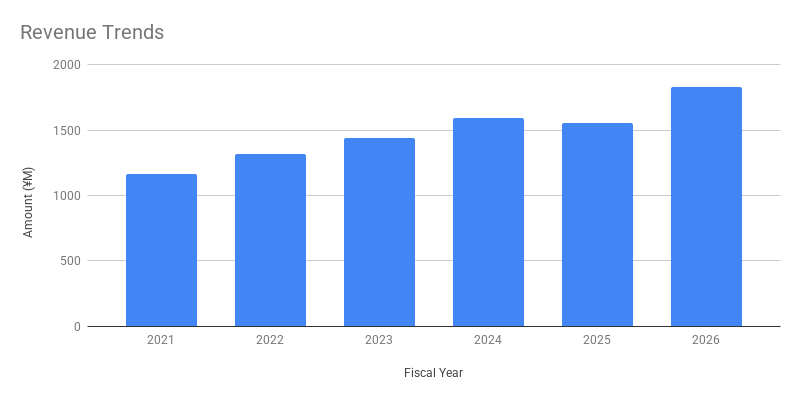
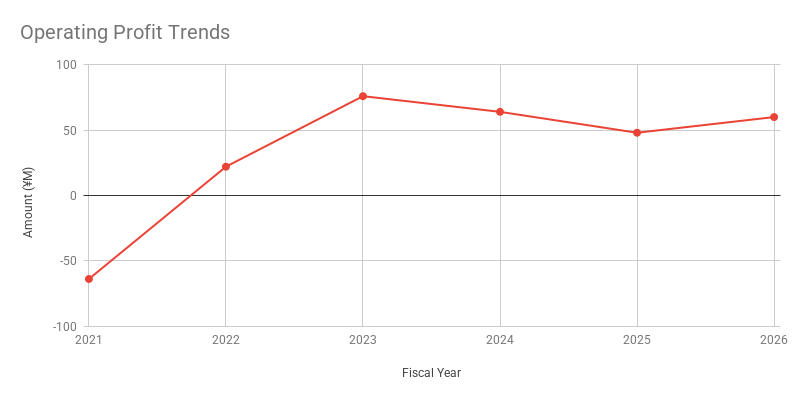
True Data Co., Ltd. continues to strengthen its position in the field of data marketing based on consumer purchase data.For the fiscal year 2023, the company reported revenue of 1,554,285 thousand yen (down 2.4% year-on-year), operating profit of 48,468 thousand yen (down 24.2% year-on-year), and ordinary profit of 49,166 thousand yen (down 21.6% year-on-year). Notably, net profit stood at 13,231 thousand yen, marking a 77.9% year-on-year decline.As the effects of the new services and promotions introduced the previous year begin to wane, the company is seeing an overall downward trend due to diversifying consumer needs and intensifying competition.
This decline in performance is directly attributable to the recent economic environment and intense market competition. Furthermore, while leveraging the foundation of past growth, it has become necessary to invest in new services and expand existing ones. Going forward, the company will need to enhance its competitiveness through technological investments in AI and data analysis. Investors should closely monitor strategic policies aimed at ensuring sustainable growth and trends in new product development.
2. Analysis of the Income Statement
Looking at the income statement, revenue has increased over the past few years, growing from 1,166,060 thousand yen in fiscal year 2021 to 1,440,271 thousand yen in fiscal year 2023. However, the growth rate slowed from fiscal year 2022 to fiscal year 2023, and the fact that it ultimately turned to a year-on-year decline of 2.4% is a cause for concern.This trend is likely due to the waning impact of the high-impact measures implemented in fiscal year 2021.
Cost of goods sold reached 675,000 thousand yen, with the cost of goods sold ratio remaining at approximately 47%, while selling, general, and administrative expenses decreased to 846,374 thousand yen, indicating that efforts to improve cost efficiency are yielding results. However, operating profit decreased from 63,942 thousand yen in the previous year to 48,468 thousand yen, highlighting the need to improve profit margins.Going forward, it is necessary to cut unnecessary costs and review sales activities, as this is expected to lead to a healthier profit structure. Therefore, strategic investments to establish efficient operations are urgently needed.
3. Balance Sheet Analysis
An analysis of the balance sheet for fiscal year 2023 reveals that total assets increased to 1,362,640 thousand yen, indicating that fixed assets were strengthened while offsetting the decrease in current assets from the previous year. The current ratio stands at a high 410.9%, indicating strong short-term debt repayment capacity; however, the decline in cash flow has become apparent.
On the liability side, total liabilities amounted to 321,841 thousand yen, a decrease from the previous year; in particular, the reduction in long-term borrowings enhances financial stability. The equity ratio exceeds 73%, suggesting stable operations can be expected, but liquidity challenges will likely be a focus moving forward. Going forward, it is desirable to seek investment opportunities while working to improve short-term cash flow management.
4. Analysis of the Cash Flow Statement
From the perspective of the cash flow statement, cash flow from operating activities decreased to 37,153 thousand yen, a significant deterioration compared to the 127,526 thousand yen recorded in the previous year. This decline resulted from an increase in accounts receivable, despite a pre-tax net profit of 22,831 thousand yen.
Cash flow from investing activities also decreased by 104,905 thousand yen, driven by expenditures related to the introduction of a new system. While concerns about the short-term financial situation are growing, system investments made from a long-term perspective have the potential to generate returns. In terms of financing activities, although the repayment of long-term borrowings has had an impact, the diversification of funding sources through the issuance of new shares has a positive effect on the company’s cash flow management.
5. Analysis of Performance Indicators
Looking at current performance indicators, ROE remains at a low level of 1.2%. This suggests that assets are not being utilized to their full potential, and improving efficiency will be required in the next management plan. ROA has also declined, and since the overall return on assets is falling, improvement is desired going forward.
It is noteworthy that EBITDA has decreased from the previous year due to a decline in operating profit; the relationship between cash flow and EBITDA is a key indicator for measuring the company’s actual earning power. Therefore, establishing an efficient operational structure and improving the profit structure will contribute to the company’s sustainable growth.
Taking a comprehensive view of overall performance, while True Data’s recent growth trend has stalled, the company has maintained its competitiveness and now has an opportunity to reevaluate its sustainable growth strategy. In the next chapter, we expect a detailed examination of financial soundness and future strategies based on these performance trends.
Mid-Term Management Plan / Growth Strategy
1. Overview of the Mid-Term Management Plan
A medium-term management plan involves a company setting strategic goals for a three- to five-year period with an eye toward future growth and formulating specific action plans to achieve them.True Data Co., Ltd., guided by its philosophy of “Creating the Future with Data and Wisdom,” aims for growth centered on data utilization and is working to leverage big data with a particular focus on the retail industry. The company aims to achieve sales of 2 billion yen and operating profit of 160 million yen for the fiscal year ending March 2025, and is proceeding with the enhancement of ID-POS data and the development of new services.
The mid-term management plan includes key initiatives such as strengthening the data infrastructure, deepening AI and data analytics, expanding recurring-revenue services, enhancing brand awareness, and developing new markets. The aim is to visualize consumer behavior and advance marketing support to achieve sustainable growth.
From an expert’s perspective, a mid-term management plan clarifies a company’s strategic direction and demonstrates stable future prospects to investors. By anticipating areas with growth potential and optimally allocating resources, the company can secure a competitive advantage. For investors, the content and degree of execution of the mid-term management plan serve as important criteria for making investment decisions.
2. Overall Strategy
True Data Co., Ltd.’s growth strategy aims to build new services and business models based on data collection and analysis. In particular, the company will strengthen data analysis using AI technology to enhance marketing support for client companies. Specifically, through marketing support tools such as “Eagle Eye” and “Dolphin Eye,” the company will enable real-time, advanced data analysis to maximize the effectiveness of clients’ advertising and sales promotion strategies.
Furthermore, the company will flexibly adapt to domestic and international market conditions to promote entry into new markets and cross-industry expansion. In particular, the development of data utilization models tailored to regional characteristics—with a focus on entering the Southeast Asian market—is a key initiative for unlocking this region’s growth potential.
This strategy will drive the shift from the physical to the digital world, enabling the company to respond to the diversification of consumer needs. Therefore, from an investor’s perspective, the major appeal lies in the fact that the execution of this strategy will diversify future revenue streams and is expected to lead to sustainable growth. On the other hand, risks exist in an increasingly competitive market environment, and preparations to address these risks must also be advanced.
3. Key Initiatives (Domestic/Overseas/By Business Segment)
Key initiatives of particular importance in True Data’s medium-term management plan include strengthening the data infrastructure, enhancing analytical capabilities using AI, expanding subscription-based services, raising brand awareness, and developing new markets. In the domestic market, the company will strengthen data governance and integrate ID-POS data to improve the accuracy of consumer trend analysis, thereby optimizing advertising and sales promotion strategies.
In overseas markets, the company will prioritize expansion into Southeast Asia, aiming to provide services tailored to regional characteristics. It also plans to expand service offerings to other industries, securing new revenue streams through data utilization in the tourism and foodservice sectors. Additionally, the company will intensify social media campaigns and PR activities to boost brand awareness and build a new customer base.
From an expert’s perspective, these initiatives are crucial for True Data’s sustainable growth, as building long-term relationships with customers and entering new markets will enhance the company’s competitiveness. Investors should keep a close eye on these high-value-added initiatives, as they have the potential to contribute to profit growth.
4. Investment Policy (Capital Expenditures / R&D, etc.)
True Data Co., Ltd.’s growth strategy includes a focus on capital expenditures, encompassing the enhancement of existing data analysis infrastructure and the adoption of new technologies. In particular, investments in strengthening cloud infrastructure and in infrastructure for AI technology and big data processing will enable efficient data processing and reduce operating costs.
Furthermore, through R&D investments, the company will advance the development of new data marketing tools and methodologies, with a particular focus on improving the accuracy of AI-driven data analysis. A system capable of flexibly responding to changing customer needs and delivering services immediately is essential.
This investment strategy will serve as the foundation for building a true competitive advantage, not only supporting long-term growth but also contributing to revenue stabilization. For investors, how the effects of capital expenditures and R&D investments are reflected in earnings is a key consideration, and striking a balance with the need to secure short-term profits is particularly important.
5. Results, Expected Effects, and KPIs
In its medium-term management plan, True Data Co., Ltd. has set specific KPIs of achieving 2 billion yen in revenue and 160 million yen in operating profit. This growth is expected to be realized through the strengthening of its recurring revenue business model and the rollout of new services, with the expansion of sales for the “Eagle Eye” service being a particularly critical factor.
Expected outcomes include improved operational efficiency and enhanced marketing effectiveness over the next three years. Furthermore, as sales contributions from new markets increase, the customer base is expected to diversify, providing a risk-hedging effect.
For investors, these results and anticipated effects serve as key indicators for assessing the company’s growth potential. However, it is also necessary to regularly monitor the progress and achievement of these plans and flexibly revise investment strategies as needed.
6. Approach to Risk Factors
Risk management is critical to True Data’s growth strategy. In particular, risks arise from changes in the external environment, intensifying market competition, and technological advancements. Uncertainties surrounding U.S. tariff policies and the economic environment could impact the company’s performance.
The company must implement risk hedging measures, such as strengthening its collaborative networks and developing new sales channels. Additionally, it is necessary to enhance customer trust and build long-term relationships by improving data visualization and transparency.
For investors, how companies address these risk factors impacts confidence in their sustainable growth, so this must be closely monitored.
7. Implementation Framework
Strengthening the organization is essential for executing True Data’s growth strategy. In particular, the company is actively recruiting and developing talent with expertise in data utilization. Furthermore, it is enhancing training programs in AI and data analytics, establishing a framework aimed at improving employee capabilities.
This execution framework serves as the foundation for supporting the company’s future growth and strengthens its ability to adapt quickly to market changes. For investors, how the company develops talent and contributes to business expansion is a key evaluation criterion.
Based on its mid-term management plan, True Data Co., Ltd. aims for growth through data utilization, and its initiatives demonstrate a commitment to achieving sustainable growth and enhancing corporate value. The company is expected to build further competitive advantages while flexibly responding to future market conditions and industry trends.
News & Topics
1. Launch of a New Service
True Data Co., Ltd. released its “POS Data Cleansing Service” in September 2023. This service standardizes the diverse POS data from different retailers into a unified format, providing an environment where consumer goods manufacturers can focus on data analysis. This service is expected to significantly reduce the time manufacturers spend on data cleansing and contribute to improving the effectiveness of their marketing strategies.
Against this backdrop, data consistency is becoming increasingly important in marketing and sales strategies. Many companies struggle with complex data environments, and the effort required for data cleansing has been hindering operational efficiency. True Data’s new service addresses this need and is expected to serve as a factor in enhancing the company’s competitiveness in the market. Investors should bear in mind that this service is likely to contribute to increased revenue and help materialize the company’s growth strategy.
2. Introduction of the AI Tool “Potential Scan”
The company plans to release “Potential Scan,” an AI-powered tool, in December 2023. This tool is designed to provide a visual overview of strategies aimed at boosting retailers’ sales and is intended to support store management and buyer decision-making.
The introduction of this tool is driven by the need for retailers to quickly leverage data and maintain their competitiveness. In particular, strategies that can efficiently secure sales are crucial in the post-COVID market. As AI adoption progresses, it is expected to enable rapid data analysis and precise marketing, ultimately contributing to increased sales. Investors need to closely monitor how the efficiency gains from this new tool will contribute to long-term earnings.
3. Capital and Business Alliance with Itochu Corporation
True Data Co., Ltd. has announced a capital and business alliance with Itochu Corporation. Through this alliance, the companies plan to launch a new service called “FOODATA ID-POS” to promote data utilization among consumer goods manufacturers and retailers. The new service began rollout in 2025, and is expected to enhance the competitiveness of both companies by promoting data-driven decision-making.
This strategic alliance is driven by the growing demand for data utilization in the food industry. In particular, by playing a pioneering role in data collection and analysis, True Data is likely to strengthen its position as a market leader. Investors should pay close attention to the synergies generated by this partnership and the growth potential stemming from the acquisition of new customer segments.
4. Expansion into Overseas Markets
True Data recently formed a business partnership with FPT Software in Vietnam to expand into that market. This partnership is expected to enable test marketing in overseas markets and provide new business opportunities for Japanese consumer goods manufacturers.
As the Vietnamese market is growing rapidly, the combination of True Data’s local market understanding and data marketing expertise has the potential to generate significant synergy. This expansion will serve as a means to increase revenue streams in international markets. Investors should focus on the revenue diversification brought about by entering emerging markets and understand that this strategy will significantly contribute to business growth if successful.
5. Social Contribution and Sustainable Growth
Under the philosophy of “Creating the Future with Data and Wisdom,” True Data is committed to social contribution and sustainable growth. As companies affected by the COVID-19 pandemic accelerate their digital transformation, the company’s data services are becoming increasingly important. In particular, the company plans to contribute to addressing social issues such as waste reduction and inventory reduction through the power of data utilization.
Such social contribution activities enhance a company’s brand value and help build trust with customers. Investors should note that when a company achieves sustainable growth, the likelihood of generating long-term returns increases. Consequently, ethical business practices are expected to yield stable returns.
6. Key Financial Indicators and Risk Management
Looking at the financial results for the fiscal year ended March 2023, while revenue decreased by 2.4% year-over-year to 1,554 million yen, operating profit increased to 48 million yen. In particular, the stable revenue model derived from subscription-based services will be a key factor supporting future growth. Additionally, the company has established a rapid risk management system centered around the President’s Office, creating a framework capable of responding appropriately to external factors.
A company’s commitment to thorough risk management instills confidence in investors. By responding flexibly to economic fluctuations, the company is likely to maintain long-term growth. Therefore, True Data’s risk management capabilities will be a key factor in ensuring the stability of its future business.
7. Vision for the Future and Investment Opportunities
True Data is pursuing sustainable growth under its medium-term management plan. The company has set targets of 2.0 billion yen in revenue and 160 million yen in operating profit for fiscal year 2025 and is implementing various initiatives to achieve these goals. Through this, the company aims to maximize corporate value and is executing strategies that directly lead to improved services for customers.
This approach offers attractive opportunities for investors. With a clear corporate vision and concrete growth strategies in place, shareholders can continue to invest with confidence. True Data’s sustainable growth is expected to remain a focal point in the future market environment.
Recent news and activities from True Data Co., Ltd. hold the potential to significantly impact the market through the company’s growth strategies and the launch of new services. Every aspect—including new services, capital alliances, and international expansion strategies—has the potential to contribute to the enhancement of corporate value, making it essential to keep a close eye on the company’s future developments.
Company Overview
1. Basic Company Information
True Data Co., Ltd. is a data marketing company headquartered in Shiba Daimon, Minato-ku, Tokyo, and was established in 2000. Hiroyuki Yonekura serves as the Representative Director and President. The company specializes in analyzing consumer data and providing marketing solutions by utilizing customer-ID-linked POS data obtained from retailers nationwide.Specifically, the company offers services such as the purchase data analysis tool “Eagle Eye” and “Shopping Scan” for the retail industry, and also provides “Dolphin Eye,” a data visualization tool. It is listed on the Tokyo Stock Exchange Growth Market with a capital of approximately 1.37 billion yen. The company employs 994 people, and its client base includes over 200 companies, such as drugstores and supermarkets.
The company’s corporate philosophy is “Creating the Future with Data and Wisdom.” While pursuing sustainable growth, it focuses on supporting data utilization that transcends regional and scale boundaries. The foundation of this company places a strong emphasis on contributing to society through data and providing value to customers.
2. History and Key Milestones
True Data’s history began in 2000 when it was established as a subsidiary of Mitsubishi Corporation. Subsequently, in 2008, Planet Co., Ltd. became the largest shareholder, driving the diversification of its business.In 2014, the company launched “Shopping Scan,” an ID-POS data analysis service for the retail industry, transitioning its business model to a consumer data marketing platform. Furthermore, it formed strategic partnerships with “Dolphin Eye” in 2016 and Nielsen Company in 2018, advancing initiatives to enhance data reliability.
The company listed on the Tokyo Stock Exchange Mothers Market in 2021 and moved to the Growth Market in 2022. More recently, in 2023, it released “Poswell,” offering new advertising solutions that leverage consumer purchase data. Furthermore, in 2024, the company is clearly committed to achieving sustainable growth through strengthening corporate sales and forming new business partnerships.
3. Organizational Structure and Key Management
True Data’s management team consists of members with industry experience and specialized expertise. CEO Hiroyuki Yonekura joined the company in 2011 after gaining experience at Gurunavi, Inc. starting in 2008, and has been leading its growth ever since. Naoko Shimazaki, Senior Executive Officer and Director, plays a key role as Head of the Data Marketing Division, while the board of outside directors includes experienced members such as Hiromasa Tamau and Yoshiharu Yuki.The executive committee meets monthly to engage in lively discussions regarding management policies and operational plans, enabling rapid decision-making.
This enables the development of new data-driven marketing solutions and the implementation of measures to enhance corporate culture. This organizational structure, which respects diversity and transparency, is a key factor supporting sustainable growth.
4. Competitive Advantage in the Market
True Data Co., Ltd.’s strength lies in its ability to leverage a nationwide consumer purchasing database to provide diverse marketing solutions. In particular, its analytical capabilities utilizing proprietary ID-POS data serve as a key differentiator from competitors. This technology is essential for responding swiftly to diversifying consumer needs and accurately grasping market trends.
Furthermore, with technological advancements, the incorporation of AI and big data analytics has enabled even more precise data analysis. This makes it possible to provide higher value-added services to client companies, thereby enhancing future growth potential. As the company continues to strengthen its transparency and governance, its position within the industry is expected to become increasingly solidified.
5. Future Outlook and Strategy
Looking ahead, True Data is expected to launch new services based on consumer purchase data. The company plans to expand into new sectors such as the tourism, foodservice, and automotive industries, requiring flexible strategies to adapt to changing consumer needs. The release of these new services is expected to further strengthen the company’s competitive advantage over rivals.
Furthermore, as data utilization plays a crucial role for both companies and local communities, efforts to enhance educational programs and contribute to the local economy will be strengthened. However, to maintain sustainable growth in an increasingly competitive market environment, constant review and adaptation of corporate strategy are essential.
In this way, True Data Co., Ltd. is pursuing sustainable growth as an innovator in the field of data marketing. For investors, the company is viewed as one that combines growth potential with stability, making its future developments highly anticipated.
With expectations arising from both perspectives, this chapter illustrates how True Data has established its market position and achieved sustainable growth. In the next chapter, we will delve deeper into how these factors impact the company’s value.
Shareholder Returns
1. The Significance of Shareholder Returns and True Data Co., Ltd.’s Policy
True Data Co., Ltd. regards shareholder returns as a key element of its management strategy. Generally, shareholder returns serve as an indicator of how a company returns profits to its shareholders and are a crucial factor for investors when evaluating a company’s financial health and growth potential. During a company’s growth phase, internal reserves are typically prioritized, and the decision not to pay dividends is commonly made.Given True Data’s current situation, the company has not paid dividends to date, as it has prioritized growth investments and the strengthening of its financial foundation.
On the other hand, management believes it is necessary to reinvest profits to enhance corporate value and is considering the implementation of dividends as a strategy for future growth. Therefore, the company is working to build up its retained earnings while exploring the possibility of future dividend payments. This is expected to help build trust with shareholders while achieving sustainable growth. Investors are encouraged to watch True Data’s growth journey while anticipating future dividend payments.
2. Dividend Policy and Performance
True Data’s dividend policy is designed with a focus on growth and aims to provide stable returns to shareholders based on business performance. Since its establishment, the company has prioritized growth investments. Despite posting profits for four consecutive fiscal years, retained earnings remain negative, resulting in a continued suspension of dividends. Regarding dividend payments, the current basic policy is to pay dividends once a year, though the possibility of interim dividends has been suggested depending on circumstances.
In the future, concrete discussions regarding profit distribution to shareholders are likely to proceed, taking into account market conditions and the status of retained earnings. It is expected that prioritizing the stability and sustainability of the dividend policy will be a surefire way to strengthen the relationship of trust with shareholders. For investors, even if no dividends are paid, a corporate strategy that offers growth potential is more meaningful and should serve as an indicator to be viewed from a long-term perspective.
3. Current Status of Share Buybacks and Their Impact
True Data has no specific plans or ongoing share buyback programs; this is viewed as a result of its cautious capital policy.While share buybacks are generally viewed as a means of enhancing shareholder value, True Data clearly prioritizes reinvesting equity capital to secure the resources necessary for growth. Given that the company is currently in a growth phase and has not yet generated sufficient profits, it makes sense to avoid shareholder returns at this time.
On the other hand, if share buybacks were implemented, the reduction in the number of outstanding shares would increase the stake held by remaining shareholders, and a rise in the stock price could be expected. However, given the current need to prioritize the company’s sustainable growth and securing investment for that growth, the implementation of share buybacks remains an issue that requires careful consideration. In the future, as growth strategies evolve, the company may consider share buybacks as an option for shareholder returns.
4. The Relationship Between Financial Soundness and Shareholder Returns
Financial soundness and shareholder returns are key factors supporting a company’s sustainable growth. The reason True Data is currently not paying dividends is that its retained earnings are negative; therefore, restoring the company’s sound financial position takes precedence over short-term returns. Initially, securing funds for growth investments and building up retained earnings are prioritized, as laying the groundwork for stable, long-term growth is essential.
In the future, as the company’s financial condition improves, we expect opportunities will arise to consider implementing dividends. To contribute to sustainable growth, the goal is for shareholder return policies to achieve a sustainable balance between “corporate growth” and “shareholder returns.” As investors, it is important to focus not only on short-term dividends but also on financial soundness, making investment decisions that contribute to stable growth.
5. Outlook for Shareholder Returns from a Medium- to Long-Term Perspective
True Data is a company in its growth phase, and since solid growth is expected over the medium to long term, the likelihood of shareholder returns being implemented in the future is increasing. As long as growth continues, profits are expected to be secured stably, and opportunities for returning profits to shareholders are expected to increase. While anticipating future economic conditions and market trends, management is required to act strategically and flexibly, which will likely lead to the gradual implementation of dividends.
However, at this stage, it is necessary to maintain a medium- to long-term perspective and continue investing in a manner that supports the company’s growth process. Monitoring the company’s growth without being fixated on short-term gains has the potential to lead to significant returns. Transparent disclosure of information regarding the likelihood and timing of shareholder returns is crucial, and investors should pay close attention to future developments.
6. Approach to Investor Communication
The relationship between a company and its shareholders is greatly influenced by the transparency and reliability of management. True Data has demonstrated a commitment to sincere disclosure to shareholders and places a high priority on fulfilling its accountability regarding financial conditions, medium- to long-term growth strategies, and dividend policies. Effective communication with investors serves as the foundation for strategic growth, including corporate governance.
Appropriate disclosure of information instills a sense of security in shareholders and serves as a factor that stimulates investment interest. At the same time, explaining the current situation regarding the absence of dividends and the outlook for shareholder returns helps build a relationship of trust between investors and the company. By regularly providing necessary information and prioritizing transparency, True Data is expected to establish a foundation for securing shareholder support.
As companies continue to explore shareholder return measures while supporting corporate growth, it is important for investors to pay close attention to corporate developments. Through the sharing of further information, the relationship between companies and shareholders is likely to deepen.
True Data’s shareholder return initiatives emphasize flexible strategies tailored to a company’s growth stage. Under a corporate strategy prioritizing growth, the ability to flexibly adjust shareholder return policies will likely become a key factor in supporting corporate growth going forward. As investors, it is essential to assess corporate growth and shareholder return measures from a medium- to long-term perspective and make investment decisions aligned with future expectations.
As described above, shareholder returns are closely linked to corporate growth and should be addressed strategically. In the future, actual dividend payments are expected, and the management team’s efforts and communication toward this goal will be crucial.
Business Risks
1. Factors Affecting Business Performance
True Data Co., Ltd.’s business performance is influenced by various factors, including the stability of data supply, market dependence, the competitive environment, and consumer trends. In particular, the company relies heavily on ID-POS data and POS data provided by retailers; therefore, changes in business relationships with major retail companies or alterations to contract terms have the potential to immediately impact performance.If a business partner adopts a new business strategy or undergoes a management integration, current data supply contracts may be revised, raising concerns about the impact on sales.
Fluctuations in the market environment are also a factor that cannot be ignored. If the economy slumps and consumers hold back on purchases, the risk of reduced demand for our products and services increases. In particular, if there is no prospect of economic recovery, customers are likely to cut budgets more aggressively, potentially leading to a series of contract revisions.Furthermore, as the entire industry undergoes changes due to technological delays and shifts in the competitive landscape, the Company is required to demonstrate greater adaptability. Since business performance is influenced by the interplay of these multiple factors, it is necessary to focus on identifying and managing various risks and to diversify our revenue base.
Investors must pay close attention to these factors affecting business performance and constantly monitor risks that could impact results. Formulating risk management strategies that take into account how business activities are influenced by market conditions will likely lead to securing long-term growth.
2. Industry-Specific Risks
The data marketing industry faces numerous unique risks. First, the industry as a whole is undergoing rapid change and transformation.As various competitors enter the market using new technologies and methods, the ability to collect high-quality data and deliver value becomes a critical competitive factor. Furthermore, the tightening of data protection regulations in various regions can pose significant risks to business operations. In particular, there are concerns that stricter regulations related to personal data protection will increase compliance costs and heighten the risk of unintentional legal violations.
The pace of technological innovation is another risk that reflects the nature of the industry. In the digital marketing sector, new technologies are emerging one after another, and failure to adapt to them could result in being left behind by the competition. While the adoption of analytical methods utilizing AI and machine learning enhances competitiveness, companies that choose not to adopt them face the risk of losing market share.
Furthermore, since the financial health of our client companies directly affects us, we must constantly monitor their trends. If a client goes bankrupt, there is a risk of a sharp decline in revenue, making it essential to establish a robust credit management system. Thus, understanding industry-specific risks and continuously assessing their impact is indispensable for the company’s survival and growth.
3. Financial and Management Risks
The financial and operational risks faced by True Data Co., Ltd. include cash flow management, cost control, and governance systems. In particular, securing sufficient working capital is essential for business operations. If uncollected receivables or a downturn in the economy leads to contract revisions, cash flow could deteriorate immediately. Therefore, it is necessary to constantly monitor customer credit risk and implement appropriate credit management.
Furthermore, the importance of cost management deserves special mention. Cost control to improve operational efficiency is a critical factor directly linked to profit margins. Particularly in situations where labor and material costs are rising sharply, it is essential to establish an appropriate cost management system aligned with the company’s business strategy. Where possible, the company should strive to build long-term relationships with suppliers to achieve cost reductions from a long-term perspective.
Regarding governance, transparent management is crucial for gaining trust, and legal compliance is indispensable, particularly for companies that handle large amounts of personal information. Transparent management and the strengthening of risk management systems are also essential elements for gaining external trust. In addition to leadership from management, promoting a multi-layered organizational structure is also important for enhancing the company’s sustainability.
4. Regulatory and Compliance Risks
In the data marketing industry, the risks posed by legal regulations to business operations are of critical importance. Regulations under laws such as the “Personal Information Protection Act” and the “Act Against Unjustifiable Premiums and Misleading Representations” are becoming increasingly stringent, and the risk of violating these laws could damage a company’s credibility. Particular caution is required regarding the handling of personal information; since data breaches can result in legal liability and financial losses, appropriate risk management is essential.
Furthermore, the risk of intellectual property infringement cannot be ignored. Infringing on a third party’s patents or trademarks carries the risk of facing claims for damages and could lead to business stagnation; therefore, establishing a robust legal review system is essential. Strengthening compliance frameworks enables companies to adapt swiftly to changes in laws and regulations and mitigate risks, which is key to supporting sustainable corporate growth.
5. Natural Disasters and Geopolitical Risks
Natural disasters and geopolitical shifts are also significant risk factors in corporate activities. In particular, there is concern that business operations could be severely impacted by unforeseen events such as earthquakes or pandemics. To address this, the development of a Business Continuity Plan (BCP) is essential; if such a plan is properly formulated, rapid business resumption is possible even in emergencies.
Furthermore, changes in the international landscape are another factor that cannot be overlooked. Trade wars and economic sanctions can destabilize the situation of business partners, requiring a swift response in such cases. It is necessary to strengthen risk assessment and management systems and prepare to respond flexibly to changes in the external environment.
Investors are expected to understand the diversity of these risks and adopt a cautious approach when evaluating companies that have a risk management framework in place.
Looking back at the content of this chapter on business risks, it has become clear that True Data Co., Ltd. faces a wide range of risk factors, including factors affecting business performance, industry-specific risks, financial and legal risks, as well as natural disasters and geopolitical risks. Analyzing these factors and implementing appropriate risk management are critical elements in supporting sustainable growth.
Financial Charts