TOYO ENGINEERING
Report Update:2026/05/05Location
Hibiya Fort Tower, 1-1-1 Nishi-Shinbashi, Minato-ku, Tokyo 105-0003
Business content
A major general engineering company that engages in the design, procurement, and construction (EPC) of social infrastructure such as industrial plants, electric power, and water treatment on a global scale. Along with JGC Corporation and Chiyoda Corporation, the company accounts for approximately 80% of its business overseas. Has an extensive track record in petrochemicals, gas, and new energy. Strengthening next-generation areas such as non-EPC, environmental and energy fields, and CO2 utilization.
Main Scheduled Dates
ーーー
Table of Contents
6330TSE Prime
Summary
Toyo Engineering Corporation is a major integrated engineering firm established in 1961. It primarily engages in the design and construction of plants in sectors such as energy, oil and gas, petrochemicals, the environment, and healthcare through its EPC (Engineering, Procurement, and Construction) business. Notably, more than 80% of its revenue comes from overseas markets, reflecting its strong international presence.The company deepens its relationships with customers by providing customized services tailored to their needs and managing the entire process—from project planning to construction and commissioning—in an integrated manner. Recently, there has been an increase in projects aimed at achieving carbon neutrality, and the company is focusing on technological innovation and improving operational efficiency to realize sustainable growth.For the fiscal year 2023, the company reported revenue of 192,908 million yen and operating income of 4,764 million yen, continuing its steady growth. In particular, increased demand in the energy-related market is supporting its performance, and the company forecasts revenue of 260,825 million yen for fiscal year 2024.In the income statement, the operating profit margin relative to revenue has improved, reflecting the company’s efficient utilization of management resources. On the balance sheet, current assets remain stable, and the high equity ratio provides significant operational flexibility.Under its medium-term management plan, the company aims to achieve order intake of 170,000 million yen and operating profit of 1,500 million yen by fiscal year 2026, with a strategy focused on strengthening its EPC capabilities and expanding its international operations. In terms of new business initiatives, the company is focusing on renewable energy and carbon-neutral technologies, aiming to contribute to a sustainable society.Regarding shareholder return policy, the company aims for a dividend payout ratio of 25% or higher based on stable dividends and is also conducting share buybacks. Investment risks include factors affecting business performance, industry-specific risks, and financial risks; in particular, fluctuations in crude oil prices and the impact of environmental regulations are causes for concern. The company is expected to continue pursuing sustainable growth and remain a company that meets investor expectations.
1. Overview of FY2023 Performance
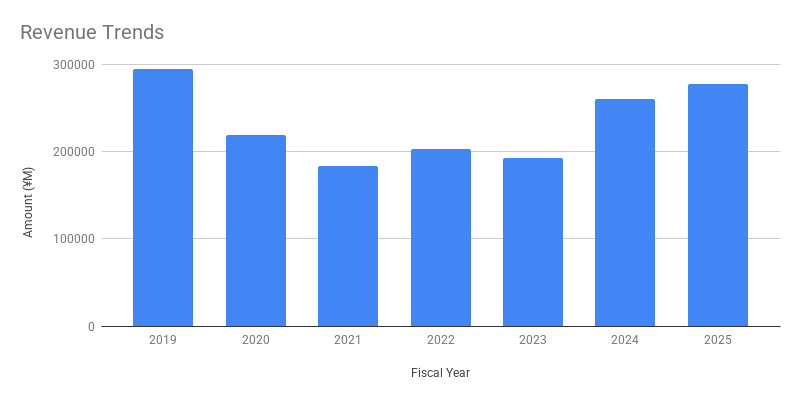
Toyo Engineering Corporation’s consolidated financial results for FY2023 showed an increase from the previous year, with net sales reaching 192,908 million yen. In particular, the company has continued to achieve sustained growth in the energy-related market, with operating performance over the past three years showing rapid growth from 184,000 million yen in FY2021 to 202,986 million yen in FY2022.Although a slight adjustment was observed in FY2023, revenue of 260,825 million yen is expected for FY2024. Operating profit reached 4,764 million yen, an increase from the previous year, driven by the efficient utilization of management resources and cost management. Ordinary profit also grew steadily, reaching 3,888 million yen in FY2023.Net income attributable to owners of the parent company increased from 814 million yen to 1,647 million yen, and is projected to reach 9,821 million yen in fiscal year 2024. However, caution is required regarding changes in the business environment, such as fluctuations in crude oil prices, stricter environmental regulations, and the transition to sustainable technologies. In particular, soaring prices of energy-related raw materials are having an impact, making future cost management a critical challenge.An analysis of the income statement shows an improvement in the operating profit margin relative to net sales, driven by efficient cost management and the acquisition of high-margin projects. On the balance sheet, current assets totaled 222,755 million yen, with cash and deposits of 108,523 million yen demonstrating stable liquidity.Total liabilities amount to 207,206 million yen, and the equity ratio remains at a high level of 81.1%. In the statement of cash flows, cash flow from operating activities is positive at 382 million yen, while cash flow from investing activities is negative, primarily due to capital expenditures.Analysis of financial performance indicators shows that ROE reached approximately 6.7% and ROA approximately 2.5%, indicating improvements in the company’s asset utilization efficiency. Overall, Toyo Engineering’s performance trends highlight both challenges and opportunities as the company aims for sustainable growth, demonstrating that a solid foundation for future growth is being steadily established.
2. FY2024 Earnings Outlook
The earnings outlook for FY2024 projects a significant increase from the previous year, with revenue of 260,825 million yen, operating profit of 1,500 million yen, ordinary profit of 6,500 million yen, and net income attributable to the parent company of 5,000 million yen.In particular, rising demand in the energy-related market is expected to drive performance, with the company anticipating the acquisition of new domestic and international projects as well as progress on existing projects. The operating margin is expected to improve further from the 2.5% recorded in FY2023, driven by efficient project management and the introduction of new technologies. Furthermore, as the shift toward environmental-related businesses progresses, carbon-neutral technologies and renewable energy projects will become key pillars of revenue.Furthermore, expanding demand in the medical and fine chemicals segments is also being highlighted as a factor that will bolster performance. On the other hand, caution is required regarding fluctuations in crude oil prices, stricter environmental regulations, and changes in the international economic landscape; it is necessary to constantly consider the impact these external factors may have on performance. Overall, Toyo Engineering aims for sustainable growth and plans to improve performance through strategic investment and technological innovation.
3. Medium- to Long-Term Growth Strategy
Toyo Engineering has formulated a medium-term management plan covering fiscal years 2024 through 2026. Under the philosophy of “Engineering for Sustainable Growth of the Global Community,” the company aims to strengthen the foundation for pursuing sustainable growth.This plan sets targets of 170,000 million yen in order intake, 200,000 million yen in completed construction revenue, 1,500 million yen in operating profit, 6,500 million yen in ordinary profit, and 5,000 million yen in net profit. It places a strong emphasis on leveraging the company’s technical capabilities and project management expertise in the EPC business to secure leadership in the environmental and energy sectors.Specific measures include strengthening the EPC business, developing new technologies and business opportunities, expanding international operations, and building long-term partnerships with customers. The company plans to improve operational efficiency and profitability by generating synergies from these measures. Additionally, the company will prioritize investments in capital expenditures, research and development, and human resource development, aiming to provide high-quality products and services that address environmental issues and improve energy efficiency.In terms of new business development, the company intends to create new business opportunities by focusing on carbon-neutral technologies and renewable energy markets, and by expanding participation in solar and wind power projects. Furthermore, the company will focus on optimizing resource utilization and building ecosystems, aiming to maximize regional value by strengthening businesses related to water resource management and waste recycling.The results of the mid-term management plan are evaluated using KPIs, with customer satisfaction and employee engagement positioned as key indicators alongside order intake, operating profit, and ordinary profit.To address risk factors, the company has established a Project Management Division to conduct risk assessments, thereby ensuring that only feasible projects are selected and resources are allocated appropriately, while pursuing a flexible strategy that responds sensitively to changes in the external environment. Through these initiatives, Toyo Engineering aims to pursue sustainable growth and remain a company that meets investor expectations.
- In fiscal year 2023, Toyo Engineering Corporation achieved net sales of 192,908 million yen, with both operating profit and ordinary profit increasing from the previous year; however, caution is required regarding fluctuations in crude oil prices and stricter environmental regulations.
- The earnings outlook for fiscal year 2024 anticipates a significant increase from the previous year, with rising demand in energy-related markets and a shift toward environmental businesses serving as key drivers of performance.
- In its medium-term management plan covering fiscal years 2024 through 2026, Toyo Engineering aims for order intake of 170,000 million yen, completed construction revenue of 200,000 million yen, and operating profit of 1,500 million yen. The company plans to pursue sustainable growth by leveraging its technical capabilities in the EPC business.
Business Overview
1. Overview of the Business Model
Established in 1961, Toyo Engineering is a leading comprehensive engineering firm that designs, procures, and constructs diverse industrial plants primarily through its EPC (Engineering, Procurement, Construction) business. The company has a particularly strong track record in the energy, oil and gas, petrochemical, environmental, and medical sectors, and is characterized by the fact that over 80% of its revenue is generated from overseas markets.This international expansion is a key factor in our ability to provide high-quality engineering solutions to our customers.
The company’s business model focuses on providing customized services tailored to customer needs. Specifically, it has established a system to meet customer expectations by handling the entire process—from project planning through design, procurement, construction, and commissioning—in an integrated manner. These comprehensive services serve as a major factor in deepening relationships with clients and providing a competitive edge.
Furthermore, in recent years, we have been focusing on the development of new technologies and technologies to reduce environmental impact, with a particular increase in projects aimed at achieving carbon neutrality. To realize sustainable growth, we are striving for technological innovation and improved operational efficiency to secure a competitive advantage. This is expected to lead to business expansion while capturing new business opportunities in the environmental and energy sectors.
2. Major Business Segments
Toyo Engineering’s main business segments are as follows.
1. Energy Sector:
– The company is rapidly growing through plant design and construction related to LNG, renewable energy, and low-carbon technologies. This sector is strongly influenced by rising global energy demand and environmental policies, and plays a significant role in the company’s financial foundation.
2. Oil and Chemical-Related Business:
– The company has particular strengths in the design and construction of oil refining plants and chemical plants. It is demonstrating strong competitiveness throughout Asia, with ammonia and ethylene plants performing particularly well. To meet expanding demand both domestically and internationally, the company continues to focus on new projects.
3. Environmental Technologies:
– We are expanding our business in environmental technologies aimed at creating a sustainable society, such as water treatment and waste treatment facilities. This is a key segment expected to grow in the future as national and regional environmental standards become stricter.
4. Pharmaceuticals and Fine Chemicals Segment:
– We provide a wide range of services, from plant design to operational support for pharmaceutical pipelines and chemical product lines. This segment is attracting particular attention due to increased demand for pharmaceuticals resulting from the impact of the novel coronavirus.
These segments are crucial for diversifying the company’s overall revenue structure and for risk hedging. By adapting to market changes while providing services tailored to customer needs, the company aims to ensure revenue stability.
3. The Company’s Market Position and Competitive Advantages
To compete with rivals such as JGC and Chiyoda Corporation in the Japanese market, Toyo Engineering demonstrates particular strengths in technical expertise and project management capabilities. This year’s financial results show continued stable growth, with revenue of 192,908 million yen and operating profit of 4,764 million yen. Furthermore, in its market expansion over the past few years, the company has been recognized for its diverse approaches, particularly in the product sector, and for building long-term relationships with customers.
This competitive advantage is rooted in the company’s unique engineering capabilities. By embracing technological innovation, the company can quickly adapt to new market trends and maintains a strong commitment to helping customers solve their challenges. In particular, initiatives addressing environmental issues and the development of clean energy will be key to future sustainable growth.
Furthermore, the company’s proactive expansion into overseas projects has led to the expansion of international experience and knowledge, further enhancing its market sophistication. This enables flexible responses tailored to regional markets and contributes to the establishment of a competitive advantage.
4. Market Background
The engineering industry is influenced by a variety of factors, including geopolitical risks, environmental policies, and economic fluctuations. Currently, the world is shifting toward prioritizing sustainable development, and the industry is also being called upon to take steps toward carbon neutrality. Consequently, demand is expected to rise, particularly for businesses related to renewable energy.
Furthermore, the shift in demand structures caused by the impact of COVID-19 is creating new business opportunities. Companies must actively pursue digitalization and the adoption of new technologies to address supply chain bottlenecks and labor shortages. Additionally, the weak yen has created a favorable environment for export activities, and as a recovery in the manufacturing sector is anticipated, strategies to enhance the value-added nature of services are required.
Against this backdrop, Toyo Engineering is expected to contribute to a sustainable society through ambitious investment and technological innovation, thereby steadily building a foundation for future growth. The company is expected to grow as a trusted partner for its customers while flexibly responding to market needs.
Chapter 2: Business Performance Trends
1. Overview of Recent Performance
Toyo Engineering Corporation achieved revenue of 192,908 million yen in fiscal year 2023 and continues to grow steadily, particularly in domestic and international energy-related markets.Operating performance over the past three years has shown rapid growth, rising from 184,000 million yen in fiscal year 2021 to 202,986 million yen in fiscal year 2022. Although a slight adjustment was observed in fiscal year 2023, the company forecasts revenue of 260,825 million yen for fiscal year 2024, with expectations of over 295,000 million yen for fiscal year 2025.This growth is driven by the acquisition of new projects and the progress of existing ones.
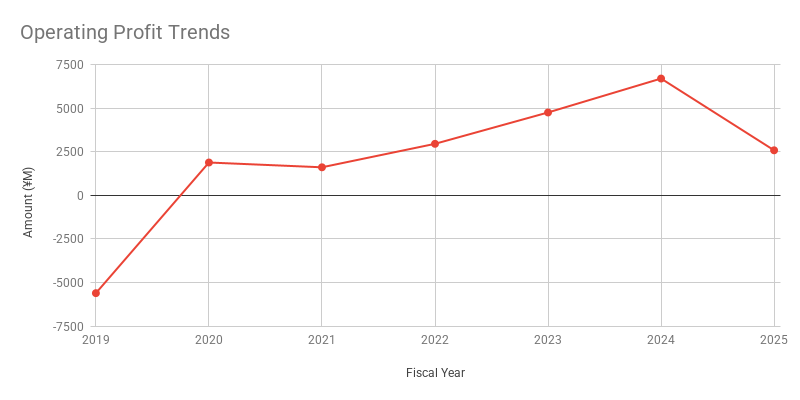
Additionally, operating profit reached 4,764 million yen in FY2023, marking an increase from the previous year. This is attributed to the efficient utilization of management resources and effective cost management. Furthermore, ordinary profit has also grown steadily, reaching 3,888 million yen in FY2023.Net income attributable to owners of the parent company also increased from 814 million yen to 1,647 million yen, with a forecast of 9,821 million yen for fiscal year 2024.
On the other hand, caution is required regarding changes in the business environment. Factors such as fluctuations in crude oil prices, stricter environmental regulations, and the transition to sustainable technologies are affecting the industry as a whole. To address these challenges, Toyo Engineering is accelerating its shift toward environmental-related businesses and continues its efforts to secure new revenue streams.
2. Analysis of the Income Statement
Looking at the income statement for fiscal year 2023, net sales remained stable at 192,908 million yen. In particular, the operating profit margin improved from 1.5% in fiscal year 2022 to 2.5% in fiscal year 2023. This improvement is attributed to efficient cost management and the acquisition of high-margin projects, as well as reductions in selling, general, and administrative expenses.
Cost of sales reached 214,639 million yen, with the ratio to net sales remaining high at approximately 87.5%. This is likely due to rising material and labor costs. In particular, the surge in prices for energy-related raw materials has been significant, and cost management will be a critical challenge moving forward. Furthermore, SG&A expenses decreased by approximately 8.8% compared to fiscal year 2022, indicating progress in operational efficiency.
Looking ahead, the shift toward environmental and energy-related operations could be a factor driving further growth. In particular, an increase in projects related to CO2 utilization technologies and new energy sources is expected to lead to improved profitability.
3. Analysis of the Balance Sheet
An analysis of the balance sheet shows that current assets at the end of fiscal year 2022 totaled 222,755 million yen, with cash and deposits of 108,523 million yen demonstrating stable liquidity. This liquidity strengthens the stability of short-term cash flow and contributes to securing working capital.Additionally, fixed assets totaled 34,048 million yen, remaining stable compared to the previous year, and are positioned as assets expected to enhance production capacity.
Total liabilities amounted to 207,206 million yen, with interest-bearing debt of 36,059 million yen being of particular note. This level maintains a sound balance relative to total assets and is a factor that supports the company’s ability to raise funds for future investment activities.The equity ratio stands at a very high level of 81.1%, indicating the stability of the capital structure. This is believed to enhance managerial flexibility and maintain the resilience necessary to respond flexibly to changes in the external environment.
4. Analysis of the Statement of Cash Flows
According to the analysis of the cash flow statement, cash flow from operating activities for fiscal year 2023 was positive at 382 million yen. On the other hand, cash flow from investing activities was negative, primarily due to capital expenditures. These are necessary investments for the company’s future growth and are expected to yield significant returns in the long term.
Cash flow from financing activities showed an outflow of 57 million yen, primarily due to dividend payments. This suggests that the company is maintaining an appropriate dividend policy while aligning with its growth strategy.
Going forward, the company plans to proceed with investments in new businesses, with a particular focus on expanding its presence in the environmental market. As a result, the key will be how to utilize funds to improve project quality while stabilizing cash flow.
5. Analysis of Performance Indicators
In the analysis of performance indicators, ROE was estimated at approximately 6.7% for fiscal year 2022, and further improvement is expected as part of sustainable growth. ROA reached approximately 2.5% in fiscal year 2023, reflecting efforts to improve the company’s asset utilization efficiency. The improvement of this indicator is considered a key factor as it contributes to enhancing corporate value.
EBITDA stood at 6,810 million yen in fiscal year 2023, indicating that the company’s earnings power remains stable. This demonstrates that the company’s operations are stable and that a solid revenue foundation has been established. While overall performance metrics show a gradual improvement trend, it will be necessary to implement more aggressive growth strategies moving forward. A strategy that promotes sustainable growth while focusing on cost efficiency and the adoption of new technologies is required.
As a comprehensive review of management strategies is urgently needed, flexible organizational management that adapts to environmental changes will be key to maintaining the company’s competitiveness.
Overall, Toyo Engineering’s performance trends have been analyzed from multiple perspectives, highlighting both challenges and opportunities as the company aims for sustainable growth. In the next chapter, it is important to further explore corporate strategies based on these analyses.
Chapter 3: Medium-Term Management Plan and Growth Strategy
1 Overview of the Mid-Term Management Plan
Toyo Engineering has formulated a medium-term management plan covering fiscal years 2024 through 2026, aiming to strengthen the foundation for pursuing sustainable growth.This plan is built on the principle of simultaneously prioritizing the needs of both customers and the global environment, under the philosophy of “Engineering for Sustainable Growth of the Global Community.” Particular emphasis is placed on securing leadership in the environmental and energy sectors by leveraging core technical capabilities and project management expertise, especially within the EPC (Engineering, Procurement, Construction) business.
Specific targets for fiscal year 2026 include order intake of 170,000 million yen, completed construction revenue of 200,000 million yen, operating profit of 1,500 million yen, ordinary profit of 6,500 million yen, and net profit of 5,000 million yen.Specific measures to achieve these goals include strengthening EPC capabilities, developing new technologies and business opportunities, expanding international operations, and building long-term partnerships with customers. The company’s policy is to improve overall operational efficiency and profitability through the synergistic effects of these measures, thereby achieving sustainable growth.
For investors, clear growth targets and systematic measures provide reassurance and heighten expectations regarding the company’s future prospects. Furthermore, by balancing environmental considerations with the creation of customer value, the company can achieve growth while fulfilling its social responsibilities.
2 Investment Plan and Key Initiatives
A strategic investment plan is essential for the success of the medium-term management plan, and Toyo Engineering is focusing its investments on capital expenditures, research and development, and human resource development. Through these efforts, the company strives to meet customer expectations by providing high-quality products and services that address environmental issues and improve energy efficiency.
First, regarding capital expenditures, the company is actively introducing state-of-the-art plant equipment and IT systems, thereby improving project productivity and reducing costs. Furthermore, by optimizing production lines, we have shortened delivery times and enhanced flexibility, establishing a system capable of responding swiftly to customer requests.
Next, in research and development (R&D), the company aims to provide sustainable energy solutions by developing technologies specialized in carbon neutrality and renewable energy. This enables the company to secure new market opportunities and provide high added value to customers.
Furthermore, the company places a strong emphasis on investing in human resources, with initiatives focused particularly on developing engineering talent and promoting diversity. Efforts are underway to enhance training programs and increase local hiring at overseas locations, aiming to improve problem-solving capabilities through diverse perspectives.
In this way, our investment plan forms the foundation for achieving sustainable growth and is expected to contribute not only to short-term performance improvements but also to the enhancement of corporate value over the medium to long term.
3 New Business Initiatives and Growth Strategies by Business Segment
The development of new businesses plays a key role in Toyo Engineering’s growth strategy. In particular, by focusing on markets related to carbon-neutral technologies and renewable energy, the company aims to create new business opportunities and contribute to a sustainable society.
As part of our renewable energy business, we are expanding our participation in solar and wind power projects to diversify our energy supply. Furthermore, the commercialization of CCUS (Carbon Capture, Utilization, and Storage) technology and hydrogen energy utilization technology is a key initiative. This will enhance our competitiveness in the sustainable energy market while establishing a framework to meet new customer needs.
Furthermore, the company is focusing on optimizing resource utilization and fostering ecosystems. By strengthening initiatives related to water resource management and waste recycling, the company intends to maximize regional value. This is expected to reduce environmental impact while contributing to local communities.
The expansion of B2B services is also a priority. By providing plant operation support and customized services, the company aims to improve customer satisfaction and ensure stable revenue. Such growth strategies for new businesses require a flexible approach based on changing times and serve as a key factor in providing attractive growth opportunities for investors.
4 Results, Expected Effects, and KPIs
The results of implementing the mid-term management plan will be regularly evaluated using KPIs (Key Performance Indicators). The company plans to monitor progress against the targets set for fiscal years 2024 through 2026 and review necessary measures as needed. In particular, in addition to financial indicators such as order intake, operating profit, and ordinary profit, customer satisfaction and employee engagement are also positioned as key metrics.
As a specific expected outcome, we anticipate achieving our goal of increasing revenue by approximately 50% by fiscal year 2026. This achievement is expected to contribute not only to business growth but also to enhanced brand strength, an expanded customer base, and further improvements in competitiveness. Furthermore, as we strengthen risk management and streamline project operations, we expect this to contribute to enhancing the company’s overall credibility.
For investors, the clear definition of these KPIs and their progress serve as key indicators of the company’s growth potential. In particular, the company’s commitment to pursuing sustainable growth acts as a factor that enhances its long-term investment appeal.
5 Approach to Risk Factors
As we implement our mid-term management plan, we are required to manage risk factors appropriately. Since numerous risks—such as market fluctuations, the rapid pace of technological innovation, and stricter environmental regulations—have the potential to impact corporate activities, we have established a comprehensive risk management framework.
Specifically, we have established a Project Management Division to conduct detailed risk assessments for each project and are strengthening initiatives to apply lessons learned from past cases. This is expected to enable the selection of feasible projects and appropriate resource allocation, while also increasing our sensitivity to risks.
Furthermore, we must remain constantly attuned to changes in the external environment and be prepared to revise our strategies and respond flexibly as needed. In particular, as interest in climate change and social responsibility grows, corporate activities must be conducted with even greater transparency and a heightened sense of responsibility.
As outlined above, risk management is directly linked to corporate growth and sustainability. Recognizing that this is a critical consideration for investors as well, it is essential to implement appropriate strategies.
Going forward, Toyo Engineering will continue to pursue sustainable growth through the strategic initiatives outlined in its medium-term management plan and the strengthening of risk management, while aiming to remain a company that meets investor expectations.
News & Topics
1. Toyo Engineering’s Strategic Initiatives
Toyo Engineering Corporation (hereinafter, the “Company”) is advancing projects related to carbon neutrality to strengthen its strategy for sustainable growth. In particular, in its fiscal 2023 Mid-Term Management Plan, the Company has set clear numerical targets for environmental-related orders and business investments, and plans to secure orders for 16 environmental projects in fiscal 2024.This initiative reflects the growing global concern regarding environmental issues and contributes to the realization of a sustainable society.
According to experts, the development of next-generation energy is a factor that contributes to market competitiveness. In the FPSO projects promoted by the Company, new energy proposals utilizing LNG and hydrogen are anticipated, and environmentally conscious business operations are highly likely to contribute to enhancing corporate value. For investors, the shift toward a sustainable business model holds great promise in terms of long-term profitability.
However, promoting carbon-neutral initiatives also carries the risk that they may not necessarily generate profits in the short term. Investors must carefully assess whether upfront investments in environmental initiatives will yield returns in the future.
2. Status of New Orders for Petrochemical Plants
In July 2023, the company secured a design contract for a large-scale petrochemical plant in the Middle East. This order responds to rising energy demand in the Asian market and serves as a catalyst for strengthening the company’s international engineering-related order acquisition activities. Through this contract, the company has gained an opportunity to expand its market share in a rapidly growing region and strengthen its revenue base.
According to experts, energy demand in the Asian region is expected to continue growing, a trend that will impact the entire energy industry, including resource procurement and pricing. In particular, the partnership with BASF is expected to contribute to enhancing technical capabilities and strengthening order acquisition efforts. This is expected to further strengthen the company’s competitive advantage.
From an investor’s perspective, the expansion of new orders is viewed as a key factor in future earnings recovery. In particular, while investing in the design and construction of petrochemical plants offers the potential for sustainable growth, management must remain constantly aware of market fluctuations and risks.
3. Growth Prospects for the Healthcare and Environmental Businesses
Our company is expanding demand for its fine chemicals division within the pharmaceutical and environmental sectors. Capturing new demand in these areas could contribute to an increase in the company’s total revenue. In particular, we plan to strengthen our competitiveness in the pharmaceutical industry by establishing new synthesis technologies and manufacturing processes.
According to experts, advancements in the healthcare sector are rooted in social factors such as an aging population and an increase in chronic diseases, and sustained market growth is expected to continue. Additionally, corporate initiatives based on ESG standards are anticipated in the environmental sector, and the technologies we deploy will serve as a key factor in gaining customer trust.
For investors, revenue from the healthcare and environmental businesses is a factor that offers prospects for stable growth. However, given the potential impact of regulatory changes and shifts in the competitive landscape on corporate growth, flexible and swift responses are required.
4. Financial Condition and Performance Outlook
Regarding performance indicators for fiscal year 2023, revenue is projected to reach 95% of the previous year’s level, with an expected increase to 260,825 million yen in fiscal year 2024. This growth is expected to be driven by contributions from both the EPC and non-EPC businesses. Operating profit is also projected to increase by approximately 40% in fiscal year 2024, which is believed to be the result of streamlined project management and the introduction of new technologies.
However, in the short term, challenging conditions may persist. In particular, there are concerns regarding the risk of external factors such as U.S. protectionism and the slowdown in the Chinese economy having an impact. The company will need to respond sensitively to changes in the domestic and international economic environment and maintain a flexible strategy.
From an investor’s perspective, while rising revenue is expected to lead to short-term improvements in performance, the importance of risk management in response to market changes is increasing. It is an urgent priority to thoroughly implement cost management and efficiency measures and establish a framework capable of meeting investor expectations.
5. Focus on Technological Innovation and Human Resource Development
The company is focusing on developing new technologies that leverage AI and IoT, and is launching new products based on these results. In particular, “edge computing technology” is attracting attention as an innovation that enables the optimal allocation of resources. Additionally, the company is promoting human resource development with a focus on diversity and inclusion, and is implementing measures aimed at increasing the proportion of female managers.
According to experts, technological innovation is the key to enhancing a company’s competitiveness, and companies that invest in robust human resource development are more likely to achieve long-term success. Leveraging workforce diversity is also expected to generate new ideas and innovations.
For investors, technological innovation and human resource development are critical elements that underpin corporate growth. While these initiatives, if successful, may lead to higher valuations in the capital markets, companies should avoid neglecting their long-term vision in their eagerness to achieve short-term results.
6. Summary and Future Outlook
Toyo Engineering Corporation is building a foundation for sustainable growth by simultaneously advancing environmental initiatives, technological innovation, and human resource development. Each of these efforts will play a crucial role in future market competition.
Investors are advised to keep a close eye on the company’s financial condition and market trends while paying attention to its carbon-neutral initiatives and new technology development. As expectations for growth rise, it is crucial to carefully assess the company’s efforts toward sustainable growth and evaluate their progress. Timely investment decisions will be required as we monitor future developments.
Company Overview
1. Basic Information (Company Overview, Location, etc.)
Toyo Engineering Corporation (hereinafter referred to as “the Company”) is a major Japanese integrated engineering firm established in 1961. Headquartered in Nakase, Mihama Ward, Chiba City, Chiba Prefecture, the Company primarily engages in EPC (Engineering, Procurement, and Construction) business. Its business scope spans a wide range of sectors, including energy, petrochemicals, the environment, and infrastructure, with particular strengths in petrochemical plants and new energy technologies.
The company’s business is expanding steadily both domestically and internationally; with overseas operations accounting for approximately 80% of its business in recent years, it possesses a wealth of experience in international projects. The company is focused on innovation aimed at realizing a sustainable society and plans to advance the development of numerous new technologies and the expansion of non-EPC businesses in the near future. For the fiscal year ending March 2025, the company forecasts consolidated revenue of approximately 192 billion yen and net income of approximately 1.6 billion yen.
The company’s management philosophy is “Engineering for Sustainable Growth of the Global Community,” and it places emphasis on achieving sustainable growth by meeting customer needs. This philosophy is deeply rooted in the corporate culture, and the company places importance on transparent management to build trust with shareholders.
2. History and Key Milestones
The Company was established in 1961 as a spin-off from the engineering division of Toyo High Pressure Industries Co., Ltd., and its subsequent growth laid the foundation for establishing a solid position within the industry. In the 1970s, the Company expanded its business operations both domestically and internationally; it was listed on the Second Section of the Tokyo Stock Exchange in 1980 and moved to the First Section in 1982. The numerous projects constructed during this period contributed to enhancing the Company’s reliability and technical capabilities.
Since the 1990s, we have established a subsidiary in Houston, Texas, and expanded into the Chinese market. In recent years, following our transition to the Prime Market in 2022, we have established strategic joint ventures (e.g., the FPSO business with Mitsui Ocean Development) to identify new growth opportunities. Furthermore, by leveraging our technical expertise to develop environmentally conscious plants, we are reinforcing our commitment to sustainability as a company.
Furthermore, with plans to relocate its headquarters in 2024, the company has established a framework to further accelerate its growth. These historical milestones serve as indicators of the company’s progress, and its future business development is highly anticipated.
3. Organizational Structure and Key Management
Our organizational structure prioritizes operational efficiency and is characterized by project-based management. The executive team comprises a diverse group of members with extensive experience and expertise in the industry. Eiji Hosoi, President and CEO, has demonstrated strong leadership in the engineering industry and is driving management strategies aimed at sustainable growth.
In addition, members with diverse backgrounds—such as the General Manager of Corporate Planning and the General Manager of Sales—contribute to operational efficiency and fostering customer satisfaction. In particular, the administrative department is working to improve risk management by strengthening internal controls and corporate governance. Through collaboration across departments, we have established a system capable of responding flexibly and promptly to customer needs, thereby maintaining sustainable competitiveness.
Overall, the company maintains an organizational culture that prioritizes technological innovation and customer satisfaction, while also working to improve the work environment and promote diversity. This enhances employee engagement and serves as a key factor in generating superior results.
4. Research and Development Framework
Our R&D framework serves as a critical foundation for achieving sustainable growth. Specifically, we are conducting R&D on projects related to new energy technologies and reducing environmental impact, and we are designing plants that incorporate the latest technologies. A major strength is that we receive support from both the public and private sectors for the development of new technologies aimed at solving environmental issues.
In particular, as the achievement of carbon neutrality becomes increasingly urgent, we are strengthening our efforts in this area. This enables us to provide environmentally conscious solutions to our customers, allowing us to pursue an impeccable business strategy to secure a sustainable competitive advantage. Our R&D department collaborates with universities and research institutions, which helps foster new ideas and drive technological innovation.
5. ESG and Sustainability Initiatives
The company places a high priority on building a sustainable business model from the perspectives of Environment (E), Social (S), and Governance (G). These initiatives are essential for fulfilling corporate social responsibility, and they strongly demonstrate our commitment to contributing to next-generation energy and a recycling-oriented society, particularly as environmental considerations become increasingly critical.
Specific initiatives include plant designs that reduce environmental impact and projects incorporating carbon offsets. Furthermore, by promoting diversity within the company and diversifying our corporate values and culture, we aim to become a company supported by a broader range of stakeholders. In addition, we are strengthening transparent compliance and risk management, continuing our efforts to maintain corporate credibility.
In this way, by advancing initiatives aimed at realizing a sustainable society, the company is enhancing its corporate value and building a stable foundation for long-term growth.
—
Overall, Toyo Engineering Corporation is a company with a solid history and a foundation for future growth. Its diverse business models, efficient organizational structure, and commitment to sustainable growth demonstrate that management strategies have been developed in close alignment with technological advancements. It is essential to thoroughly understand these factors when considering future investment opportunities. For these reasons, the company is one that investors should keep a close eye on.
Shareholder Returns
1. Dividend Policy and History
Toyo Engineering Corporation’s dividend policy is based on stable and sustainable profit distribution, and the company has established a system to return profits to shareholders in accordance with its business performance. Specifically, the company aims for a dividend payout ratio of 25% or more of net income attributable to owners of the parent. This dividend policy reflects the company’s shareholder-oriented stance, rooted in its management philosophy, with the aim of building a relationship of trust with shareholders through stable dividends.
Looking at the history, the company has increased its dividend amount in line with rising profits since fiscal year 2019, and a dividend of 40 yen per share is scheduled for fiscal year 2023. Additionally, a special dividend payment of 38 yen per share is planned for fiscal year 2024. By raising dividends in this manner, the company intends to emphasize the importance of shareholder returns and foster future growth.
The company is also actively working to build up its retained earnings, aiming for sustainable corporate growth by reinvesting profits into new business ventures. Such a dividend policy is likely to enhance shareholder confidence and serve as an attractive factor for investors. Based on past performance, stable dividend payments are expected to continue in the future.
2. Share Buybacks and Their Impact
Share buybacks are positioned as part of Toyo Engineering’s shareholder return initiatives and are considered a key means of enhancing corporate value. By purchasing shares from the market, the number of shares outstanding decreases, which is expected to contribute to an increase in earnings per share (EPS). This increases shareholders’ equity, thereby promoting an increase in the stock price.
Looking back over the past few years, the company has conducted share buybacks in line with its business performance, resulting in steady growth in EPS. In particular, during periods of market instability, share buybacks serve as an effective means of supporting the stock price. By utilizing the company’s surplus funds, the company establishes trust with shareholders and improves its financial soundness.
Toyo Engineering is planning a new share buyback program for fiscal year 2024, with the intention of strengthening returns to shareholders while maintaining the company’s growth potential. Furthermore, share buybacks serve as a positive signal of the company’s confidence to investors and demonstrate a commitment to maximizing long-term corporate value. Therefore, share buybacks are positioned as a key shareholder return measure alongside dividends, and their continued implementation is expected.
3. Current Status and Evaluation of the Total Payout Ratio
The total return ratio is an indicator that shows what portion of a company’s profits is allocated to shareholder returns. This figure is also important for Toyo Engineering, serving as a benchmark for gaining shareholder trust. Specifically, by increasing the total return ratio—which combines dividends and share buybacks—the company is demonstrating a management stance that prioritizes shareholders.
The current dividend payout ratio is generally set at 25% or higher, and the company also actively engages in share buybacks. This strengthens overall returns to shareholders and builds investor confidence based on a stable financial foundation. In particular, the company has explicitly stated its aim to achieve a higher total return ratio in fiscal year 2024, raising expectations for this initiative.
For investors, the stability of dividends and the expansion of the total return ratio through share buybacks are key points, and these factors significantly influence investment decisions. Overall, the shareholder return policy is considered essential for enhancing corporate value and a critical element supporting Toyo Engineering’s sustainable growth. This approach is likely to become even more important in the future.
4. Alignment with Financial Strategy
Shareholder return policies are closely linked to a company’s financial strategy. Toyo Engineering has established a framework for implementing its capital policy, emphasizing a commitment to both shareholder returns and the accumulation of retained earnings. This approach ensures that risk management is prioritized as the company pursues sustainable growth.
Specifically, sound capital management is required; the company considers not only returning profits to shareholders but also investment needs aimed at future growth. For example, it is expected to enhance corporate value from a long-term perspective through investments in carbon neutrality initiatives and new business development. These measures are essential for increasing management flexibility and ensuring the sustainability of shareholder returns.
By advancing shareholder returns while maintaining financial soundness, Toyo Engineering is striving to adapt to changes in the external environment and remain a resilient organization in the face of fluctuating economic conditions. This approach is considered a key factor in building trust with shareholders.
5. Medium- to Long-Term Policy and Sustainability
Toyo Engineering is exploring shareholder return measures that are sustainable from a medium- to long-term perspective. The company aims to earn shareholder trust through stable dividends while also strengthening its retained earnings. This creates a foundation that is less susceptible to short-term fluctuations in business performance, enabling the realization of long-term profit returns.
Furthermore, the company is commended for implementing measures aimed at medium- to long-term growth while prioritizing financial soundness as part of its corporate strategy. For example, initiatives related to environmental investments and new business ventures are expected to contribute to future profit growth and lead to a sustained expansion of shareholder returns. As a result, the company will become an attractive prospect for investors and achieve sustainable growth.
In this way, Toyo Engineering is firmly focused on the future environment and is strengthening measures to sustainably increase shareholder returns. This enables the company to balance profit distribution to shareholders with corporate growth, sending a clear message to investors.
Based on the points above, Toyo Engineering’s commitment to sustainable shareholder returns will serve as a factor in enhancing the company’s long-term valuation. How investors receive this initiative will likely have a significant impact on the company’s future growth potential. To further enhance its corporate value, the company must continue to strengthen its shareholder return policies.
In this chapter, we have discussed Toyo Engineering’s shareholder return measures, including its dividend policy, share buybacks, alignment with financial strategy, and sustainability. For investors, it is crucial to assess the balance between the company’s growth strategy and shareholder returns, and this will require continued close attention.
Investment Risks
1. Factors Affecting Business Performance
The performance of Toyo Engineering Corporation (hereinafter, the “Company”) is heavily dependent on its EPC (Engineering, Procurement, Construction) business and is susceptible to the influence of both external and internal factors. Therefore, understanding the factors affecting performance fluctuations is extremely important for investors. While the Company operates plant businesses across a wide range of fields, including energy, the environment, and pharmaceuticals, it is particularly prone to fluctuations caused by changes in market conditions and customer needs.
In particular, since our customers are primarily large corporations, economic trends affecting these companies and fluctuations in raw material prices directly impact our order intake, contributing to increased volatility in our business performance.For example, while a surge in international crude oil prices may temporarily boost the appetite for plant investment, if this does not persist, it risks triggering cost pressures and project delays, leading to even greater volatility in sales. Furthermore, the execution of long-term projects inherently carries risks such as construction delays and budget overruns, making them highly susceptible to direct impacts from changes in the order environment.
Pandemics, such as infectious diseases, are also factors that cannot be ignored. For example, if on-site work is restricted due to the impact of COVID-19, construction delays and cost increases may occur, which in turn negatively affect business performance. Therefore, the Company’s performance depends on many external factors, and investors are required to recognize and respond to potential risks.
2. Industry-Specific Risks
The engineering industry faces unique risks, and due to its nature, our company is also confronted with numerous risk factors. First, a high degree of project dependency increases the risk to our business performance. As specific large-scale projects proceed, their success or failure can have a significant impact on the company’s overall performance. For example, sharp fluctuations in raw material prices or labor shortages could lead to project delays, which in turn carry the risk of further cost increases.
Furthermore, in the energy sector, changes in government policies and laws can have a significant impact on business operations. In particular, the push for carbon neutrality and the shift toward renewable energy directly affect a company’s competitiveness, and failure to adapt carries the risk of deteriorating business performance. Additionally, as environmental standards become stricter, inadequate compliance can lead to a loss of customer trust, necessitating rapid response capabilities and technical expertise.
Furthermore, risks related to information security and cyberattacks are on the rise, posing a threat to business continuity. As companies are required to adapt quickly to overall management strategies and provide high-quality services, it is essential to implement comprehensive measures to address these risks.
3. Financial and Management Risks
Our company’s financial condition serves as a key indicator for sustainable corporate growth. In particular, the level of interest-bearing debt and the impact of rising interest rates directly affect the company’s cash flow and profit margins, necessitating careful monitoring. According to recent financial reports, as the debt-to-equity ratio rises, the risks of financing difficulties and profit compression during an economic downturn are also increasing. Furthermore, as the difficulty of raising funds increases, corporate management becomes more challenging, which in turn can lead to missed growth opportunities.
Deficiencies in corporate governance and risk management can lead to compliance issues, negatively impacting a company’s credibility and brand image. As past cases have shown, strengthening governance is a critical challenge for corporate management, requiring the establishment of robust internal controls and transparent disclosure of information. In particular, it is essential to enhance collaboration with external audit bodies and raise awareness of compliance.
Furthermore, risks related to securing and developing talent cannot be overlooked. In the engineering industry in particular, there is a shortage of skilled engineers, and the loss of talent can have a detrimental effect. To achieve sustainable growth, companies must review their working environments and training programs.
4. Legal and Regulatory Compliance Risks
Compliance with laws and regulations is an absolute requirement for companies conducting business. As our company operates in diverse regions, we must adhere to the laws and regulations of each country. In this environment, new laws and regulations are frequently enacted, and regulations related to the environment and labor laws, in particular, can impact a company’s cost structure. Since this could compromise the profitability of projects, it is essential to stay up-to-date with the latest information and take appropriate action.
Furthermore, if a violation of laws or regulations is discovered, severe penalties may be imposed, and there is a risk that the company’s credibility and value will decline. Therefore, strengthening risk management systems in the course of business operations is essential. Since failures in information security and compliance violations pose significant risks to corporate performance, it is necessary to review education and governance measures in this regard.
5. Risks Associated with Overseas Expansion
As a company operating internationally, we must fully recognize the risks associated with overseas expansion. In particular, in emerging markets and unstable regions, political unrest and economic crises can have a direct impact on project progress and order acquisition. For example, if political turmoil in a specific country affects our business, it carries the risk of disrupting cash flow and order acquisition.
Furthermore, foreign exchange risk is a significant factor, as exchange rate fluctuations directly impact earnings. In particular, if the yen appreciates during overseas transactions, there is a concern that profit margins will decline; therefore, the company must implement measures to address foreign exchange risk as part of its risk management strategy. Differences in national laws and cultural barriers may also affect transactions and contracts, so thorough research is required.
6. ESG-Related Risks
As consideration for environmental, social, and governance (ESG) issues becomes an increasingly important corporate responsibility, we have entered an era where corporate social responsibility (CSR) and efforts toward the Sustainable Development Goals (SDGs) are particularly scrutinized. Companies are expected to fulfill their responsibilities regarding reducing environmental impact and engaging in social contribution activities; failure to adapt to these expectations risks damaging a company’s reputation and competitiveness, potentially causing significant repercussions.
Furthermore, as societal expectations rise, conducting business operations in compliance with environmental regulations is beneficial for corporate sustainability. From an investor’s perspective, ESG initiatives are a factor that enhances corporate value, so they must be closely monitored.
Conclusion
From the perspectives outlined above, the investment risks faced by Toyo Engineering are diverse, requiring a multifaceted analysis that includes factors affecting business performance, industry-specific risks, and financial and management risks. Investors are expected to build a foundation for better investment decisions by recognizing these risks and confirming the company’s commitment to appropriate risk management. In the next chapter, we will explore specific risk management strategies and countermeasures in detail.
Financial Charts