Nippon Paper Industries
Report Update:2026/06/23Location
Ochanomizu Sora City, 4-6 Kanda Surugadai, Chiyoda-ku, Tokyo 101-0062
Business content
One of the two leading companies in the paper industry. The market leader in Western-style paper. Also active in energy, household goods, building materials, and landscaping.
Main Scheduled Dates
ーーー
Table of Contents
3863TSE Prime
Summary
Nippon Paper Industries Co., Ltd. is one of Japan’s leading paper manufacturers, operating in four major segments: Paper and Paperboard, Consumer Products, Energy, and Timber and Building Materials. The company has established a strong position within the industry, particularly in the Western-style paper sector, where it holds a high domestic market share—accounting for approximately 40% of the publishing paper market.As a “comprehensive biomass company,” the company prioritizes the sustainable use of resources and is advancing the development of environmentally friendly products and the optimization of manufacturing processes.In fiscal year 2023, revenue reached 1,152,645百万円. Although the company benefited from product price adjustments made in response to soaring raw material costs and the weak yen, operating income was △26,855百万円, reflecting a challenging business environment.An improvement in performance is expected in fiscal year 2024, with net income attributable to owners of the parent projected to recover to 22,747百万円.In its Mid-Term Management Plan 2025, the company has outlined a strategy to strengthen profitability in its lifestyle-related and graphic paper businesses and reduce GHG emissions, with targets of 1.2 trillion yen in revenue and 40 billion yen in operating profit. In particular, the company is focusing on the recovery of demand in the household paper market and the development of new products to enhance its competitiveness.In terms of environmental initiatives, the company has set a target to reduce GHG emissions by 54% by 2030 and is implementing measures to achieve sustainable management. For investors, the company’s growth strategy and environmental considerations are key evaluation points, and the company is expected to respond flexibly to future performance trends and market conditions.Nippon Paper is expected to pursue sustainable growth and enhance long-term corporate value by addressing environmental issues and developing new businesses.
1. FY2023 Financial Results Overview
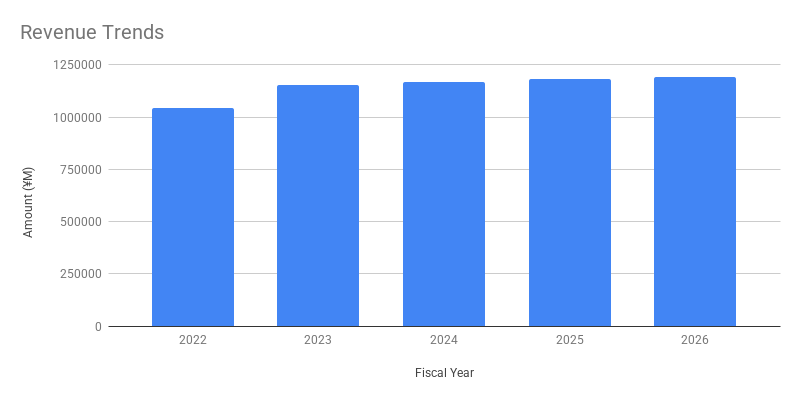
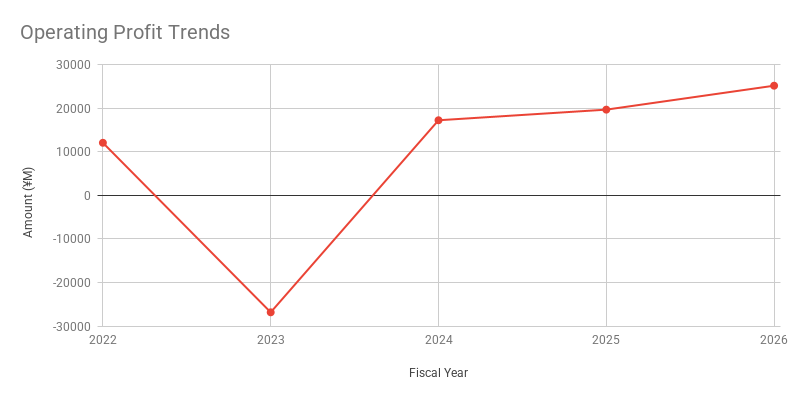
Nippon Paper Industries Co., Ltd.’s consolidated financial results for FY2023 showed a recovery from the previous year, with net sales reaching 1,152,645百万円, up from 1,045,086百万円 in FY2022. This was driven by product price adjustments made in response to soaring raw material costs and the impact of the weak yen.However, the company recorded a net loss attributable to owners of the parent of △50,406百万円, which is expected to recover to 22,747百万円 in fiscal year 2024.In the income statement, gross profit stood at 144,399百万円, with a profit margin of just 12.5%, reflecting the impact of rising raw material and energy costs.Operating income stood at a loss of 26,855百万円, reflecting a challenging situation; however, it is projected to recover to 19,706百万円 in fiscal year 2024, and ordinary income is also expected to improve to 15,505百万円.On the balance sheet, total assets amounted to 1,666,542百万円,liabilities of 1,251,341百万円, and net assets of 415,200百万円. Although the current ratio remains stable, interest-bearing debt has reached 919,192百万円, resulting in a high debt-to-equity (D/E) ratio; therefore, caution is required regarding financial leverage.On the cash flow statement, operating cash flow stood at 72,790百万円, reflecting the success of efforts to improve ordinary income and manage working capital; however, cash flow from investing activities was negative at △33,435百万円, as the company is proceeding with capital expenditures in anticipation of future growth.In terms of performance metrics, the company is targeting a ROE of 5.0% for fiscal year 2024, and an improvement is expected; however, ROA remains below the industry average. Overall, Nippon Paper is expected to see a recovery in its performance, but the company must continue to focus on sustainable cost management and efficiency improvements.
2. Earnings Outlook for the Fiscal Year Ending March 2024
The earnings outlook for the fiscal year ending March 2024 projects increased revenue and profits, with net sales of 1,282,000百万円, operating income of 400億円, ordinary income of 350億円, and net income attributable to the parent company of 22,747百万円.Nippon Paper expects demand to recover, particularly in its consumer products business, and anticipates growth in the household paper market. The household paper business is projected to grow by 4.8% year-on-year, driven by positive factors such as product price adjustments and a recovery in demand.In the Energy Business, the company plans to secure stable earnings by providing sustainable energy solutions, with a focus expected on emerging markets such as biomass power generation. Although the Paper and Paperboard Business is being affected by digitalization, demand for environmentally friendly products is rising, and efforts to strengthen the product lineup are underway.In particular, streamlining manufacturing processes and introducing new technologies are critical to maintaining a competitive advantage. Overall, while growth is expected across all business segments for the fiscal year ending March 2024, cost management in response to fluctuations in raw material prices and energy costs will remain a key challenge.From a sustainability perspective, companies are expected to develop environmentally friendly products and pursue long-term growth. Investors should pay close attention to the company’s growth strategies and changes in the market environment in light of these earnings forecasts.
3. Medium- to Long-Term Growth Strategy
Nippon Paper Industries Co., Ltd. has established its vision for 2030 as “A Comprehensive Biomass Company Pioneering the Future with Wood” and is working to transform its business structure to achieve sustainable growth.To realize this vision, the company formulated the “Medium-Term Management Plan 2025” in fiscal year 2021, outlining a concrete action plan covering the five-year period from April 2021 to March 2026.Key initiatives include strengthening profitability in the consumer goods and graphic papers businesses, reducing GHG emissions, and improving the company’s financial position, with targets of 1.2 trillion yen in net sales and 40 billion yen in operating profit.The Mid-Term Management Plan sets clear numerical targets to ensure sustainable business growth and includes a review of management resource priorities to respond flexibly to changes in the market environment.In particular, the company is promoting the use of sustainable resources through initiatives such as the introduction of new manufacturing equipment in the household paper business and the development of cellulose nanofibers (CNF) in the biomass materials business. Furthermore, with a focus on improving production efficiency across the entire company and enhancing the skills of its workforce, the company aims to improve its competitive edge in quality by reviewing factory facilities and introducing new technologies.The promotion of new businesses is also a priority; the product line utilizing woody biomass is expected to show growth potential, and development is underway for bioethanol and lignin-derived products as raw materials for sustainable aviation fuel.The Mid-Term Management Plan 2025 sets specific numerical targets: by fiscal year 2025, the company aims to achieve sales of at least 1.2 trillion yen, operating income of at least 40 billion yen, EBITDA of 100 billion yen, a D/E ratio in the 1.7x range, and a ROE of 5.0% or higher.Regarding GHG emissions reduction, the company aims to reduce emissions by 54% compared to fiscal year 2013 by fiscal year 2030; this serves as a key indicator for ensuring corporate sustainability and competitive advantage. To address risk factors, the company must respond flexibly to changes in social conditions and stricter environmental regulations while maintaining competitiveness in its household paper and healthcare businesses.Establishing an effective implementation framework is also crucial; the company is working to strengthen collaboration between departments and optimize the allocation of management resources, with the goal of maximizing company-wide synergies. Nippon Paper Industries is implementing a clear strategy focused on sustainable growth, and the company is expected to achieve both short-term improvements in performance and medium- to long-term enhancements in corporate value.
- Although Nippon Paper Industries’ revenue recovered from the previous year in fiscal year 2023, the company posted a net loss; while a recovery is expected in fiscal year 2024, the company remains in a situation where cost management and efficiency improvements are essential.
- For the fiscal year ending March 2024, the company forecasts increased revenue and profits, with net sales of 1,282,000百万円, operating income of 400億円, ordinary income of 350億円, and net income attributable to the parent company of 22,747百万円. Growth is particularly expected in the consumer products business and the household paper market.
- Nippon Paper Industries Co., Ltd. has established its vision for 2030 as “A Comprehensive Biomass Company Pioneering the Future with Wood.” Based on its Mid-Term Management Plan 2025, the company is promoting specific measures to achieve sustainable growth, targeting net sales of 1.2 trillion yen and operating income of 40 billion yen
Business Overview
1. Business Model Overview
Nippon Paper Industries Co., Ltd. is one of Japan’s leading paper manufacturers and has established a solid position within the industry. Its main product lines can be categorized into four segments: Paper and Paperboard, Lifestyle Products, Energy, and Timber and Building Materials.In the Paper and Paperboard Business, the company holds a particularly high domestic market share in the Western-style paper sector and plays a key role, accounting for approximately 40% of the publishing paper market. Additionally, the Consumer Products Business focuses on household paper and healthcare products, while the Energy Business is advancing the utilization of sustainable biomass energy.
Nippon Paper’s business model, positioned as a “comprehensive biomass company,” places a strong emphasis on the sustainable use of resources.Notably, the company aims to reduce greenhouse gas (GHG) emissions through the development of environmentally friendly products and the optimization of manufacturing processes. This not only generates economic benefits but also enhances the company’s credibility as a socially responsible enterprise.
For investors, Nippon Paper’s strong commitment to sustainability has the potential to contribute to long-term growth; in particular, the expansion of the markets for renewable energy and biomass materials is seen as a factor that will further enhance the company’s competitiveness. It is important to pay attention to future new product development and market strategies and to monitor the company’s growth trends.
2. Major Business Segments
Nippon Paper’s main business segments consist of the Paper and Paperboard Business, the Consumer Products Business, the Energy Business, and the Timber and Building Materials Business.
2.1 Paper and Paperboard Business
The Paper and Paperboard Business accounts for approximately 42.8% of the company’s revenue and is engaged in the manufacture and sale of general-purpose paper and specialty paper.While this segment primarily handles newsprint and office paper, demand is declining due to the advancement of digitalization. However, demand for environmentally friendly products is growing, and the company is strengthening its product lineup to meet this demand. In particular, streamlining manufacturing processes and introducing new technologies are essential for maintaining a competitive advantage.
2.2 Consumer Products Business
The Consumer Products Business manufactures household paper and diaper products, achieving sales of 457,880百万円. This segment is projected to grow by 4.8% year-over-year, with positive factors expected in the household paper market due to a recovery in demand and product price adjustments.On the other hand, the liquid paper container division faces challenges such as market pressures. In this market, product development tailored to customer needs is essential, and measures to strengthen competitive advantage are required.
2.3 Energy Business
The Energy Business aims to provide sustainable energy solutions and focuses on emerging markets such as biomass power generation.Through the operation and management of power generation facilities, the division ensures a stable power supply and contributes to reducing environmental impact. As this business is less susceptible to fluctuations in the economic environment, it also serves to diversify risks across other segments. Amid rising demand for renewable energy, the company’s Energy Business is considered a key factor contributing to the stabilization of its financial performance.
2.4 Timber and Building Materials Business
The Timber and Building Materials Business operates on an integrated basis, covering everything from timber procurement to the manufacture and sale of building materials, with a fundamental policy of maximizing the use of sustainable resources. In this segment, the company emphasizes building a stable supply system based on domestic and international forest data, thereby contributing to the revitalization of local economies.Furthermore, the segment is expected to promote new architectural styles to support future market expansion.
3. The Company’s Market Position and Competitive Advantages
Nippon Paper Industries holds a very high market share within the paper industry; in particular, it accounts for approximately 40% of the Western-style paper segment, demonstrating strong competitiveness. This strong market position is the result of long-standing brand strategies and technological innovation, and the company’s high level of product development capability is a key distinguishing feature.It is also noteworthy that the company is strengthening its global competitiveness through overseas expansion in addition to its domestic market presence.
One factor contributing to its competitive advantage is its commitment to developing environmentally friendly products. In particular, the expansion of biomass-based materials and functional products has the potential to serve as a powerful response to future market needs. Furthermore, the company is actively promoting innovation and human resource development across the entire organization; its dynamic organizational culture, which helps it adapt quickly to change, is another key element of its competitiveness.
For investors, these competitive advantages are highly likely to lead to sustainable growth, and further development is anticipated. In particular, the company’s ability to respond swiftly to future changes in market needs will be a major factor influencing its growth.
4. Market Background
In the paper industry as a whole, demand fluctuations are pronounced due to digitalization and stricter environmental regulations. In particular, while the decline in demand for graphic paper and the spread of digital media are having an impact, the markets for lifestyle-related products and biomass materials, on the other hand, offer room for growth, so the company needs to capitalize on these new opportunities.
To respond to market fluctuations, Nippon Paper is strengthening its sustainability initiatives and focusing on product differentiation and the development of new products.Furthermore, investments in the renewable energy sector, supported by the government, are underway, which could open up new business opportunities. As an investor, it is important to evaluate the company’s growth strategy while taking this market context into account and to closely monitor how it contributes to sustainable value creation.
Nippon Paper is expected to continue strengthening its competitiveness based on the sustainable use of resources, while flexibly responding to industry changes and challenges to pursue future growth.
Financial Performance Trends
1. Overview of Recent Financial Performance
Nippon Paper Industries Co., Ltd. occupies a key market position in the paper industry and maintains a particularly strong presence in the Western-style paper segment. While performance trends from fiscal year 2020 to fiscal year 2024 have been volatile, a moderate recovery was observed in fiscal year 2023; however, the company remains susceptible to fluctuations in the economic environment and the market.Specifically, net sales increased from 1,045,086 million yen in fiscal year 2022 to 1,152,645 million yen in fiscal year 2023. This is believed to be due to product price adjustments made in response to soaring raw material costs, as well as benefits from the weak yen.Revenue increased further in fiscal year 2024, recording a growth rate of 111.3%.Furthermore, while net income attributable to owners of the parent company posted a loss of △50,406百万円 in fiscal year 2023, it recovered to 22,747百万円 in fiscal year 2024, showing signs that overall performance is improving.These figures suggest that while the company has the flexibility to respond to economic fluctuations, sustained cost management remains essential.
2. Analysis of the Income Statement
In the FY2023 income statement, net sales amounted to 1,152,645百万円, indicating a recovery from the previous fiscal year. However, gross profit stood at 144,399百万円, with a profit margin of only 12.5%, reflecting the impact of rising raw material and energy costs.Operating income stood at △26,855百万円, reflecting a challenging situation; however, it recovered to 19,706百万円 in fiscal year 2024, suggesting improved operational efficiency. Ordinary income also improved to 15,505百万円, underscoring that cost management is essential to support sustainable growth.Gains and losses recorded as extraordinary items consist of gains on the sale of assets and impairment losses, with the impact of Opal in Australia being particularly significant. It is recognized that adjustments to this portion will have a major impact on future performance. Overall, from the perspective of the income statement, Nippon Paper is on track for a recovery, but further cost efficiency measures are required.
3. Balance Sheet Analysis
According to the balance sheet as of the end of fiscal year 2023, total assets were 1,666,542 million yen, liabilities were 1,251,341 million yen, and net assets were 415,200 million yen.The proportion of current assets is high, the current ratio is stable, and the company has a solid position in terms of securing current assets to cover short-term liabilities. Cash and cash equivalents amount to 144,350百万円, indicating the company’s ability to raise funds in the market.On the other hand, interest-bearing debt has reached 919,192百万円, and the debt-to-equity (D/E) ratio is high; therefore, the company should be mindful of its financial leverage.Net assets show an upward trend in equity, which serves as a factor in strengthening the company’s internal capital; however, there are concerns that the impact of extraordinary losses and impairments could lead to a reduction in capital in the future. Therefore, reviewing the asset structure will be a key factor for future fundraising. Overall, Nippon Paper Industries’ liquidity is sound, but ensuring long-term financial soundness is essential.
4. Analysis of the Statement of Cash Flows
According to the cash flow statement, operating cash flow for fiscal year 2023 was 72,790百万円, reflecting the success of efforts to improve ordinary income and manage working capital.Net income before income taxes also reached 61,204百万円, raising expectations for free cash flow. In contrast, cash flow from investing activities was a negative △33,435百万円, primarily due to new investments and the acquisition of fixed assets.The company is proceeding with the introduction of new equipment in anticipation of growth, suggesting a promising long-term outlook. Cash flow from financing activities was △18,274百万円; while the company is struggling to repay existing debt, it is facing difficulties in securing new funding. Consequently, a review of the company’s funding strategy is underway, and even amid stable cash flow, a reevaluation of its investment strategy is required.Maintaining stable cash flow from operating activities is a key factor supporting the company’s sustainable growth, and careful evaluation of future capital allocation is required.
5. Analysis of Performance Indicators
From the perspective of financial performance metrics, ROE (Return on Equity), ROA (Return on Assets), and EBITDA are particularly important.The company is targeting an ROE of 5.0% for fiscal year 2024, and while a sufficient improvement is expected, ROA remains below the industry average. If this situation persists, concerns regarding the efficiency of capital utilization will grow. EBITDA is key to sustainable profit generation, and a review of the cost structure and efficient operations are considered essential.Overall, even as profit margins come under pressure, the company must maintain its growth trajectory, and a strategy that flexibly adapts to changes in the economic environment is particularly necessary. It is recognized that corporate value is likely to increase if appropriate resource allocation and cost control are implemented.
Future performance trends will be influenced by the risk factors companies face and market trends, requiring a flexible response. To achieve sustainable growth, companies must firmly implement environmental considerations and pursue strategic market expansion. This is expected to strengthen their competitive advantage overall and enhance their ability to adapt to a volatile market environment.Going forward, investors should focus on improvements in performance metrics and the execution of growth strategies.
Medium-Term Management Plan / Growth Strategy
1. Overview of the Mid-Term Management Plan
The Nippon Paper Group has established its vision for 2030 as “A Comprehensive Biomass Company Pioneering the Future with Trees” and is working to transform its business structure to achieve sustainable growth.To realize this vision, the Group formulated the “Medium-Term Management Plan 2025” in fiscal year 2021, outlining a concrete action plan covering the five-year period from April 2021 to March 2026.Key initiatives include strengthening profitability in the consumer products and graphic papers businesses, reducing GHG emissions, and improving the financial position, with targets of 1.2 trillion yen in net sales and 40 billion yen in operating profit.
This medium-term management plan sets clear numerical targets to ensure sustainable business growth and includes a review of management resource priorities to respond flexibly to changes in the market environment. In today’s business environment, corporate sustainability is increasingly valued, and environmental considerations, in particular, are considered essential for gaining shareholder support.
From an investor’s perspective, a company’s specific goals lead to greater transparency and serve as a foundation for assessing growth prospects. Furthermore, enhancing sustainability through GHG reductions is a key factor in gaining social recognition, and this is expected to create new business opportunities.
2. Investment Plans and Key Initiatives
Within the framework of the Mid-Term Management Plan 2025, Nippon Paper Industries is prioritizing investments in business segments with growth potential, such as lifestyle-related businesses and the biomass materials business.Specifically, this includes the introduction of new manufacturing facilities in the household paper business and the construction of a new CMC manufacturing plant for lithium-ion batteries in the chemicals business. These initiatives are expected to drive technological innovation and quality improvements, establishing a framework capable of meeting diverse market needs.
In terms of research and development, the company is advancing the development of cellulose nanofibers (CNF) in its biomass materials business, with an eye toward applications in food, cosmetics, and even automotive components. Furthermore, the company is exploring bioethanol production in Japan as part of its efforts to promote the use of sustainable resources.
By focusing on production efficiency and enhancing the skills of human capital, the company aims to improve its competitive edge in quality through the review of factory facilities and the introduction of new technologies. This is expected to lead to an overall improvement in productivity and cost reductions, thereby establishing a foundation for sustaining excellent performance.
For investors, such a clear investment plan serves as an indicator for evaluating a company’s growth potential; in particular, investment in new businesses is a key factor in assessing risk and return.
3. New Businesses and Business-Specific Growth Strategies
The promotion of new businesses is an essential element for a company’s sustainable growth, and Nippon Paper Industries is aiming to expand not only into its existing businesses but also into new areas such as the biomass materials business. In particular, the development of products utilizing woody biomass is expected to offer significant growth potential, and the company is advancing the development of bioethanol as a raw material for sustainable aviation fuel, as well as products derived from lignin.This sector is key to gaining support from markets that place a strong emphasis on environmental considerations.
Furthermore, in its existing businesses—particularly in the household paper and liquid paper container markets—the company is advancing product development and market strategies to enhance competitiveness, with a focus on innovation tailored to customer needs. This includes the launch of products featuring new designs and functionalities, and a commitment to responding quickly and flexibly to customer demands is essential.
In its overall strategy, Nippon Paper places “sustainability” at the core and aims to create new business opportunities through initiatives such as reducing GHG emissions and promoting recycling. Through this approach, the company seeks sustainable growth by providing value to customers while contributing to society.
For investors, the development of new businesses serves as a means of diversifying corporate risk and provides a basis for anticipating long-term growth. Furthermore, business diversification contributes to strengthening future market competitiveness, making it a factor worthy of attention.
4. Results, Expected Effects, and KPIs
The Mid-Term Management Plan 2025 sets forth specific numerical targets, aiming for sales of at least 1.2 trillion yen, operating income of at least 40 billion yen, EBITDA of 100 billion yen, a D/E ratio in the 1.7x range, and ROE of at least 5.0% by fiscal year 2025.These clearly defined targets are viewed as a result of concretizing the company’s growth strategy and reflecting the intentions of management.
In particular, regarding the reduction of GHG emissions, the company aims to achieve a 54% reduction by fiscal year 2030 compared to fiscal year 2013; this serves as a key indicator for ensuring the company’s sustainability and competitive advantage. Since consideration of environmental issues also leads to an increase in corporate value, it is a factor that investors should pay close attention to.
Furthermore, while growth in sales and profits strengthens the company’s financial foundation, accelerating GHG reductions helps the company fulfill its social responsibilities. These KPIs serve as key indicators for assessing the company’s growth potential and risk profile; setting specific numerical targets also ensures that management practices are presented with a high degree of transparency to investors.
5. Addressing Risk Factors
In implementing the medium-term management plan, it is essential to identify risk factors and take appropriate countermeasures. In particular, changes in social conditions, U.S. trade policies, the situation in Ukraine, and developments in the Middle East could significantly impact the company’s business environment. In response, Nippon Paper Industries is focusing on reviewing its supply chain and restructuring its product strategy to ensure a flexible response.
As regulations regarding GHG emissions reductions become stricter—and given that this has become a factor that could determine the company’s survival—transforming the business structure is an urgent priority.In the household paper and healthcare businesses as well, it is necessary to respond swiftly to product price adjustments and shifts in demand to maintain competitiveness. This will safeguard the company’s sustainability while ensuring long-term growth.
From an investor’s perspective, it is necessary to monitor these developments closely from the standpoint of risk assessment; a key focus is how the company’s approach to risk will affect its corporate value in the long term. Since the pursuit of sustainability determines a company’s competitiveness, how the company addresses risk is also a major concern for shareholders.
6. Implementation Framework
For a medium-term management plan to succeed, establishing an implementation framework is essential. In particular, it is necessary to build an organizational structure aimed at achieving company-wide goals. This includes strengthening coordination among departments and optimizing the allocation of management resources.
At Nippon Paper Industries, each business division sets its own independent goals and formulates specific plans to achieve them.Furthermore, by promoting information sharing and strengthening cooperation among departments, the company aims to maximize company-wide synergies. In particular, by focusing on human resource development, the company is laying the foundation to enhance its competitiveness and achieve sustainable growth.
Improving employee engagement is also a priority; by fostering a culture in which employees share the company’s vision and actively contribute, the company’s growth potential is further strengthened. Strengthening this implementation framework is a key element in translating the vision set by management into concrete results.
The establishment of this implementation framework under the plan is also a key factor for investors when evaluating the company’s growth potential. In particular, how management puts the plan into action, as well as the extent to which employee understanding and participation are fostered, influence the assessment of confidence in the company’s future.
Nippon Paper Industries’ Mid-Term Management Plan 2025 is firmly structured around the company’s strategic framework aimed at sustainable growth and the enhancement of shareholder value, and it demonstrates a commitment to achieving sustainable growth while flexibly adapting to changes in the external environment. As a result, the company’s credibility as an attractive investment opportunity has increased, and expectations for its future are growing.
News & Topics
1. Formulation of the 2030 Vision and Its Significance
Nippon Paper Industries Co., Ltd. formulated its “2030 Vision” in 2021, aiming for sustainable growth through 2030. This vision is based on the principle of “achieving sustainable growth as a comprehensive biomass company that opens up the future together with trees.”The company emphasizes its commitment to achieving sustainable management by shifting management resources toward growth businesses and actively addressing environmental challenges.When a company strengthens its environmental considerations, it is expected to enhance the trust of consumers and investors and contribute to shareholder value. This initiative is also crucial for solidifying the company’s management foundation and fulfilling its social responsibility regarding environmental issues. In particular, setting targets for reducing greenhouse gas emissions sends a strong message to investors and promotes the development of sustainable products and services.
2. Revision of the Mid-Term Management Plan 2025 and a Flexible Strategy
Nippon Paper Industries’ “Mid-Term Management Plan 2025” underscores the need to respond flexibly to changing times. Specifically, numerical targets of 1.2 trillion yen in net sales, at least 40 billion yen in operating income, and 100 billion yen in EBITDA have been set, highlighting the company’s commitment to growth.In a challenging economic environment, the ability to adapt to market fluctuations is crucial, and strategies that take into account the impact of external factors—such as the situation in Ukraine and U.S. trade policies—are required. Awareness of risks and concrete policies to overcome them provide reassurance to investors. These initiatives are likely to have a positive impact on the company’s performance and its dividend policy toward investors.
3. Focus on Lifestyle-Related Businesses and Market Strategy
Nippon Paper’s shift of management resources toward lifestyle-related businesses will lead to enhanced competitiveness in the future. Within this context, demand for household paper products is rising, and sales are increasing as a result of successful price adjustments. These results suggest that the lifestyle-related business has the potential to become a key source of revenue for the company.Furthermore, actively addressing the needs in the liquid paper container business—a new area of expansion—and in healthcare products will serve as factors that enhance the company’s competitiveness. Investors are likely to appreciate the concentration of resources on these high-growth segments and hold high expectations for the company’s long-term strategy.
4. Environmental Initiatives and GHG Reduction Targets
As climate change becomes increasingly severe, Nippon Paper has set an ambitious goal of reducing GHG emissions by 54%. This is a critical strategy aimed at the company’s long-term growth and aligns with today’s demand for environmentally conscious management. Specifically, the company is working to reduce GHG emissions through fuel switching and the introduction of high-efficiency equipment.These initiatives not only fulfill the company’s social responsibilities but are also key factors in gaining investor trust. If successful, they will demonstrate the company’s leadership and earn it recognition as an environmentally responsible enterprise.
5. Restructuring Opal Pty Ltd in Australia and Securing Profits
The turnaround of Australia’s Opal is an extremely important challenge for Nippon Paper Industries. In particular, overhauling the production system at the Maryvale plant will be effective in expanding market share in Australia, requiring appropriate staffing and optimization of facilities.Failure to achieve this carries the risk of adversely affecting consolidated financial results and will call into question the company’s management transparency and innovation. From an investor’s perspective, the company’s commitment to leveraging its overall expertise and technology to drive Opal’s business revitalization will be a key factor in building trust. As strategies must be formulated in light of the competitive environment both domestically and internationally, this success is expected to lead to the establishment of a solid revenue base.
6. Development of High-Quality Products and Market Demand
Nippon Paper Industries is also focusing on the development of new products; in particular, “School POP®,” a new product in the liquid paper container sector, is rapidly gaining traction. This product is straw-free and designed to be suitable for school lunches, and it has garnered support particularly from environmentally conscious consumers.Furthermore, the introduction of the next-generation paper container “NSATOM®” is expected to drive further market expansion. Research and development into new materials and processing technologies in the Chemicals Business is also progressing, and these are expected to deliver high performance for a diverse range of industries. This will not only enhance economic value but also serve as a key strategy for addressing consumer concerns.
7. Financial Soundness and Shareholder Return Policy
Based on the latest financial results, Nippon Paper Industries reported revenue of 1,182,431 million yen, operating income of 19,706 million yen, and net income of 4,539 million yen, achieving both revenue and profit growth compared to the previous year.However, net income declined due to the impact of impairment losses at Opal and costs associated with the restructuring of production systems. The company’s emphasis on its dividend policy deserves recognition, and its commitment to maintaining stable dividends provides reassurance to investors. If the company’s financial position improves, this is expected to enhance its creditworthiness and ensure long-term reliability.
Nippon Paper Industries is implementing a clear strategy aimed at sustainable growth. This is expected to lead to both short-term improvements in performance and medium- to long-term increases in corporate value. The company’s future developments will be closely watched.
Company Overview
1. Basic Corporate Information
Nippon Paper Industries Co., Ltd. is one of Japan’s largest paper manufacturers, established in 1949.Headquartered at 4-chome, Kanda Surugadai, Chiyoda-ku, Tokyo, the company has a capital of 104,873百万円, and its President and Representative Director is Toru Nozawa. The group employs approximately 5,174 people, which serves as a key indicator of the company’s scale and influence.Nippon Paper Industries has a presence in the industry on par with the Oji Group and offers a wide range of products. In particular, it holds a very high market share in Western-style paper, accounting for approximately 40% of the publishing paper market, and has established itself as a major player.Furthermore, the company operates in energy-related businesses as well as the timber and building materials sectors, diversifying its revenue base. These business characteristics provide the company with strong competitive advantages in a changing market.
Nippon Paper’s business spans a wide range of sectors, including paper and paperboard (Western-style paper, paperboard, specialty paper, and pulp), household paper, chemical products, and energy-related operations. The company demonstrates particular market competitiveness in its household paper and chemical products businesses, and this diversified business portfolio supports the company’s stable growth.The company’s corporate philosophy is centered on realizing a sustainable society, and it takes its environmental responsibilities very seriously. As a result, it can be said that the company continues to make efforts to significantly enhance its corporate value.
2. Business Activities and Structure
Nippon Paper Industries’ business activities are primarily divided into four segments: the Paper Manufacturing Business, the Household Paper Business, the Energy Business, and the Timber and Building Materials Business. In the Paper Manufacturing Business, the company produces paper, specialty paper, and paperboard, boasting a large market share in Japan. In particular, its share of the publishing paper market reaches 40%, giving it significant influence.In the household paper business, the company offers products closely tied to daily life, such as toilet paper and facial tissues, and is characterized by its ability to supply products that meet consumer needs. Regarding its energy-related businesses, the company is balancing environmental considerations with the securing of new revenue streams by focusing on wholesale electricity and renewable energy sources such as solar power generation and biomass fuels.
Furthermore, Nippon Paper is focusing on the development of new technologies, such as liquid paper containers, and is expanding into new fields; for example, in its chemicals business, it has begun manufacturing carboxymethyl cellulose (CMC) for lithium-ion batteries. These businesses are key factors in strengthening the company’s revenue base and enhancing its future growth potential.For investors, Nippon Paper’s diversified business model is also worthy of recognition from the perspective of risk diversification.
3. History and Key Milestones
Nippon Paper’s history began in 1949 with its establishment as Jujo Paper Co., Ltd. From its inception, the company pursued aggressive business expansion, and in 1968, it strengthened the foundation of its paper manufacturing business through a merger with Tohoku Pulp Co., Ltd.In 1993, the company changed its name to Nippon Paper Industries Co., Ltd. to clarify its corporate brand, and in 1994, it successfully established a new parent company through a joint venture with Dai-Showa Paper Manufacturing Co., Ltd. Through this complex integration strategy—which cannot be easily summarized—the company has pursued economies of scale and maximized synergies with other companies.
Subsequently, in 2012, the company merged with Nippon Paper Group Headquarters, further integrating its operations and establishing a foundation to support global expansion. In 2019, it acquired the corrugated cardboard business of Australia’s Aurora, contributing to the strengthening and diversification of its overseas operations.The company has demonstrated that its growth is truly sustainable and has established an unshakable position in the market. This history serves as a testament to the company’s sustained growth from its inception to the present and should be noted as evidence of its potential to generate new business opportunities.
4. Organizational Structure and Management Team
Nippon Paper’s management structure is centered around President and CEO Toru Nozawa. The board of directors is well-balanced and includes outside directors with extensive experience in corporate management, accounting, and international operations, reflecting the company’s commitment to transparency and diversity.Since joining the company, President Nozawa has held positions across various departments before assuming the top leadership role, where he has focused on building a sustainable corporate culture. Under his leadership, the management team formulates strategies and makes decisions based on diverse perspectives.
In addition to strengthening its organizational structure, Nippon Paper is also committed to talent development and promoting diversity. The company aims to create an environment where employees with diverse values can maximize their potential, thereby enhancing the company’s competitiveness and promoting sustainable development. These initiatives are noteworthy to investors as factors that contribute to the long-term enhancement of corporate value.
5. Environmental and Social Initiatives
Nippon Paper is one of the companies sincerely addressing environmental issues and is planning concrete measures to reduce GHG (greenhouse gas) emissions.In particular, the company has set a target of a 54% reduction by 2030 and has formulated a plan to achieve this goal. Specifically, effective measures are being implemented, such as the installation of a high-efficiency black liquor recovery boiler at the Ishinomaki Mill, and environmental consideration is at the core of the company’s objectives.
These efforts toward sustainable management are gaining recognition in the market alongside rising environmental awareness, thereby contributing to the enhancement of corporate value. The company’s commitment to balancing corporate profits with social contribution holds significant importance as a long-term corporate strategy. Through this approach, Nippon Paper Industries is earning the trust of investors while contributing to a sustainable society.The provision of environmentally friendly products will continue to be at the center of the company’s strategy.
Nippon Paper Industries Co., Ltd. has built a solid foundation for growth through its clear business strategy, sustainability initiatives, and the insight of its management team. These factors make the company an attractive investment opportunity for investors. With its diverse product portfolio and international outlook, the company is expected to continue achieving stable growth.
Shareholder Returns
1. Dividend Policy and History
Nippon Paper Industries Co., Ltd.’s dividend policy is based on a clear fundamental principle of prioritizing value return to shareholders and aiming for stable dividends commensurate with business performance. The company considers business performance, retained earnings, and future growth opportunities when returning profits to shareholders. This policy is reviewed periodically while flexibly adapting to changes in the business environment and market trends.
Looking back at the company’s dividend history, it has paid dividends in accordance with its profit situation, maintaining a consistent payout—albeit in small amounts—every fiscal year, even during particularly challenging market conditions.The dividend for fiscal year 2024 is planned to be 10 yen per share, which is also intended to build long-term shareholder trust. The dividend payout ratio is set at 25% of net income attributable to owners of the parent company, and the company has adopted a unique policy that can adapt to fluctuations in business performance.
On the other hand, there have been instances in the past where dividends were reduced, such as in fiscal year 2022 when the company posted an ordinary loss. Under such circumstances, it can be difficult to maintain the trust of the market and investors. However, given that the company maintained stable dividends in fiscal year 2021, it is expected to continue striving for sustained returns while working to stabilize its business performance.The goal should be to implement shareholder returns based on the premise of the company’s sustainable growth, and a strategy that does not neglect the accumulation of retained earnings is required.
2. Share Buybacks and Their Impact
Share buybacks play a key role in Nippon Paper Industries’ shareholder return policy. The acquisition of treasury stock is intended to enhance shareholder value; by reducing the number of outstanding shares, it has the effect of increasing earnings per share and asset value.According to the fiscal year 2025 securities report, the company maintains a stable dividend policy while also acquiring a certain volume of treasury stock to enhance returns to shareholders.
Conducting share buybacks during periods of sluggish stock prices helps support the share price while reminding investors of future earnings growth. Specifically, the company plans to spend 54.47 million yen on share buybacks in fiscal year 2024. Such measures also serve to strengthen investor confidence.As share buybacks reduce the number of shares in circulation, ownership of the remaining shares becomes more concentrated, thereby deepening the relationship between shareholders and the company.
Furthermore, as the company’s financial foundation is strengthened through share buybacks, opportunities for shareholder returns are expected to expand. This serves not only to stabilize the stock price but also as a means to enhance the company’s overall reputation. Therefore, it can be said that share buybacks are a measure that contributes not only to short-term benefits but also to the long-term enhancement of corporate value.
3. Alignment Between the Total Return Ratio and Financial Strategy
Nippon Paper Industries’ shareholder return policy has established a framework to meet investor expectations through performance-based dividend payments and share buybacks. The total return ratio is a key factor in evaluating shareholder returns; it is an indicator that reflects a company’s business performance and financial condition.
A company’s dividend payout ratio and share buyback policies collectively form the foundation for building trust in shareholder returns and are closely linked to the company’s growth strategy.In particular, having a system in place that allows for flexible decision-making regarding dividend payments—even when business performance deteriorates—is key to earning long-term trust. This suggests a policy of maintaining an appropriate dividend payout ratio while also investing in retained earnings and new business ventures without undermining investor confidence.
However, since there are times when shareholder returns are difficult to maintain due to operating losses or fluctuations in business performance, it is inevitable that the shareholder return policy will be affected by the company’s condition and market environment. For this reason, investors need to carefully monitor the company’s financial situation and evaluate its shareholder return policy from a long-term perspective.
4. Medium- to Long-Term Vision and Shareholder Returns
Nippon Paper’s medium- to long-term vision is to implement shareholder return measures aligned with its corporate strategy of pursuing sustainable growth, demonstrating a commitment to meeting investor expectations. While aiming for a recovery in performance and growth, the company is maintaining a stable dividend policy and proceeding with share buybacks as part of its management strategy.
Going forward, the company is expected to continue its policy of paying dividends and repurchasing shares while prioritizing sustainable growth and financial soundness. In particular, strategies to secure stable revenue must be robust enough to respond flexibly to changes in the economic environment and industry trends. This will enable the company to maintain a structure that allows it to sustain its competitiveness while securing the trust of its shareholders.
For investors, companies with a clear commitment to medium- to long-term shareholder returns are seen as offering potential for future growth.It is expected that the results of Nippon Paper’s growth strategy, based on its vision, will lead to future dividend increases. Therefore, investors should monitor the company’s progress while anticipating enhanced shareholder returns in line with its strategy.
5. Communication with Investors
Communication between the company and investors plays a crucial role in ensuring the effectiveness of shareholder return policies. Nippon Paper Industries strives to build trust by providing transparent information to shareholders and candidly communicating its management policies and shareholder return measures. Through regular general meetings of shareholders and public relations activities, the company’s messages are reliably conveyed to investors.
Providing timely information on the company’s financial condition, performance trends, and investment strategies is essential for investors to understand the company. In particular, when a company clearly articulates its stance on shareholder returns, investors can provide capital with greater confidence. Furthermore, by understanding the intent and background behind changes in share buybacks and dividend policies, investors can more easily assess associated risks.
Since highly transparent companies are able to earn trust, there is a strong need for the company to continue building good relationships with shareholders while promoting measures that lead to shareholder returns. For Nippon Paper Industries to continue meeting investor expectations in the future, it is essential to convey the significance of its shareholder return measures through communication activities and to strengthen relationships of trust.
Overall, Nippon Paper Industries’ shareholder return policy is based on its business performance and financial foundation, and it is evident that the company is making efforts to secure investor trust as it implements stable dividend policies and share buybacks to achieve sustainable growth.Shareholder returns are a key strategy that contributes to enhancing corporate value, and it is important to continue monitoring the company’s future developments while maintaining optimism about its future growth.
Business Risks
1. Fluctuations in Business Performance and the Impact of the External Environment
Nippon Paper’s business performance is significantly influenced by market supply and demand conditions, fluctuations in raw material and product prices, and the domestic and international economic environment. In particular, due to the impact of the novel coronavirus, demand in the paper and paperboard business is on a downward trend, and there are indications that the market may shrink further in the future.It is an urgent priority to focus on product categories with relatively stable supply and demand, such as household paper and advertising paper.
Factors influencing these fluctuations in business performance include supply chain issues, geopolitical tensions, and fluctuations in energy prices.For example, the situation in Ukraine and the slowdown in the Chinese economy risk complicating the procurement of raw materials and logistics, leading to higher costs. Furthermore, rising energy prices would directly impact manufacturing costs and could lead to lower profit margins. Therefore, it is necessary to carefully select raw materials and manage costs.
For investors, the key focus is on measures to maintain competitiveness in this highly market-dependent industry. It is necessary to maximize the use of existing brand strength and sales networks while developing a diverse range of products that meet customer needs. This will help stabilize sales and establish a structure capable of adapting to future market uncertainties.
2. Addressing Industry-Specific Risks
The pulp and paper industry, to which Nippon Paper belongs, faces a wide range of risks, including stricter environmental regulations, soaring raw material prices, and labor shortages.In particular, as decarbonization and sustainability become increasingly demanded, corporate compliance with environmental regulations has become essential. For this reason, the company must work to recycle waste paper, transition to biomass materials, and improve production efficiency through digitalization.
Since these measures require initial investment, there is a risk that they could strain the company’s management resources. Therefore, the company must implement measures to manage costs and improve efficiency without sacrificing short-term profitability.Furthermore, declining demand for printed materials and the proliferation of digital alternatives are also putting pressure on the graphic paper business; therefore, the company must continuously monitor industry market trends and review its strategies as appropriate.
From an investor’s perspective, it is important to closely monitor how companies are responding to environmental regulations and market changes. It is also necessary to evaluate whether they have strategies in place to achieve sustainable growth amid an increasingly competitive industry environment.
3. Financial Risks and Management Strategy
Nippon Paper’s financial position faces several challenges, including debt management, the stability of funding, and rising raw material and energy costs. Although sales have remained stable over the past few years, operating income can be affected by fluctuations in raw material prices and extraordinary losses. In particular, the high level of interest-bearing debt poses a risk of undermining financial soundness.
Caution is also required regarding sudden fluctuations in interest rates, necessitating the use of hedging transactions and strategies to maintain liquidity. Recently, there has been a trend toward adopting risk management techniques utilizing interest rate swaps and incorporating them into management strategies.
Furthermore, securing human resources is a significant operational risk. As the population ages and birthrates decline, competition is intensifying, which may make it more difficult to secure and develop suitable talent. To address this, companies need to implement incentive programs and promote work-style reforms.
It is important for investors to identify risks related to a company’s financial condition and to understand its financial strategies and human resource management practices. In particular, the transparency and soundness of debt management contribute to a stable growth strategy, so an assessment of these factors is essential.
4. Environmental Regulations and Climate Change Risks
Addressing climate change is one of the major risks companies currently face.Although Nippon Paper Industries has placed the reduction of greenhouse gas (GHG) emissions at the center of its strategy, the introduction of environmental regulations and carbon pricing policies could have a significant impact on the company. Prompt action is required; any delay could lead to adverse financial consequences.
Companies are expected to address this risk by reviewing their production systems and improving energy efficiency. Since the development of environmentally friendly products presents an opportunity to tap into new markets, it is crucial to establish business models that enable this. Whether a company implements environmentally conscious initiatives is directly linked to its future competitiveness.
It is important for investors to evaluate the nature of a company’s environmental measures and how they contribute to economic value. Furthermore, given the growing awareness of environmental issues, a focus on sustainability is essential for a company’s long-term growth.
5. Labor Force Issues and Human Resources Strategy
Securing and developing the workforce is a key risk factor in corporate growth strategies. In Japan, where the population is aging and birthrates are declining, the labor market is becoming increasingly challenging. Companies need to implement comprehensive talent strategies to support diverse work styles. The introduction of remote work and flexible work arrangements can serve as measures to ensure workforce diversity.
Measures to enhance employee engagement are also essential. Offering work styles and career paths that reflect employee feedback not only improves operational productivity but also increases employee satisfaction and contributes to strengthening the company’s risk management framework.
For investors, a company’s talent strategy and initiatives regarding its workforce are key factors that influence long-term growth. It is essential to assess the costs associated with securing and developing talent, as well as the resulting impacts.
6. Supply Chain Stability
Companies face various risks in raw material procurement and logistics management. In particular, when there is a high degree of reliance on overseas procurement, companies are vulnerable to geopolitical risks and the effects of natural disasters. For this reason, it is important to implement a strategy of diversifying suppliers and spreading procurement sources across multiple countries.Furthermore, enhancing supply chain visibility enables companies to identify risks in advance and respond swiftly.
Stabilizing the supply chain is also a strategic factor that strengthens the company’s overall competitiveness; it is essential not only for cost reduction but also for achieving more efficient operations. By building a flexible and robust supply chain, companies can reduce risks and ensure a more stable supply system.
Investors need to focus on a company’s supply chain strategy and evaluate how it manages risks. This allows them to understand the factors that affect supply stability and the company’s overall profitability.
As described above, Nippon Paper Industries faces complex and multifaceted risks. However, through appropriate risk management, it is entirely possible for the company to respond flexibly to these risks and pursue sustainable growth. It is essential for investors to understand and evaluate this approach in order to identify future growth opportunities.
Financial Charts